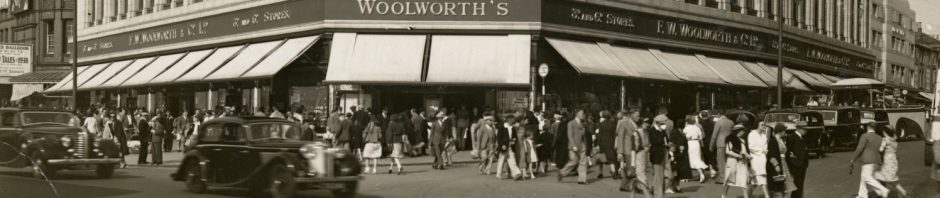
The name Bon Marché (meaning cheapness or a good bargain) has featured on high streets throughout the British Isles for 150 years, but was especially fashionable in the last quarter of the 19th century.

The modern clothing chain Bonmarché, founded in Yorkshire in 1982, has experienced spells in administration but still trades from around 225 branches. Britain’s Victorian Bon Marchés were a great deal more exciting! They can be regarded as prototypes for 20th-century department stores.

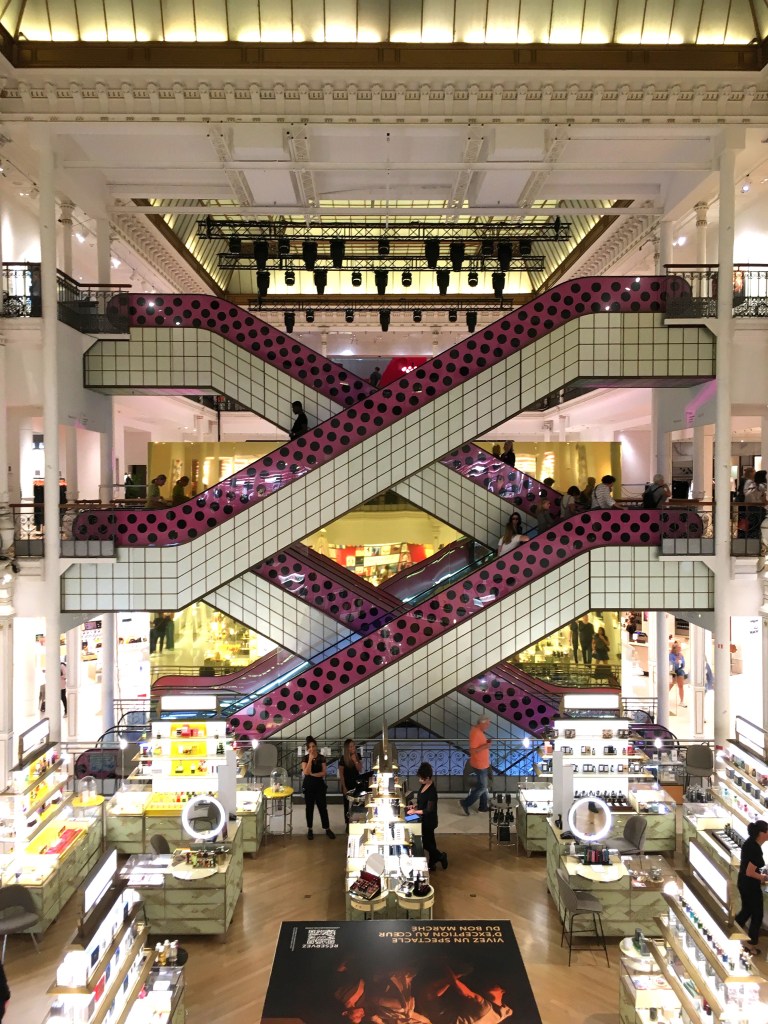
The original Bon Marché – bien sur! – is the famous grand magasin on the rue des Sèvres in Paris. Considered the first of its kind, it remains one of the finest stores in the city, drawing visitors from around the world.
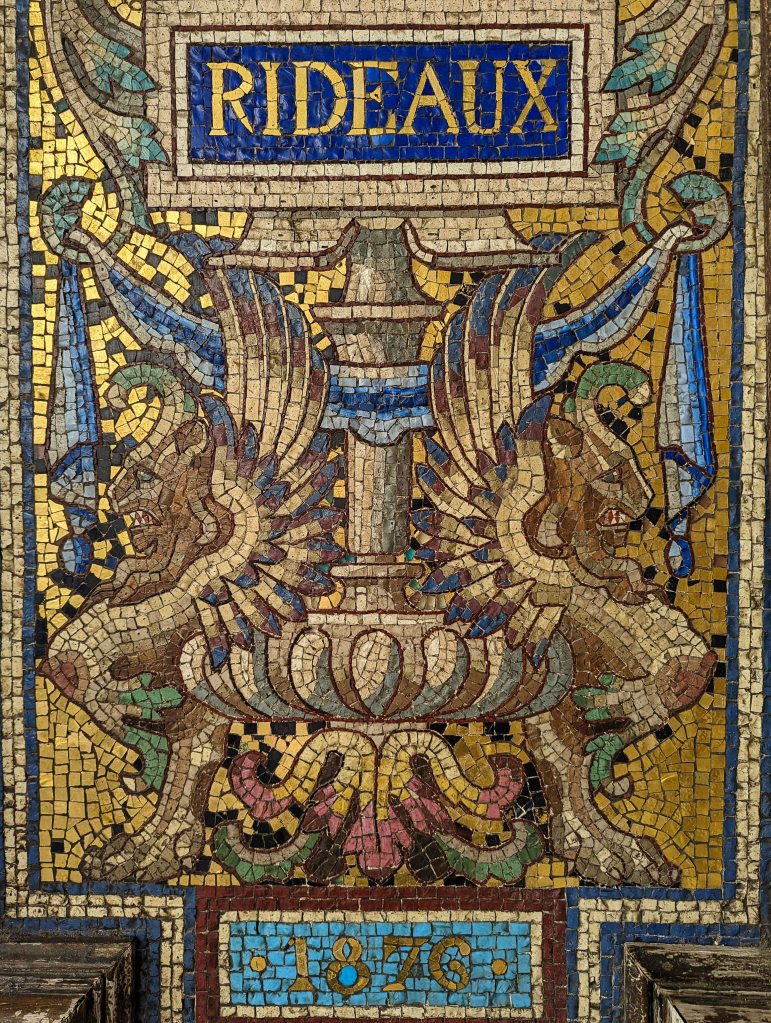
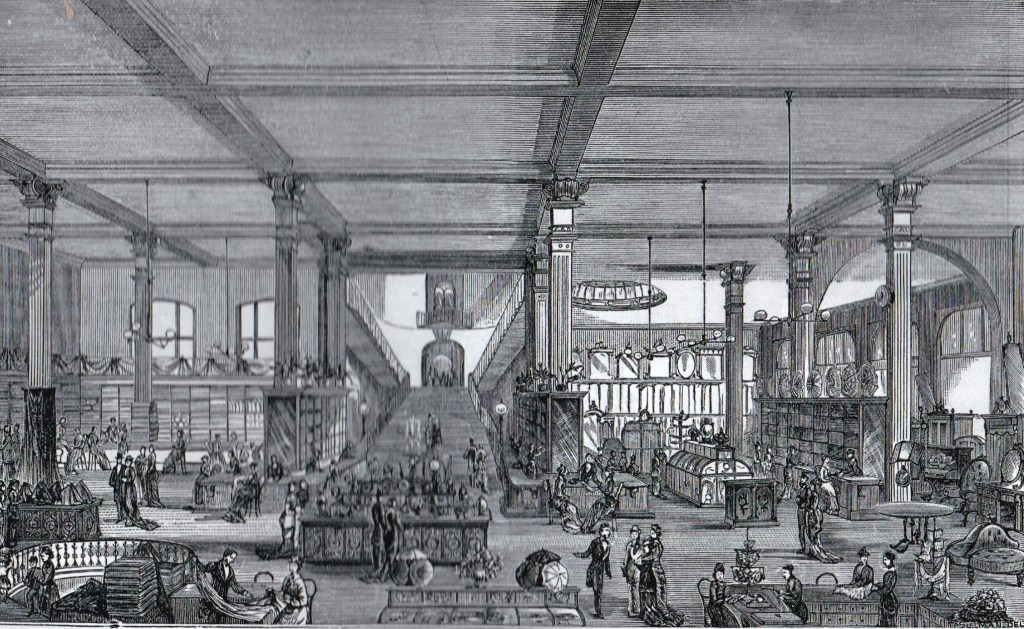
It all started in 1853, when Aristide Boucicault took over a haberdashery belonging to the Videau brothers. He transformed this into a vast retail warehouse – Au Bon Marché – which, from 1869, was rebuilt on a magnificent scale. By 1872 the Bon Marché comprised 22 departments, spread over five floors, and had a staff of 800. It continued to expand, and served as the model for Emile Zola’s fictional Au Bonheur des Dames (‘The Ladies Paradise’), published in 1883.
Such was the celebrity of the Bon Marché that its name was adopted far beyond Paris. In 1870, for example, the great fire of Constantinople destroyed the most famous store in the city: the Bon Marché. In Edinburgh, in 1875, Cranston & Elliot advertised their Clan Warehouse as ‘the Bon Marché of Scotland’. Similarly, W. Roper – who had married a French dressmaker – dubbed his expanding North London store ‘The Kilburn Bon Marché’. This traded until 1927, when it was bought by Selfridge as a branch of John Thrifty.
With the opening of the Bon Marché in Brixton, South London, on 22 May 1877, the Metropolis could boast a Bon Marché north and south of the Thames. A few months later Au Bon Marché (‘the only French House in London’) opened at 380 Oxford Street. Others followed in Hampstead, Islington, Kensington and Norwood. Now the height of high-street fashion, the ‘Bon Marché’ name was just the latest in a string of French-inspired retail trends, including arcades and bazaars, together with a penchant for mansard roofs with ironwork cresting.

The Brixton store may not have been the first Bon Marché in Britain, but it was certainly the most progressive. It came into being when James Smith won a fortune betting on horses at Newmarket and invested his winnings in a new commercial venture. Unlike Roper’s Bon Marché, Smith’s version was purpose built, with an impressive open-plan interior. Its 21 departments were spread over three sales floors. Promising to be more than a mere shop, it offered ‘all the attractions of a delightful promenade’. It traded until 1975, when it was closed by the John Lewis Partnership.
In the late 1870s shops called Bon Marché – principally haberdashers or fancy drapers – sprang into being throughout the country: in Ramsgate, Tunbridge Wells, Southampton, Bristol, Birmingham, Sheffield, Leeds, Douglas (Isle of Man), Liverpool, Glasgow and elsewhere. Proprietors insisted on cash payments and imposed fixed prices: tactics introduced decades earlier by men’s clothiers and footwear dealers, but scorned by drapers. ‘Bon Marché’ quickly become synonymous with the cash drapery trade.

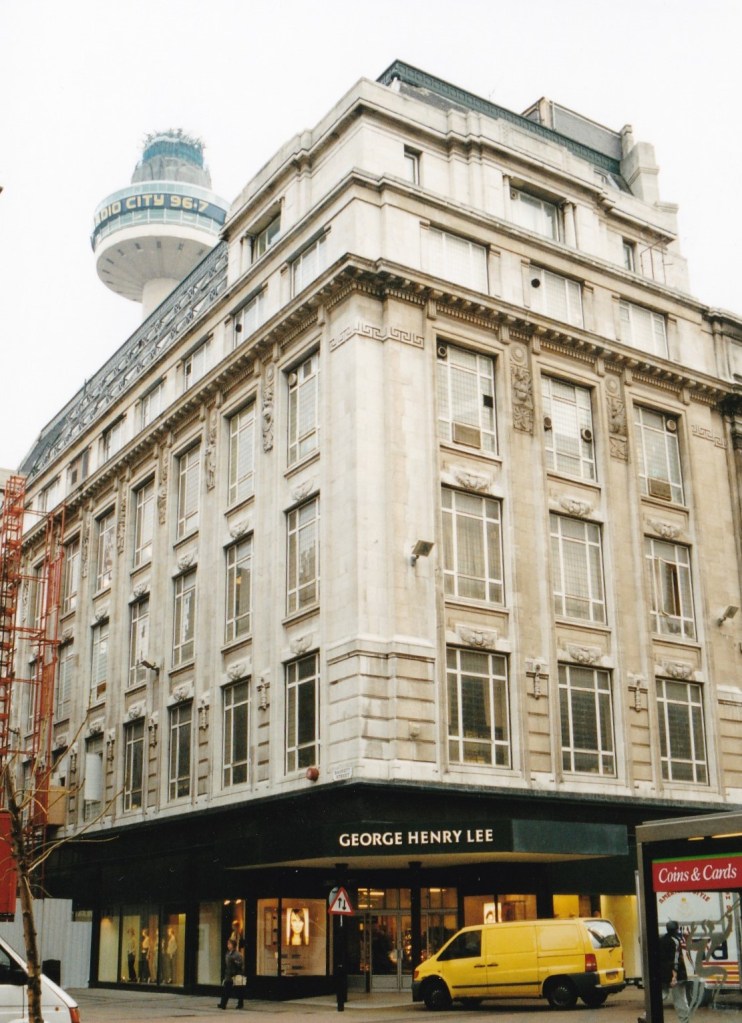
The best known Bon Marché in the North of England opened in Liverpool in December 1878. Its founder, David Lewis, was a boys’ clothier. Nevertheless, the Bon Marché in Basnett Street catered mainly for female shoppers. The establishment was extended twice in the 1880s, with a sturdy tower that advertised the Bon Marché name on each side. It was rebuilt to designs by Gerald de Courcy Fraser in 1919-23. Later, in the hands of the John Lewis Partnership, it became part of the George Henry Lee store.
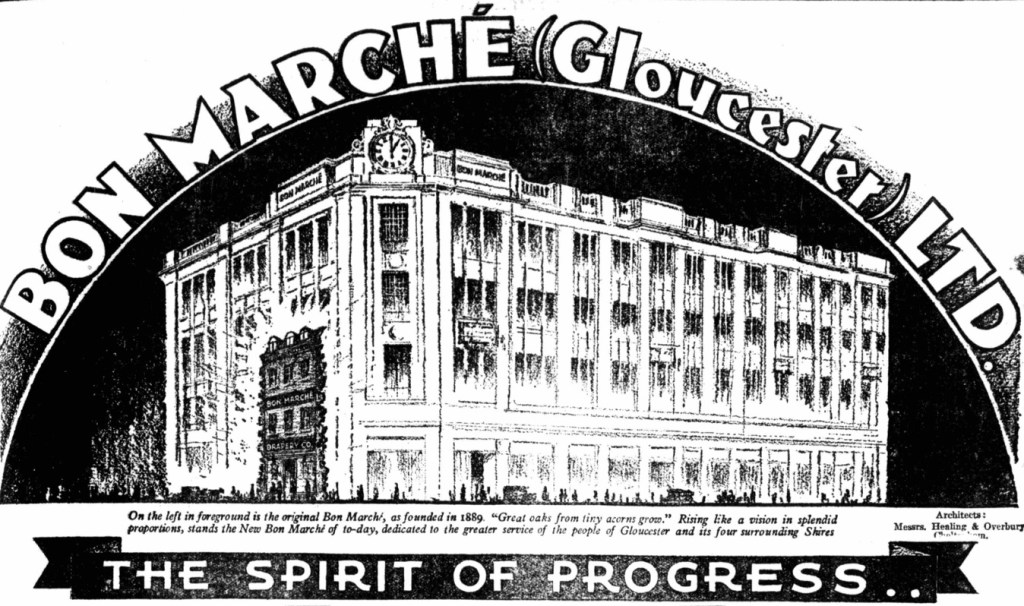
In Gloucester, the Bon Marché (‘The Bon’) became the largest department store in the city. It opened in Northgate Street in March 1882. Seven years later it was purchased by the Pope family, who extended the store in typical piecemeal fashion. In 1927 they sold out to Jones & Co. of Bristol, which belonged to the recently formed Drapery Trust (later Debenhams). The Bon Marché was rebuilt, in 1929-31, to designs by Healing & Overbury, and was rebranded ‘Debenhams’ in 1972.

Alfred Wilding opened his Bon Marché in Newport, Wales, in 1882. Unlike Lewis’s Bon Marché in Liverpool, this remained dedicated to men, but with separate departments for all aspects of hosiery, outfitting, clothing and grooming. It was the first shop in Newport to be lit by electric light.

Many Welsh towns had a Bon Marché. The 1902 extension to the original Abertillery Bon Marché, with its corner turret and cupola, still dominates a corner of Somerset Street. This business opened branches, all called Bon Marché, in Bargoed, Blackwood, Ebbw Vale, Hereford and Abergavenny.
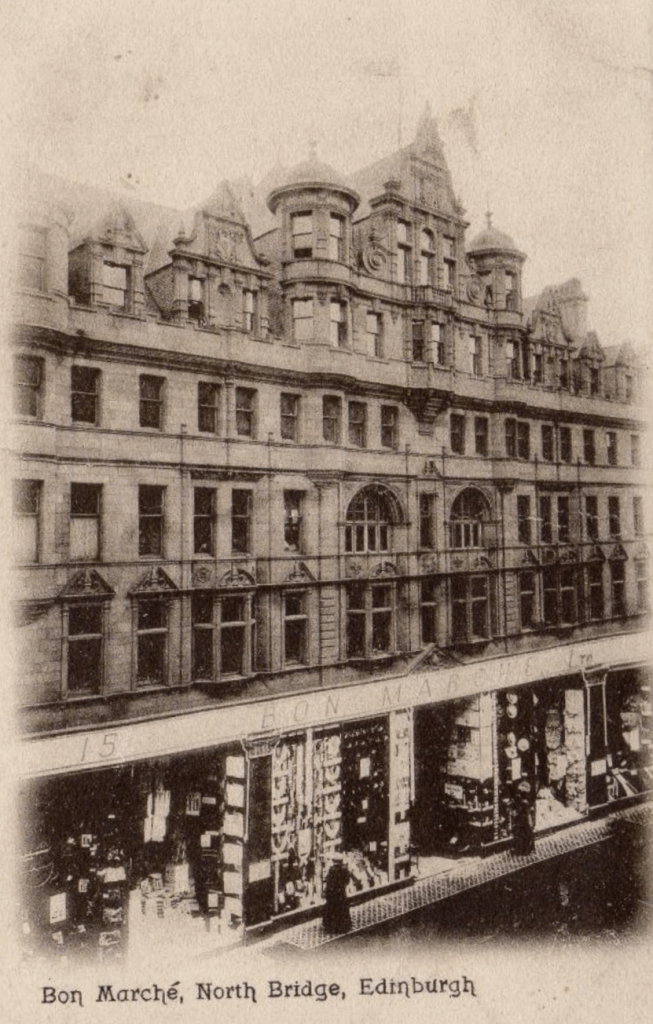
An ambitious Bon Marché was built in Edinburgh in 1899-1901. Occupying much of the east side of North Bridge Street, it formed the central component of a shop-and-hotel scheme erected for James White. This advertised as the largest ‘drapery and fancy goods warehouse in the country’, with 40 departments. Soon after being taken over by Patrick Thomson, in 1906, the building was badly damaged in a fire, a common occurrence in drapery stores. A year later Thomson died. ‘P.T.’s’ was acquired successively by Debenhams’ Scottish Drapery Corporation (1926), then by House of Fraser (1941), being renamed Arnotts in the mid-1970s and closing in 1982. It is now The Carlton Hotel.
Although several Bon Marchés developed into fully fledged department stores and retained their name into the middle of the 20th century, their heyday was undoubtedly the Victorian era, a period when British retailing was propelled forwards by successive waves of French fashion.
Text copyright Kathryn A. Morrison (AI scraping not permitted)

 Building Our Past