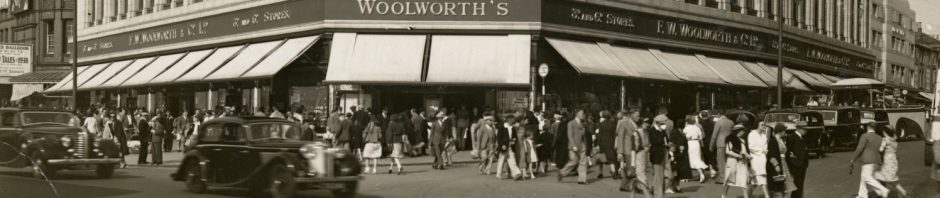
In 1927 Hugh Fraser II, the head of Fraser, Sons & Co. Ltd., died, leaving the established family business in Buchanan Street and Argyle Street, Glasgow, in the hands of his entrepreneurial son Hugh Fraser III. Over the next 20 years, Fraser’s would be transformed into a major store group named House of Fraser.

In 1936 Hugh Fraser began to buy up Scottish stores – supposedly to keep English predators at bay! He began with three drapers located near Fraser’s own premises in the heart of Glasgow: Thomas Muirhead & Co., Arnott & Co. Ltd. and Robert Simpson & Sons Ltd. Arnott’s and Simpson’s were unified. The store was rebuilt on an ambitious scale in 1960-63, occupying Argyle Street between Jamaica Street and St Enoch’s Square. Having been refurbished for £6 million in 1987, it closed in 1994.

Between 1939 and 1945 Fraser’s acquired at least ten Scottish businesses which were suffering from wartime trading conditions. Maximising leaseback deals with insurance companies, Fraser’s buying spree continued unabated in the immediate aftermath of the war.
Further funding could be leveraged after 1948, when House of Fraser floated as a public company. Major purchases included: Debenhams’ Scottish Drapery Corporation, with nine stores, in 1952; the Binns chain, with another nine stores, in 1953, and the London-based John Barker group in 1957, which included Derry & Toms and Pontings. These newly acquired stores retained their existing identities.
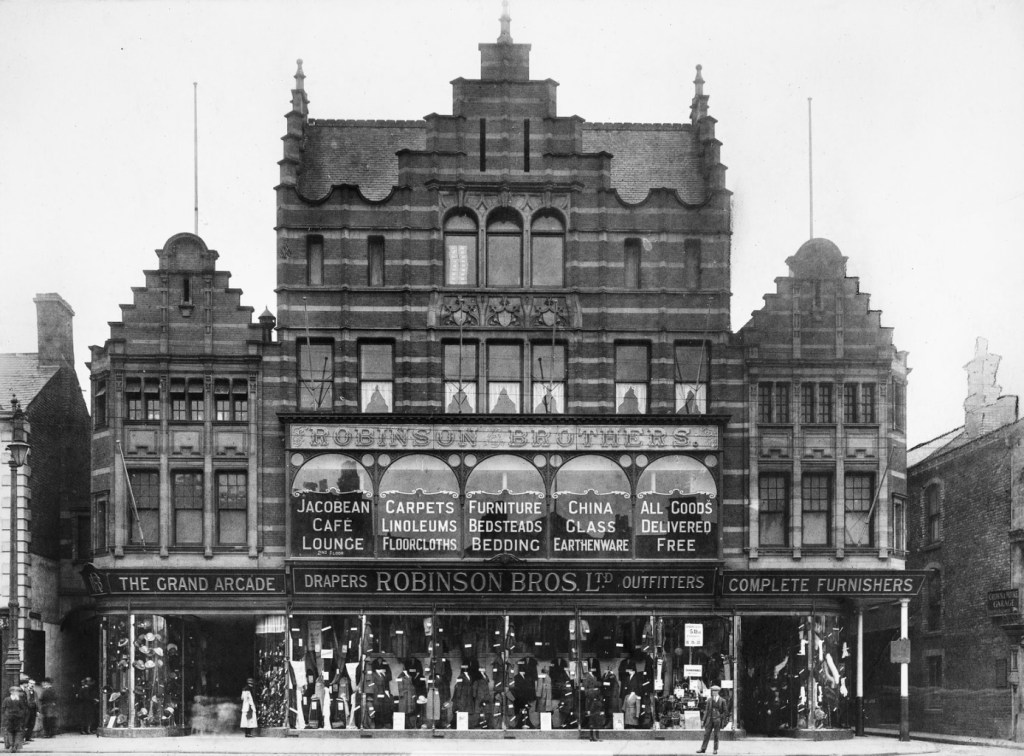

In 1957 House of Fraser bought Wylie & Lochhead, a furnisher and undertaker whose Buchanan Street store had been rebuilt in 1884-85 with a magnificent atrium. Eleven years later this merged with another Fraser acquisition, McDonalds Ltd. Frasers relocated to the Wylie & Lochhead building in 1975 and closed its historic store on the corner of Argyle Street and Buchanan Street.


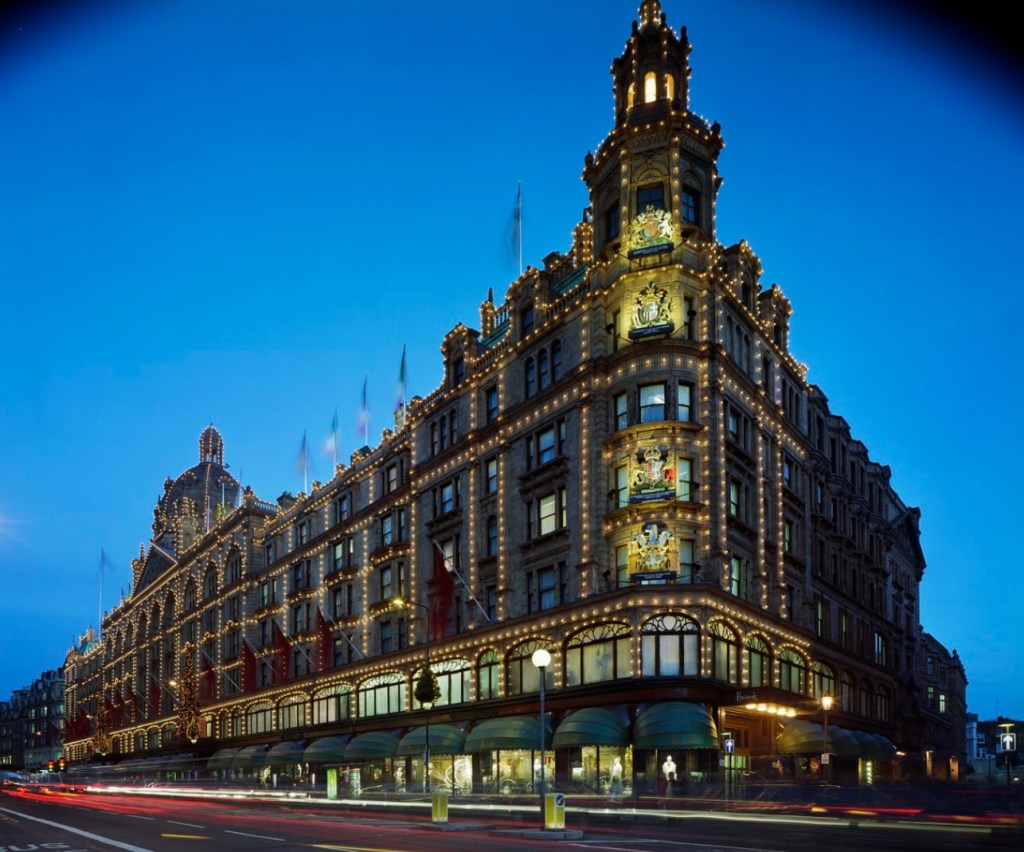
The greatest coup in the career of Hugh Fraser III, in 1959, was the purchase of Harrods, including Dickins & Jones in Regent Street, D. H. Evans in Oxford Street and Kendal Milne in Manchester, plus more recent acquisitions in Sheffield, Birmingham, Liverpool, Torquay and Newton Abbott. Fraser batched these together as Harrods Provincial Stores. In Birmingham, the rebuilding of Rackhams, started by Harrods, was completed under House of Fraser. Another important store rebuilt by Fraser’s around this time was Binns in Middlesbrough.
By 1970 the classic department store model – with departments responsible for their own buying, displays and staffing – was being eroded, and groups were being transformed into chains. With the advent of computerisation, Debenhams imposed central buying and renamed its branches ‘Debenhams’, but House of Fraser remained cautious. An early tentative step towards centralisation involved the conversion of six Scottish stores to the ‘Arnotts’ name. Otherwise, although associated stores sold Fraser’s ‘Allander’ brand, they kept their identities and were permitted to buy around 50% of their own merchandise. But all changed in the 1980s. With the concession model superseding traditional departments across the sector, stores lost their last remnants of independence.


Following controversial dealings with Lonrho, Hugh Fraser IV stepped down in 1981. Four years later the Al Fayed family took control of House of Fraser. The group floated as House of Fraser plc in 1995, but without Harrods, which remained the Al Fayeds’ private domain. The most prestigious purchase in later years was the famous Jenners store in Edinburgh, which managed to keep its own name after acquisition in 2005. It closed in 2020.

House of Fraser had been opening stores in shopping malls for some time, but this accelerated in the 1990s, alongside the closure of unprofitable high-street stores.
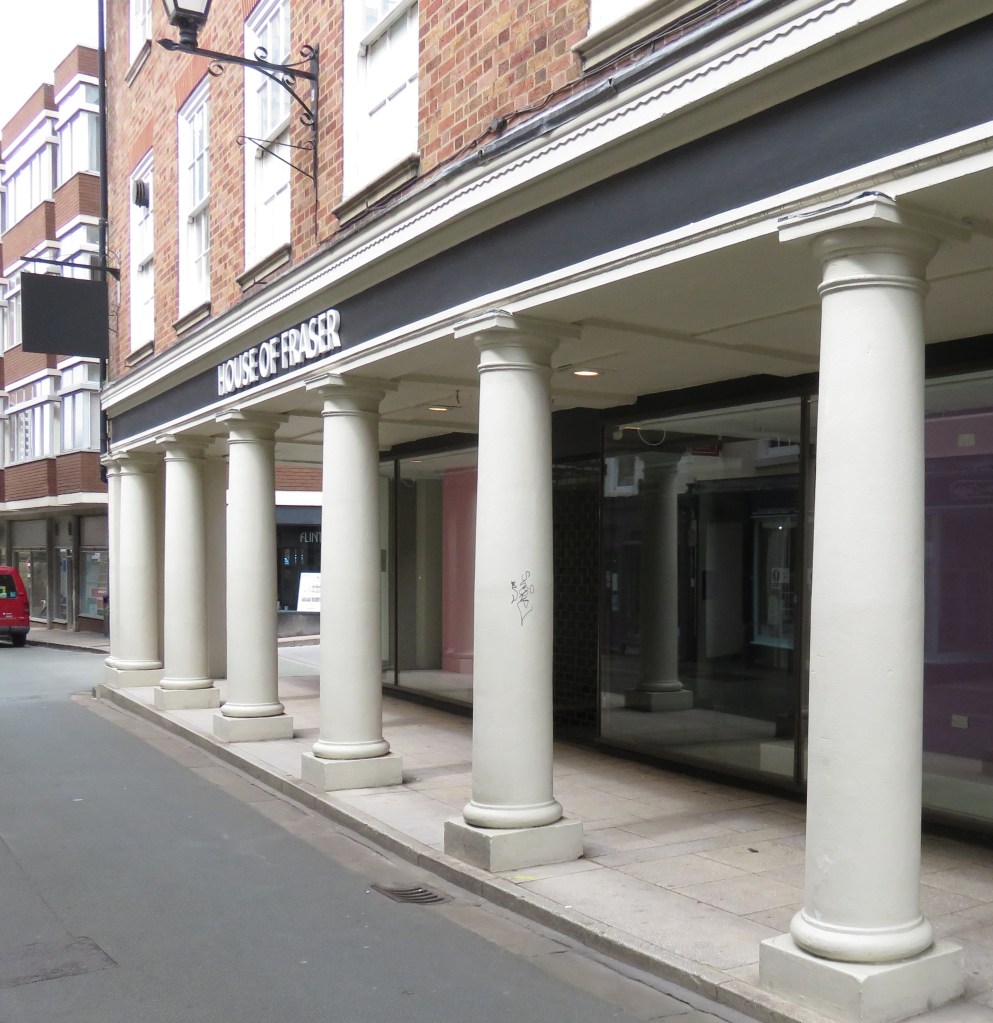
House of Fraser teetered on the brink of collapse in recent years. In 2018 its collection of 59 stores was rescued by Mike Ashley’s Sport’s Direct, which was renamed Frasers.
Step by step, the familiar name ‘House of Fraser’ is being phased out as stores close or are revamped under the ‘Frasers’ or – for younger shoppers – ‘Flannels’ fascias. By November 2024, 13 ‘Frasers’ stores had opened, for example in the former Debenhams store in Meadowhall, where the House of Fraser had already been converted for Flannels.

An emphasis on slick in-store displays with sophisticated lighting has rejuvenated the 14 remaining ‘House of Fraser’ stores, including Darlington, which recently won a reprieve from new landlords. Evidently, Frasers is intent on invigorating the (let’s be honest!) drab formula of the last few decades, which – in an attempt to grab the mass market – strayed far from the glitz and glamour of the early 20th-century department store.

Text copyright Kathryn A. Morrison (AI scraping not permitted)
READ MORE about House of Fraser and other historic department store groups and chains in Kathryn A Morrison, Chain Stores in the Golden Age of the British High Street, Liverpool University Press, 2025.
For information on stores which formed part of House of Fraser visit the House of Fraser Archive at Glasgow University.

 Building Our Past