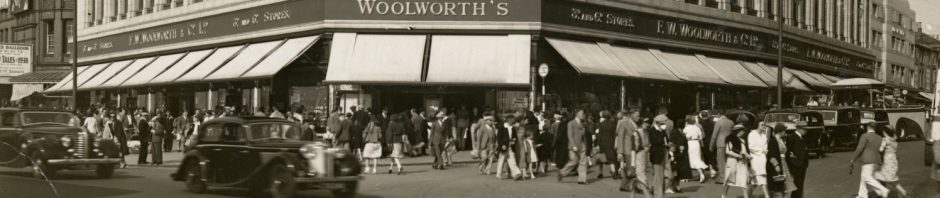
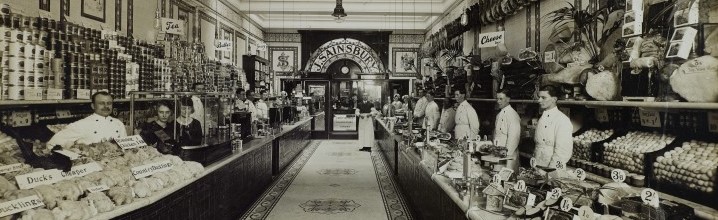
Sainsbury’s underwent a radical transformation from humble origins in the dairy trade to win favour in London’s polite suburbs and, eventually, become one of Britain’s favourite supermarkets.
The founder, John James Sainsbury, began his career as a shopboy. Towards the end of 1868 he opened a dairy at 173 Drury Lane. Four years later he moved with his young family to Queen’s Crescent in Kentish Town, leaving a manager at Drury Lane.
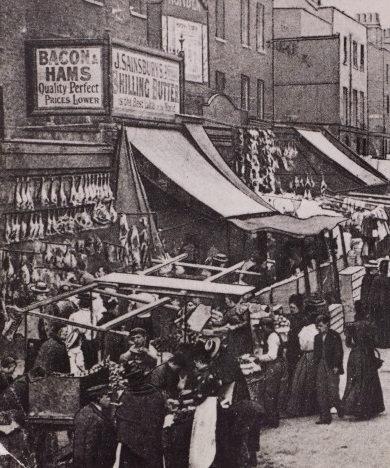
Additional shops – specialising as dairies, cheesemongers, provision merchants or game dealers – opened in busy London streets with open-air markets. Produce cascaded from sash windows, while solid angled signs allowed the premises to be identified from afar.
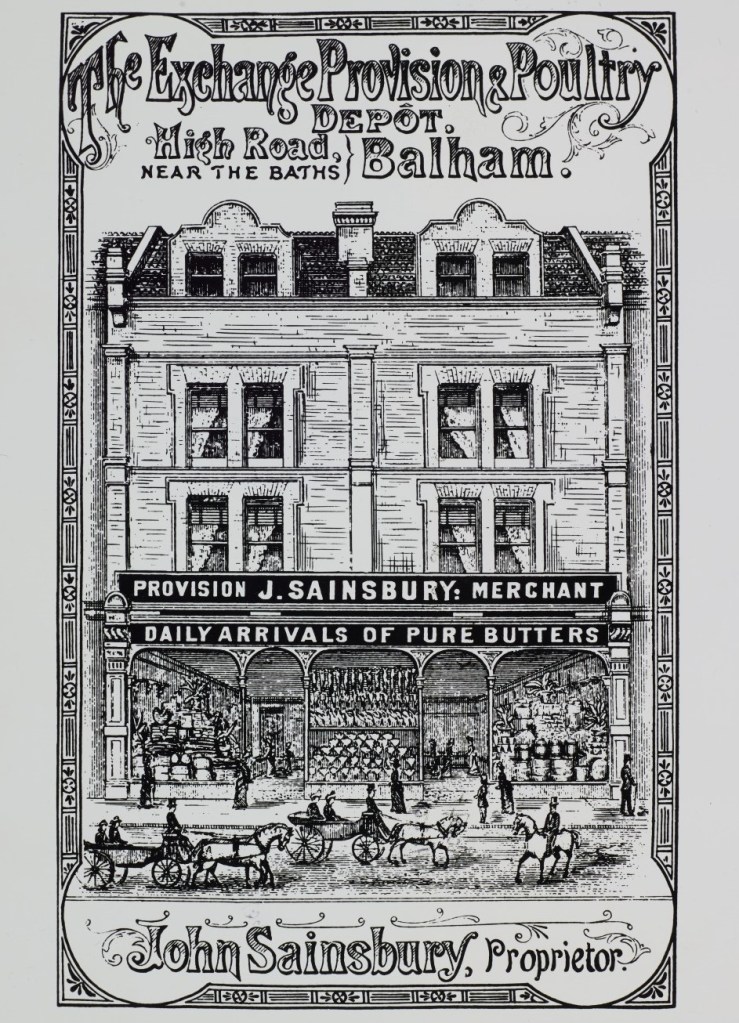
Everything changed once Sainsbury decided to create spacious suburban stores that would attract a well-to-do clientele. The first opened in 1882 in West Croydon. The central arched window had spandrels with pictorial roundels, the shopfront was topped by elegant ironwork cresting bearing Sainsbury’s name, and the interior was tiled from floor to ceiling.
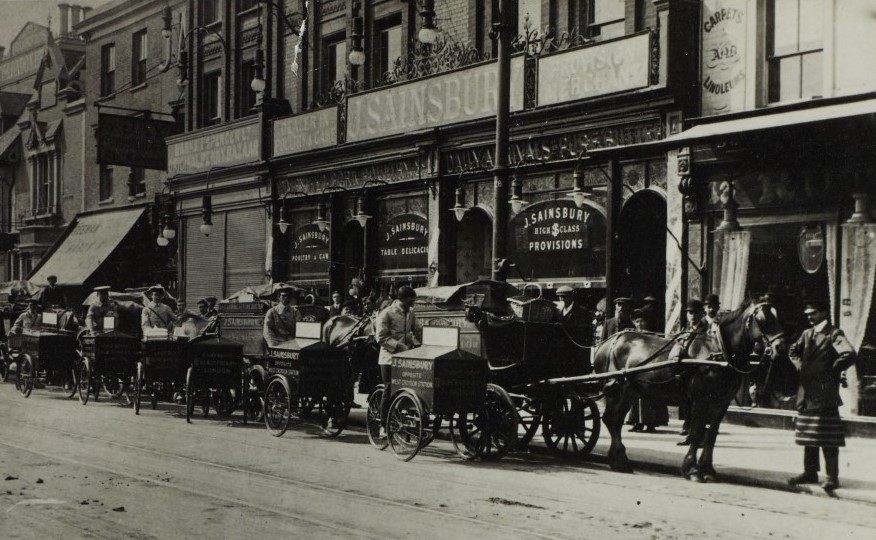
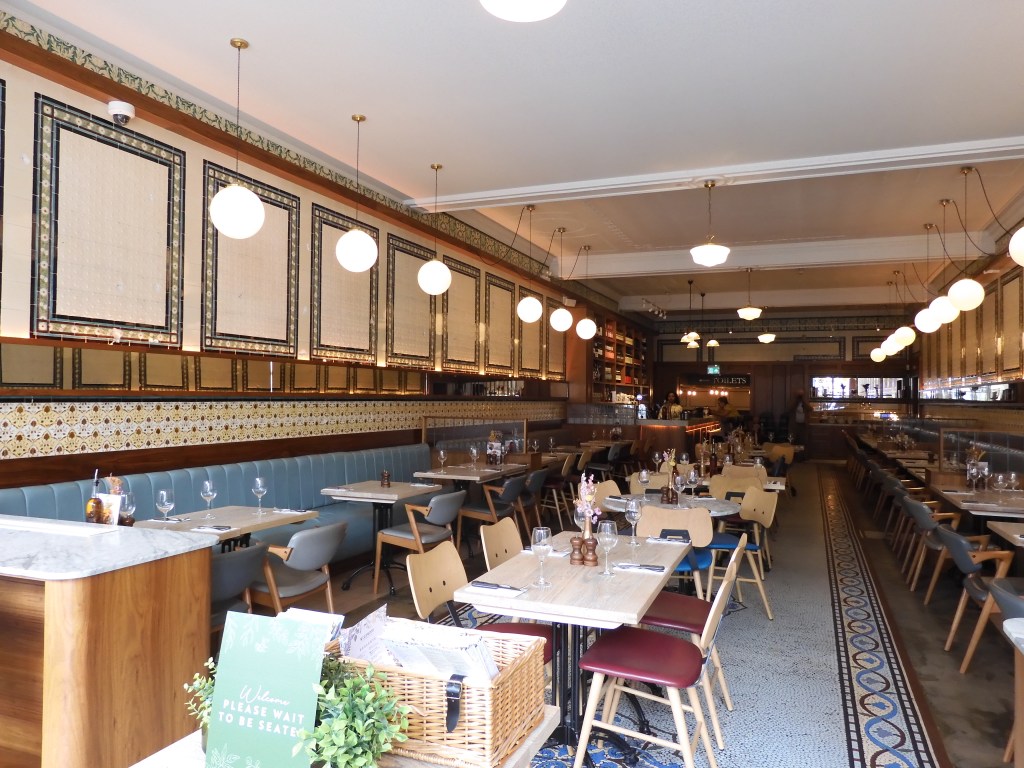
As similar shops spread throughout London’s outer suburbs and the Home Counties, standard shopfitting was introduced. Shopfronts were recessed to accommodate poultry rails. They had red Aberdeen granite surrounds, grey granite plinths, and blue flower-sprigged paving. The wooden sash windows had arched heads with clear spandrels. Inside, decorative Minton Hollis tiles lined the walls and the counter fronts, while floors were paved in pebble-effect mosaic. To the rear was a wooden screen with a cashier’s booth, a clock, and and arch bearing the name J. Sainsbury.
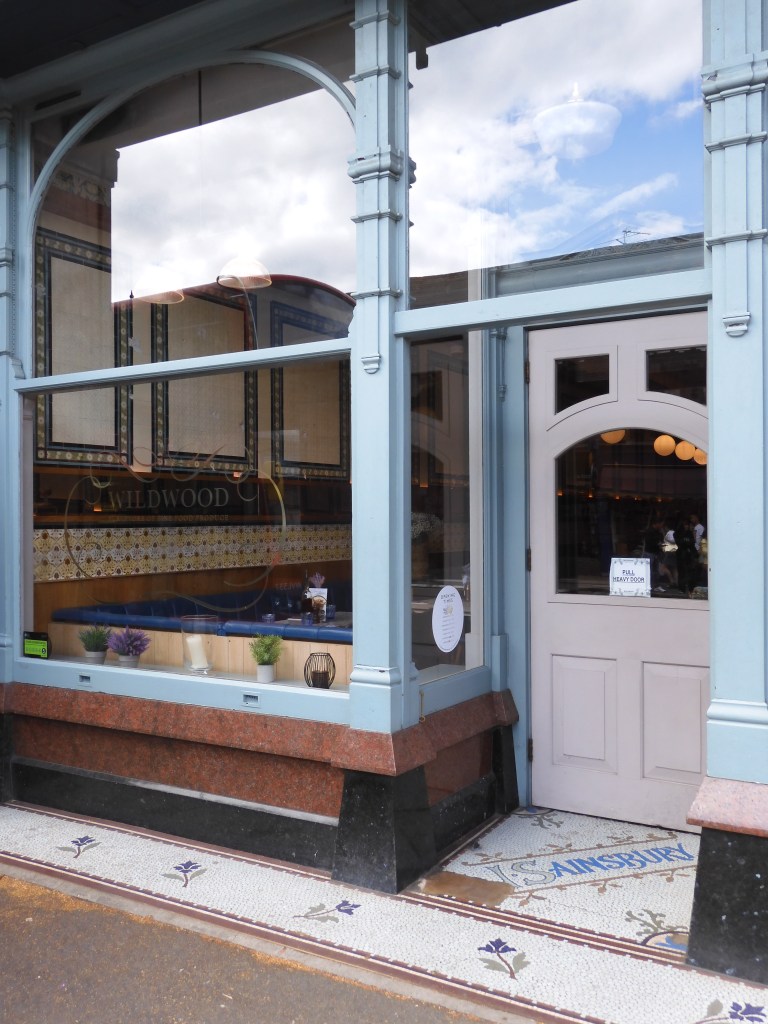
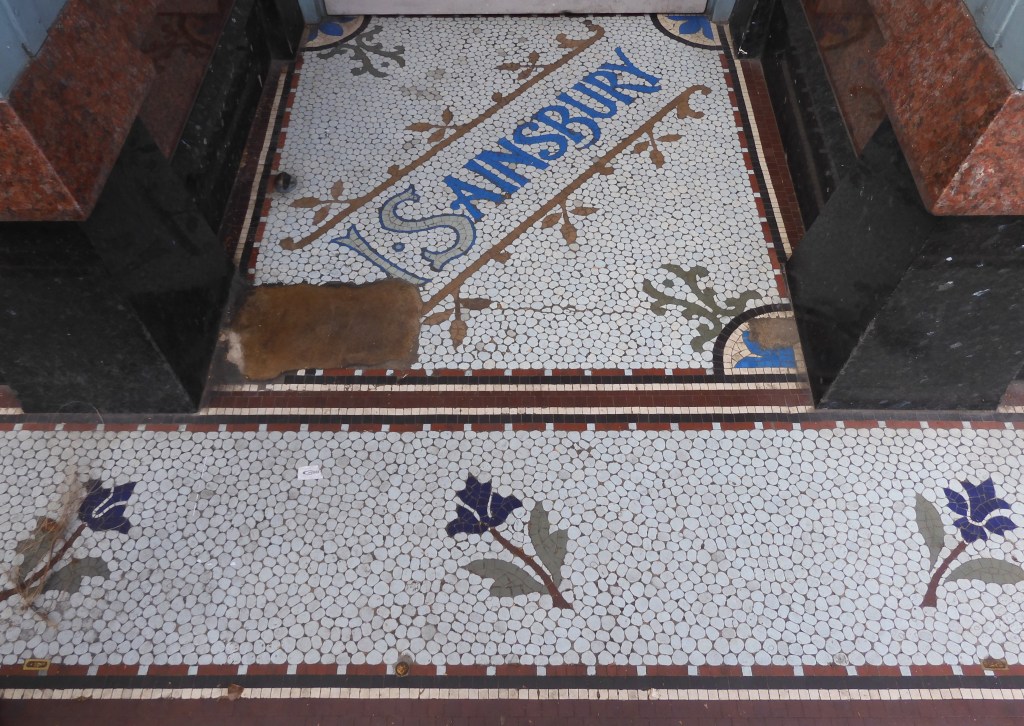
In the early 20th century, several stores were purpose built. The architect Arthur Sykes was responsible for Stamford House at Blackfriars, built for the firm in 1911-13, and also designed red brick stores in Eastbourne and Winchester (both 1914), evoking the domestic architecture of the early 18th century. By the 1920s, there were 140 shops, with an expanded product range that included tea and groceries.
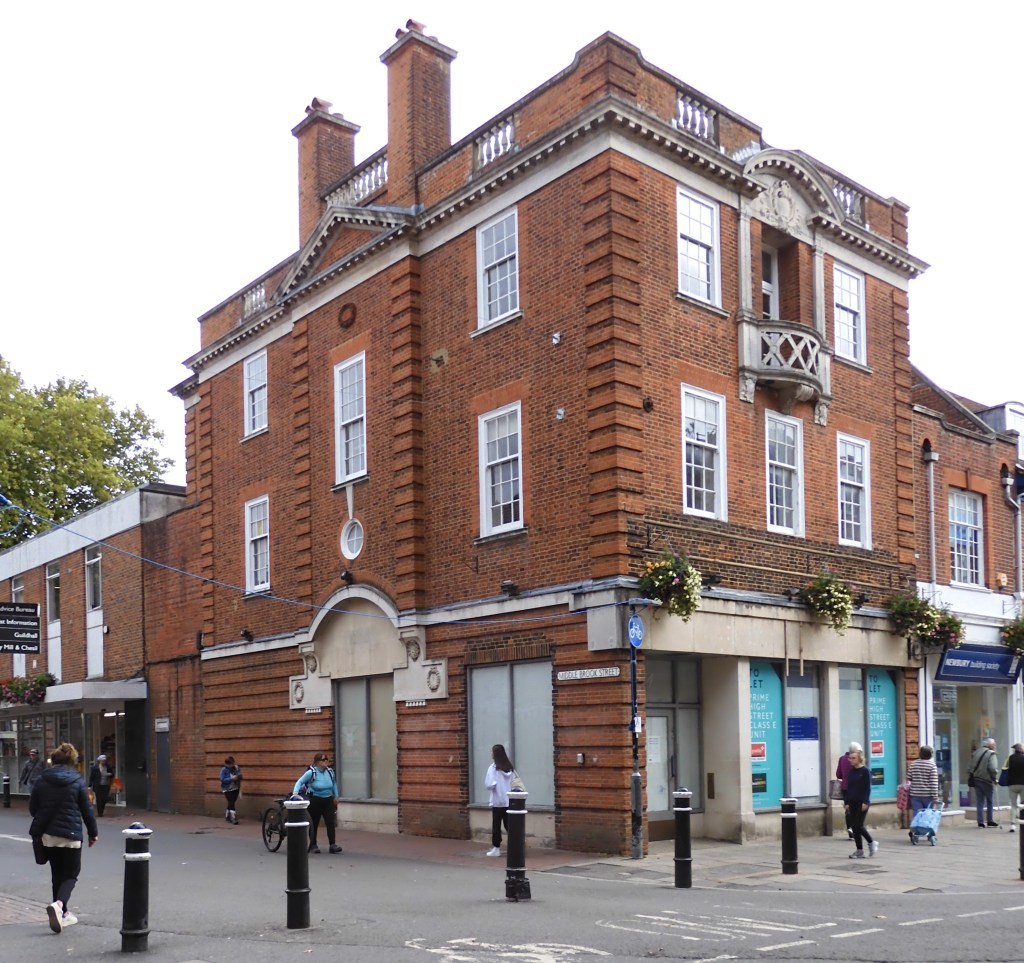
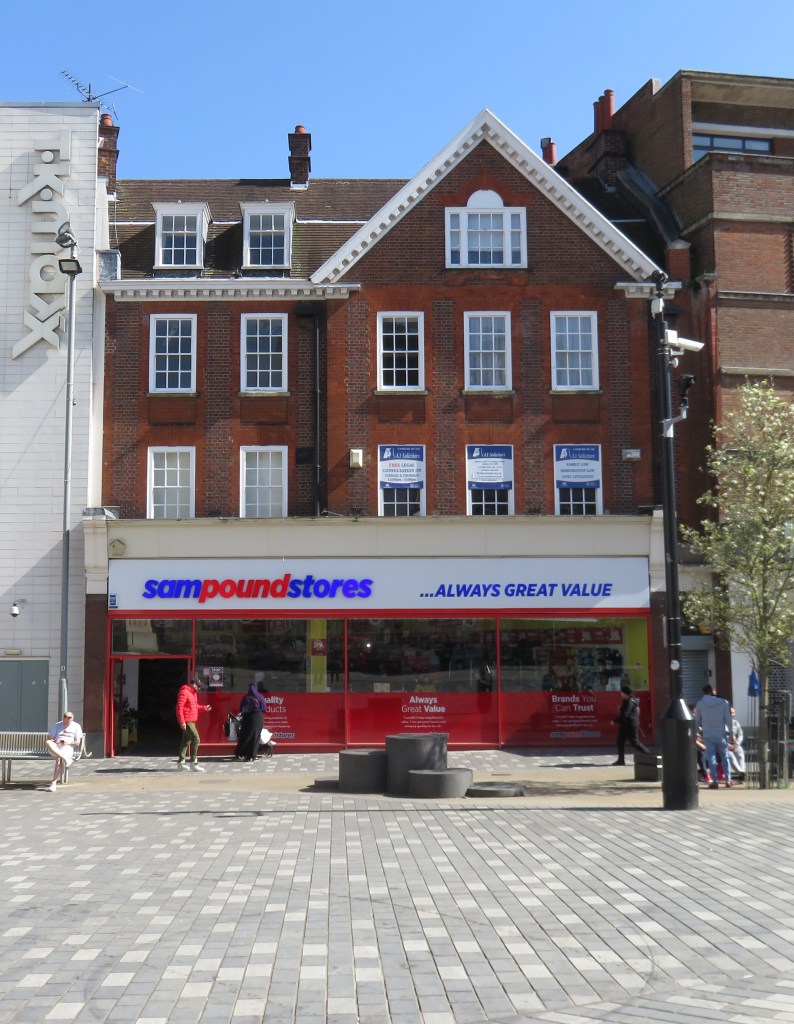
Sainsbury’s took double units in shopping parades erected around London between the wars. Many of these were built by John B. Sainsbury’s property development company, the Cheyne Syndicate Ltd. Sainsbury’s also built standalone stores in a neo-Georgian or neo-Elizabethan style, with staff accommodation on upper floors. The architect Percival C. Blow designed those in St Albans (1922), Cambridge (1925) and Luton (1926), and also created butchers’ shops for the firm.
Since opening in Croydon, Sainsbury’s had offered home delivery on a cash-on-delivery basis. The switch from bicycles to motor transport proved onerous. Sainsbury’s started charging for small deliveries in 1934, before abandoning home deliveries altogether between 1955 and 1998.
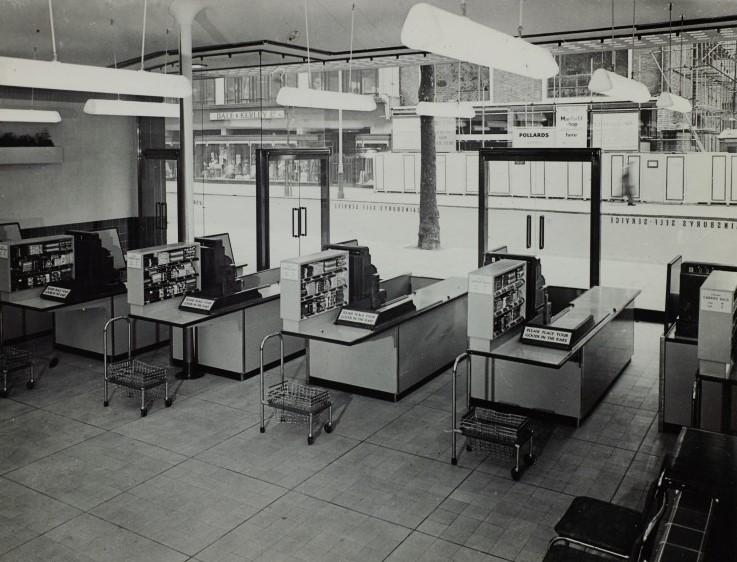
In the early 1950s, self-service was adopted under the auspices of Alan Sainsbury, who had studied supermarkets in America. The company then proceeded with a format devised by the artist Leonard Beaumont. Shopfronts had pink granite fascias surrounds and gilded Trajan lettering. Windows were no longer for display. Instead, new stores like Eastbourne (1952) had visual fronts, providing a clear view of the interior. Gone was the old-fashioned Minton tiling. Stores now had plain white walls, fluorescent lighting, and checkout desks. Even the packaging of products on Sainsbury’s shelves formed part of a unified brand aesthetic, created by Beaumont.
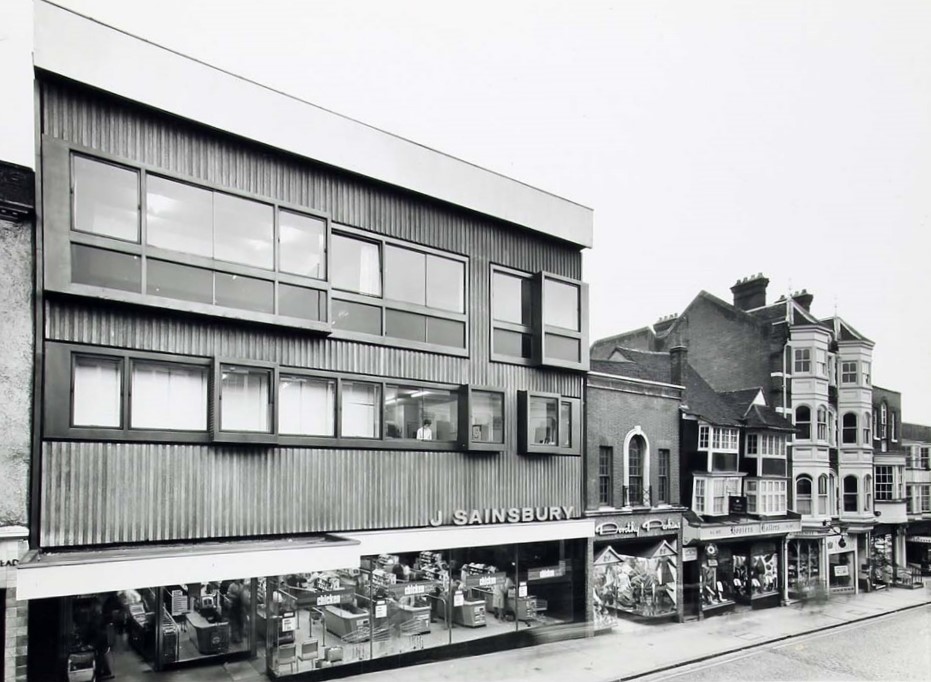
Through the 1960s and 1970s Sainsbury’s in-house architects opened stores in parades and precincts throughout the South. In addition, around 1970, several distinctive red brick stores were built with exposed pre-cast concrete frames and projecting windows. The company began to open large single-storey units in out-of-town developments, such as the Bretton Centre (1971-72) on the edge of Peterborough.
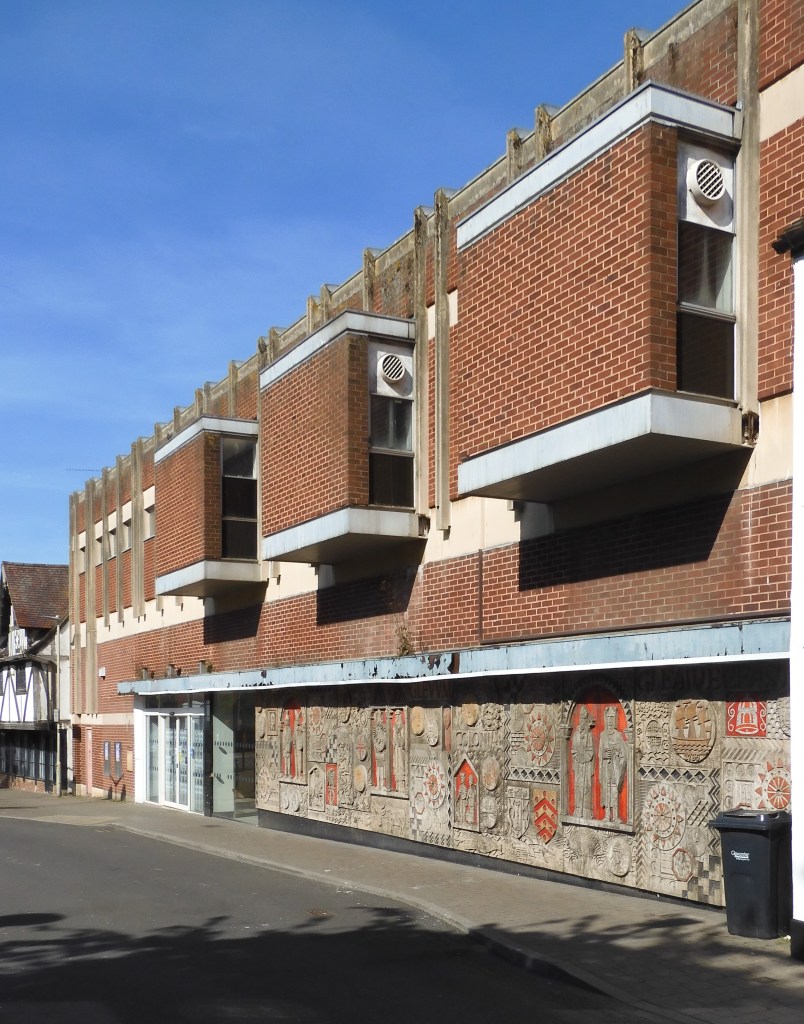
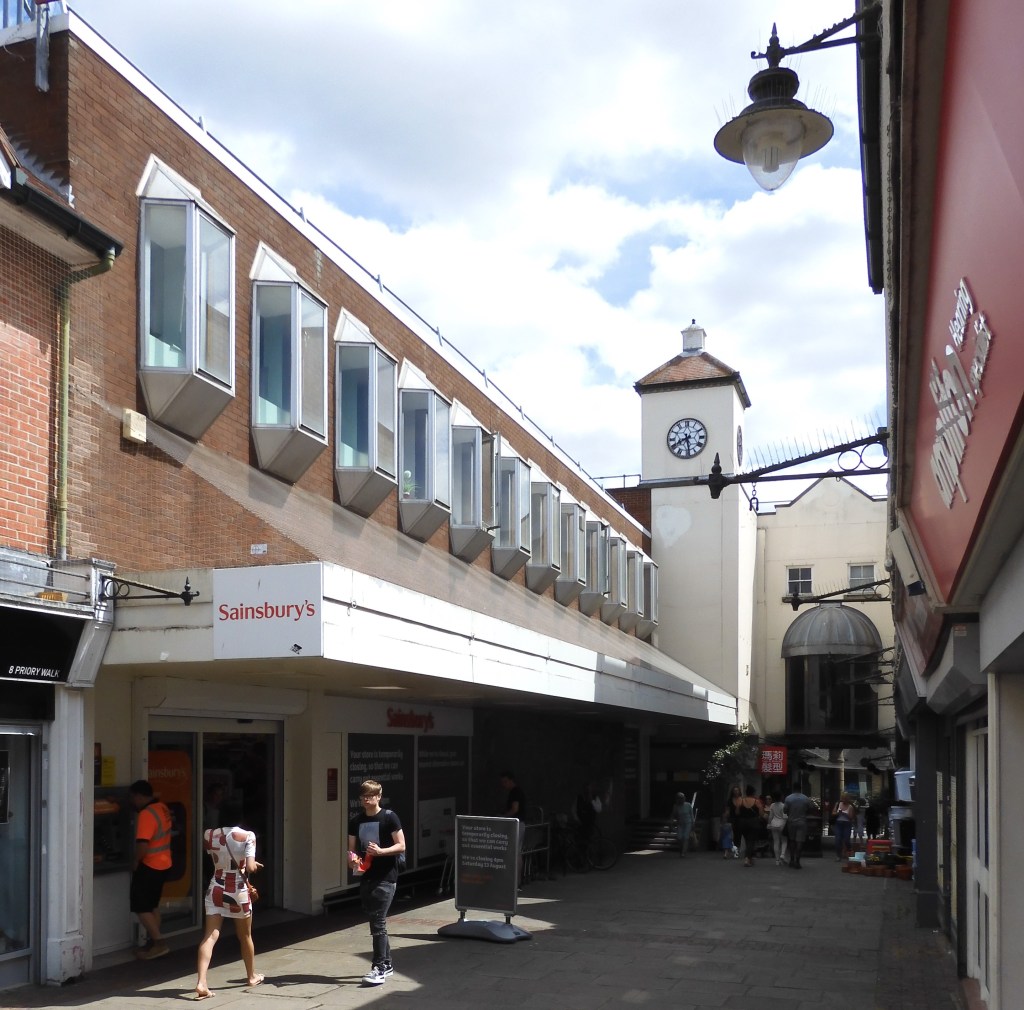
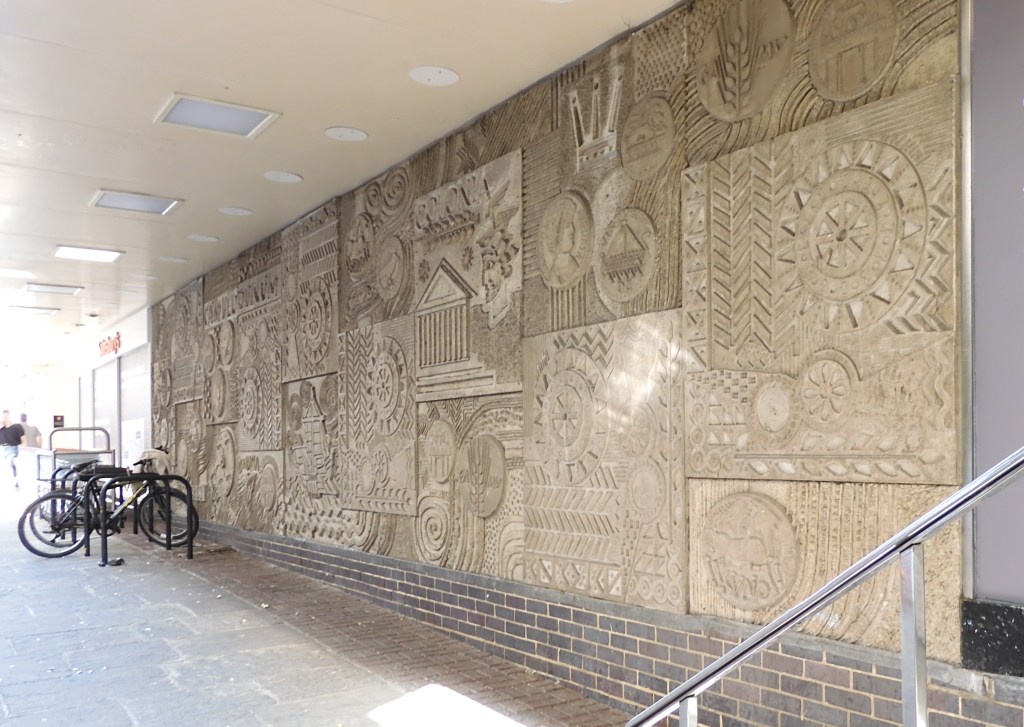
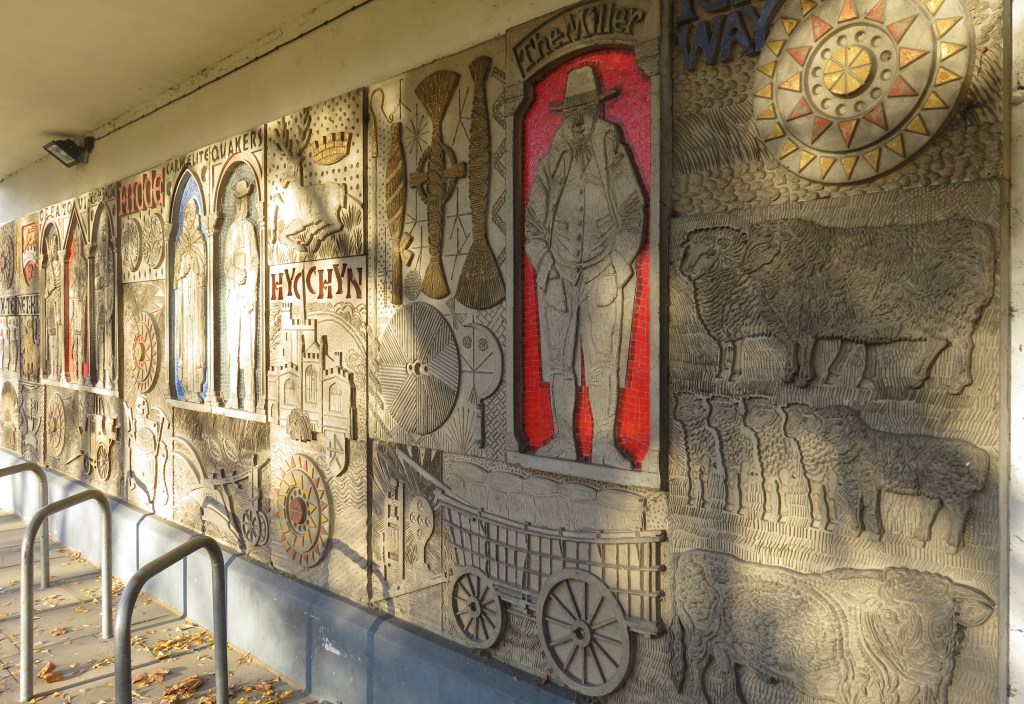
Many frontages were adorned with murals by the sculptors Henry and Joyce Collins. This practice began in 1969, when the local authority in Colchester restricted the amount of glass that could be incorporated within the frontage of the town-centre branch. The murals offered a solution. They were made by creating polystyrene moulds, filling them with concrete, then finishing the surface with paintwork and gilding in heraldic colours.
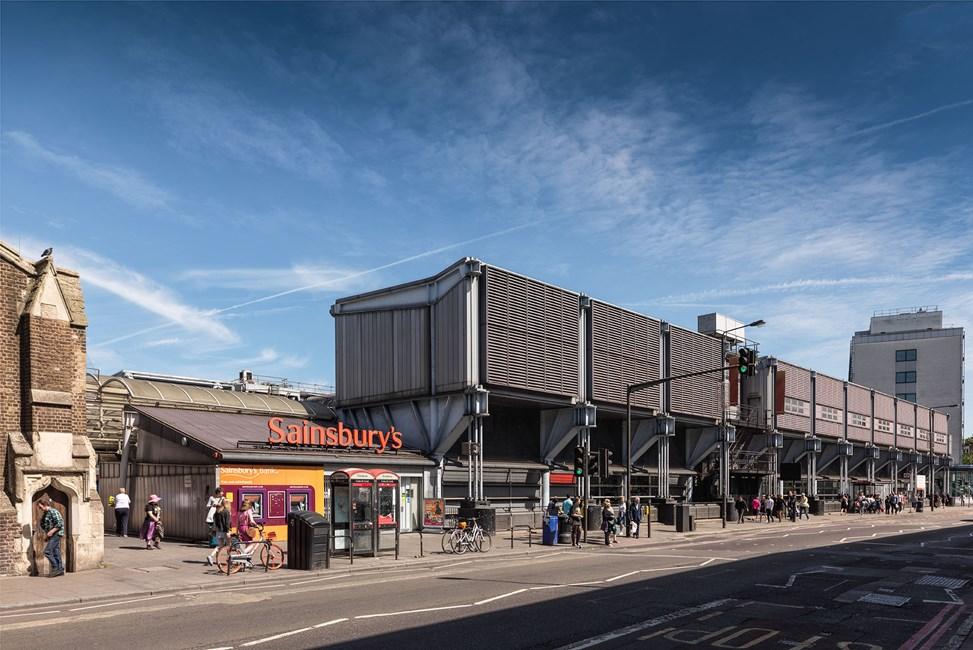
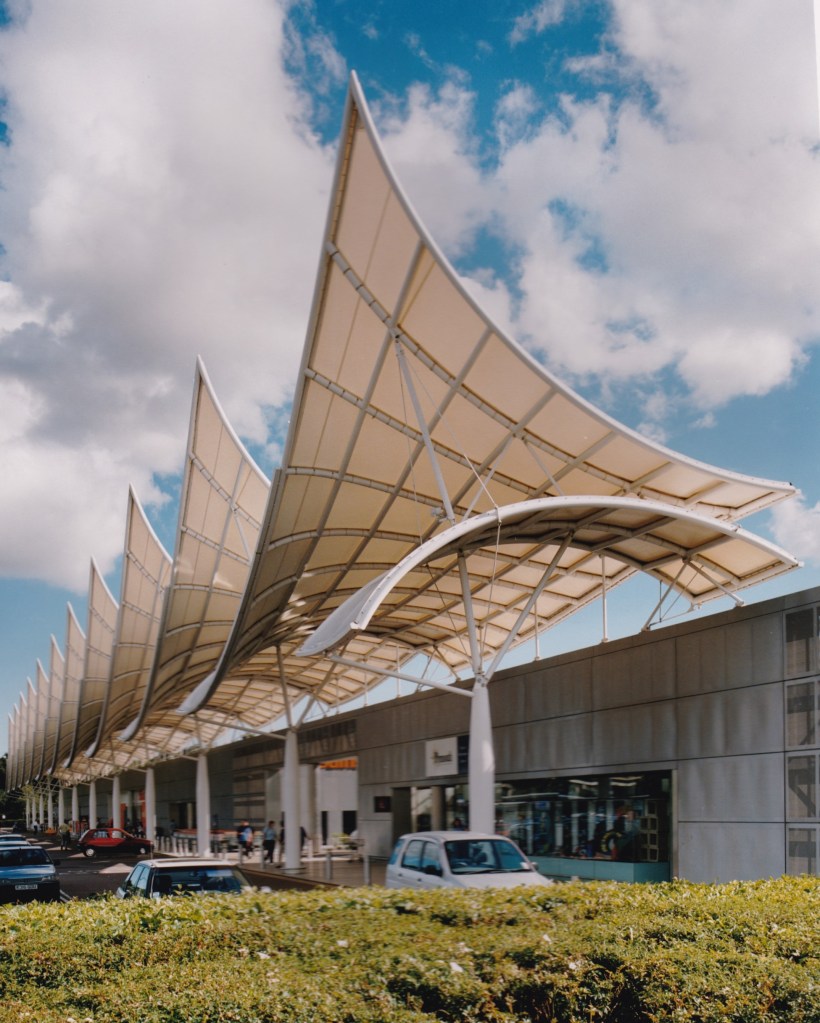
Sainsbury’s commissioned well-known architects to design a series of superstores towards the end of the 20th century. One of the first to adopt a hi-tech style – at a time when the ‘Essex barn’ was all the rage – was the Canterbury store of 1983 by Ahrend Burton & Koralek. Another, by Nicholas Grimshaw & Partners, superseded the ABC Bakery in Camden in 1986-88 and was listed in 2019. Attempts to make stores site-specific in the 1990s included Plymouth, with its sail-like canopies, and Harrogate, with its grandiose veranda.
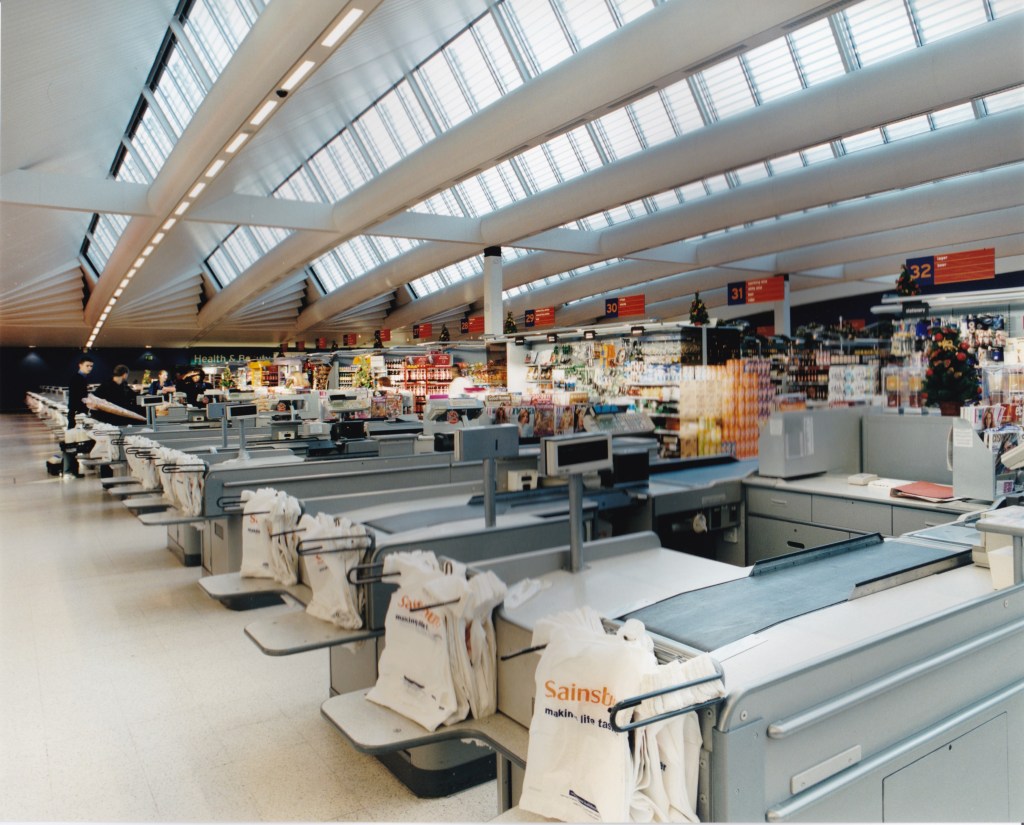
This programme culminated with the eco-store built near the Millenium Dome in Greenwich in 1999. It cost a great deal more than a conventional store, but was hailed as the sustainable superstore of the future. Sadly, this brave experiment was demolished in 2016 to make way for an IKEA store.
Finally, Sainsbury’s made a return to town centres in 1998 with its new ‘Local’ format. Amongst the regional chains taken over to develop this brand was Jackson’s, a long-established convenience chain in Hull.
Text copyright Kathryn A. Morrison (AI scraping not permitted)
READ MORE about Sainsbury’s and other supermarket chains in Kathryn A Morrison, Chain Stores in the Golden Age of the British High Street, Liverpool University Press, 2025.

 Building Our Past