Britain once had so many chains of home-grown shoe shops that it proved impossible to do justice to Saxone’s rich history in the pages of Chain Stores (reference below). So, here’s a slightly longer version of the story.

Last century, most high streets throughout the British Isles included a Saxone shoe shop. Initially known principally for men’s footwear, from the 1940s Saxone specialised in fashionable shoes for women and girls.
Saxone’s founders, brothers Frank and George Sutherland Abbott, were employed as agents for Manfield’s in Northampton until 1902, when they quit to set up their own business. F. & G. Abbott Ltd. acted as retail distributors – through shops and by mail order – for the Kilmarnock footwear manufacturer, A. L. Clark & Co. These two companies came together in 1908 as The Saxone Shoe Co. Ltd.
The Abbotts called their first shops – occupying prominent positions in Hull, Belfast, Leeds and elsewhere – “Saxone” & “Sorosis”. The inverted commas – also an intrinsic part of Greenlees’s “Easiephit” shops – indicated that these were brand names.
Saxone (for men) and Sorosis (for women) retailed for a fixed price of 16s., rising to 16s. 6d. in 1906. Although made in Scotland, they were marketed as “American”. At this time, well-made ready-to-wear American shoes (or American-style shoes) were all the rage, giving the multiple footwear trade an enormous boost.
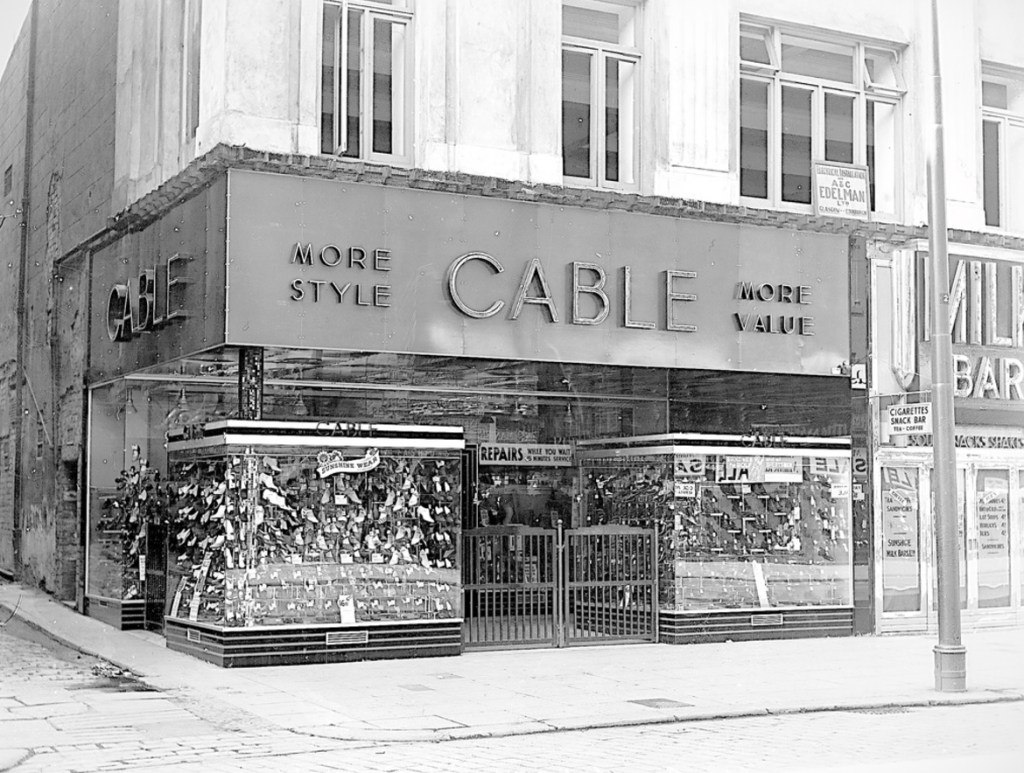
In 1906 a third brand appeared: Cable, for men and women, selling for 10s. 5d. (16s. 9d. by 1927). The name was taken from the maiden name of George’s wife, Isabella. Saxone & Cable, or simply Cable, became alternative names for the shops, especially in Ireland, Scotland and Wales. The Cable shop in Sackville Street, Dublin, was destroyed in the Easter Rising of 1916, and reopened as Saxone in 1921. Shops with the simple Saxone name usually traded exclusively in men’s footwear until the 1950s, when the Sorosis brand was dropped.
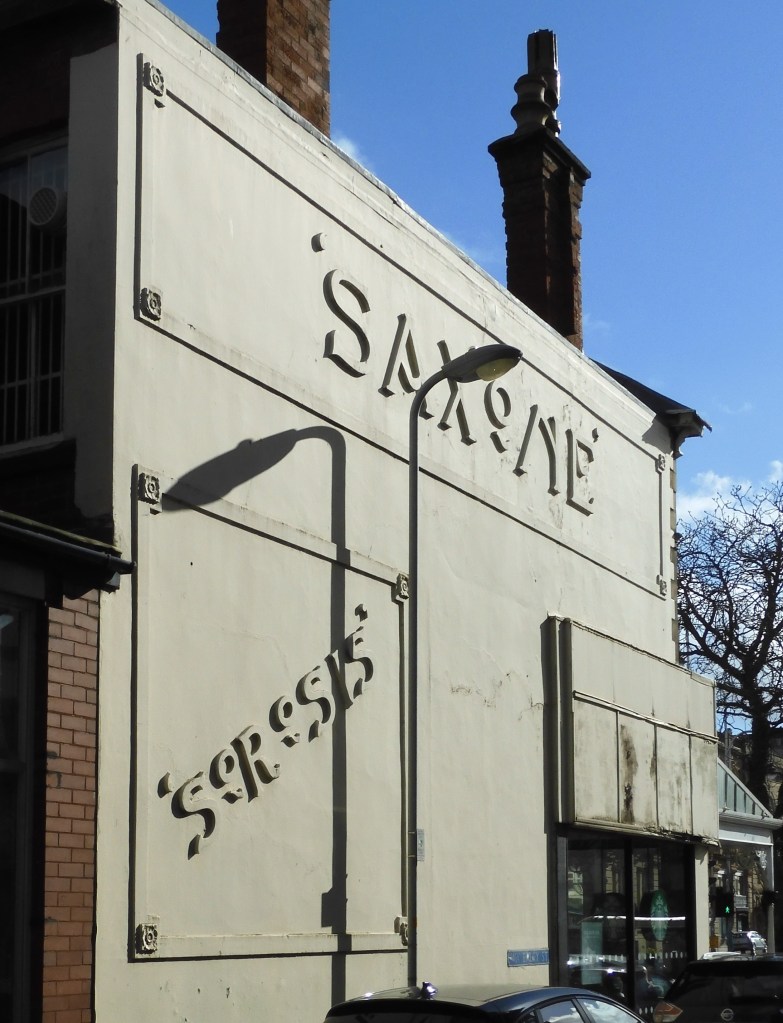
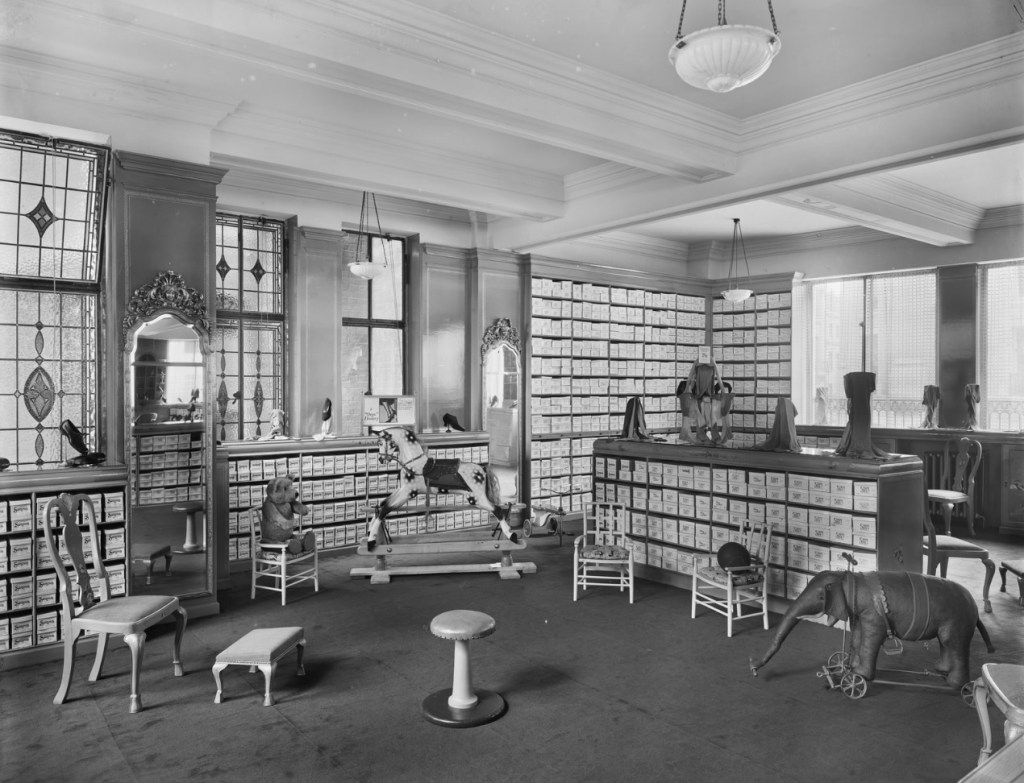
By 1921, the company’s 50 branches included Lord Street, Southport, where some original signage survives on a side elevation. Nationally, the finest branch was at 229-231 Regent Street, London. This had opened as Saxone in 1909 but was revamped in 1924 as Saxone & Sorosis, with showrooms on two floors connected by a lift. It had a sizable children’s department.
Photographs of the branch in Buchanan Street, Glasgow, dated April 1932, show workmen dismantling the elaborate Edwardian frontage. Here, Saxone & Sorosis was succeeded by a modern Saxone shop.

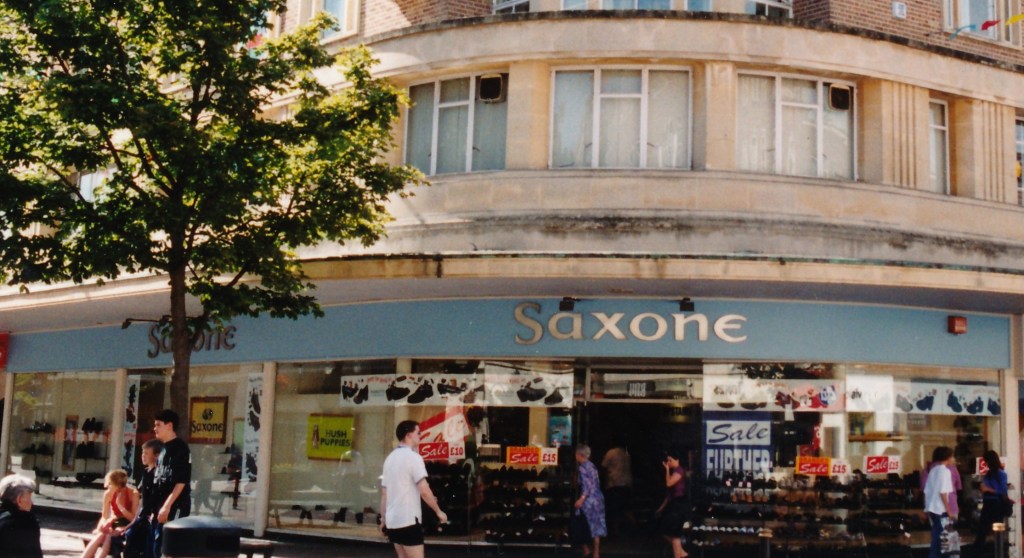
By the mid-1930s most branches had been remodelled with arcade shopfronts, providing space for extensive window displays. A masculine style was adopted, similar to that of men’s outfitters, with metal-framed showcase windows designed to look free-standing. Many shops now sported Saxone’s lion rampant logo, a reminder of the company’s Scottish heritage.
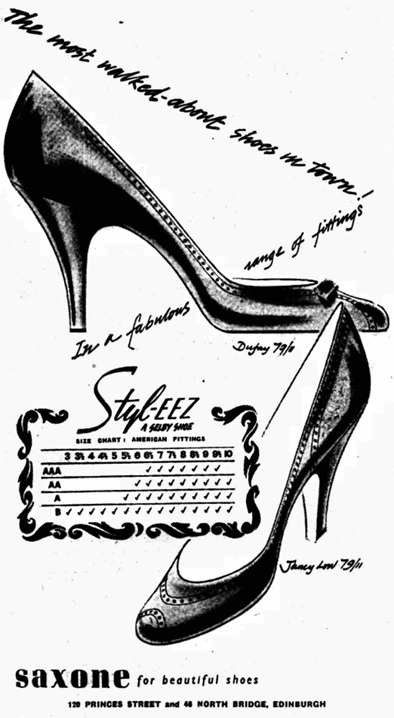
Saxone’s shops were supplied by a vast factory in Kilmarnock, which fulfilled contracts for the Services during both world wars, temporarily reducing availability for civilians. It was extended for the manufacture of women’s Styl-EEZ shoes, made under contract to the Selby Shoe Co. of Ohio, in 1949. The Kilmarnock factory operated until the mid-1980s, when it was superseded by the Galleon Leisure Centre.
In 1948, Saxone’s tally of 180 shops was swelled by the purchase of Jacksons Ltd., a Stockport-based chain of 46 shops. In January 1957 Saxone merged with Lilley & Skinner, which had recently swallowed up Benefit (the former Public Benefit Boot Co.). Together they had 470 shops, about half as many as Charles Clore’s recently formed British Shoe Corporation (Sears), which posed a new threat to the sector.
Much was made of Saxone’s new shops in the late 1950s. The branch at 399 Strand occupied the site of a famous restaurant – Romano’s – which had been destroyed in the Blitz. The two-storey shop was deeply recessed to create a spacious covered display area. Opaque glazing masking the upper level was festooned with silhouettes of women’s shoes. Above this, each letter of the word ‘Saxone’ – following a widespread current trend – was applied to individually illuminated panels, probably of Perspex. Similar ultra-fashionable shops were created elsewhere, for example in Sheffield. It was hoped that they would last 20 years: much longer than usual in the footwear trade.
The architect Michael Egan was commissioned by Saxone Lilley & Skinner to design interesting shoe shops. One of his finest façades survives in Leicester.
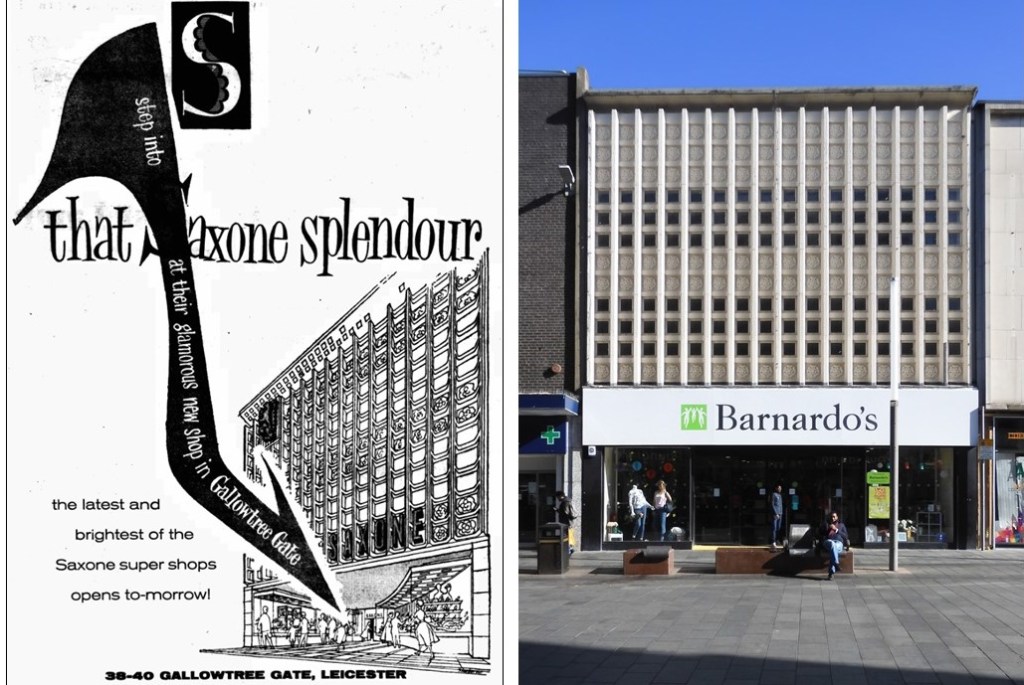
Egan also devised a system for cladding old buildings – such as Saxone’s Leeds and Luton branches – to create a modern impression quickly and inexpensively. These stores included vertical strips of green glass.

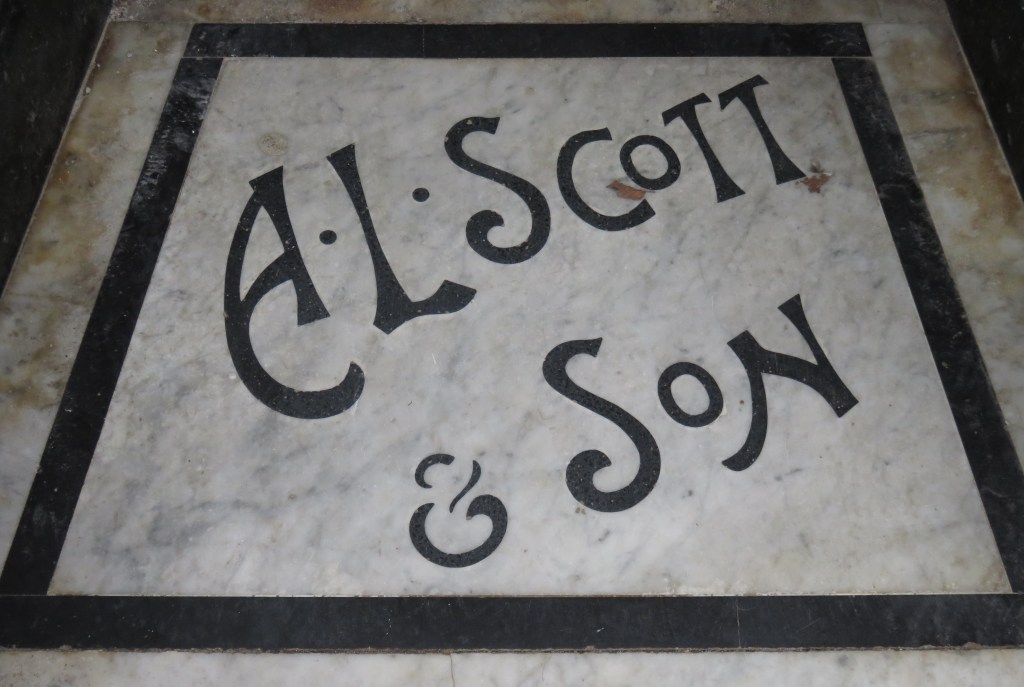
Saxone Lilley & Skinner expanded in 1961 by taking over the Scottish chain A. L. Scott & Son Ltd. Scott had started his career with Manfield, just like the Abbott brothers.
In 1962 the group was absorbed by the British Shoe Corporation and the shops were converted to semi-self-service, originally trialled by the group at Dolcis. One of Saxone’s first experiences of the new format was the ground floor of the remodelled Luton branch, which opened in October 1962.
As Sears entered its death throes in the early 1990s, Manfield’s chain – where the Abbott brothers had begun their career – was subsumed by Saxone. A few years later, Sears’ disposed of remaining Saxone shops, first of all to Fascia – a messy process – and then to Stylo (owner of Barratts). By the turn of the Millenium, just a handful traded under the Saxone name.
READ MORE about Saxone (and other boot and shoe chains) in Kathryn A Morrison, Chain Stores in the Golden Age of the British High Street, Liverpool University Press, 2025.

 Building Our Past
nice post, thankyou. so sad to think how many major retailers our high streets have lost. here in gloucester, got primark and h&m, but nowhere to buy a decent pair of trousers or shoes
LikeLike