St Ives (Hunts), once a bustling market town, has a number of historic shopfronts dating from the 19th and early 20th centuries. Many, however, have been altered over the years. For example, the vertical glazing bars have been cut away from the early Victorian shopfront at 20 Bridge Street, but the arched heads survive (compare 4 The Broadway). It may have inspired the design of two new shopfronts across the street.

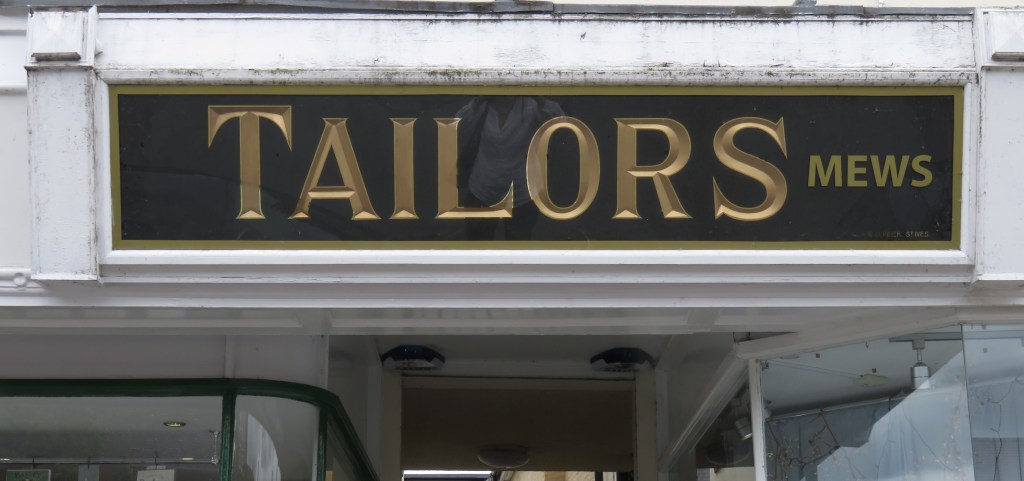
Moving into the early 20th century, a ‘Brilliant’ tailor’s sign — possibly renewed — has been exposed at 14 Market Hill, once the premises of Rowell & Son, tailors and outfitters. It is signed by W. O. Peek (born 1874), a local plumber, glazier and house decorator. The large display windows, fitted with curved glass, are typical of the trade.
Here are five more St Ives shopfronts which deserve a second look.
Prior’s (or Barton’s) Chemist’s Shop, 10 Bridge Street

The first chemist to trade from this property, Daniel Setchfield, died aged 56 in 1834. The house and business were then taken over by Thomas Prior (1804-71). As well as selling medicine, Prior stocked wine, sugar, tobacco and sheep ointment. It was a prosperous business.
Just six weeks before Prior’s death in 1871, the house and business were transferred to Henry Barton (1844-1921). Barton became an licensed agent for W. & A. Gilbey’s wines and spirits. Through the early 20th century, Barton’s son, Frederick Cooke Barton (1876-1953), ran the shop. It continued to trade as Barton’s until 1987, when Henry’s grandson, Kenderick M. C. Barton, retired. In recent years, it has been occupied by Oxfam.
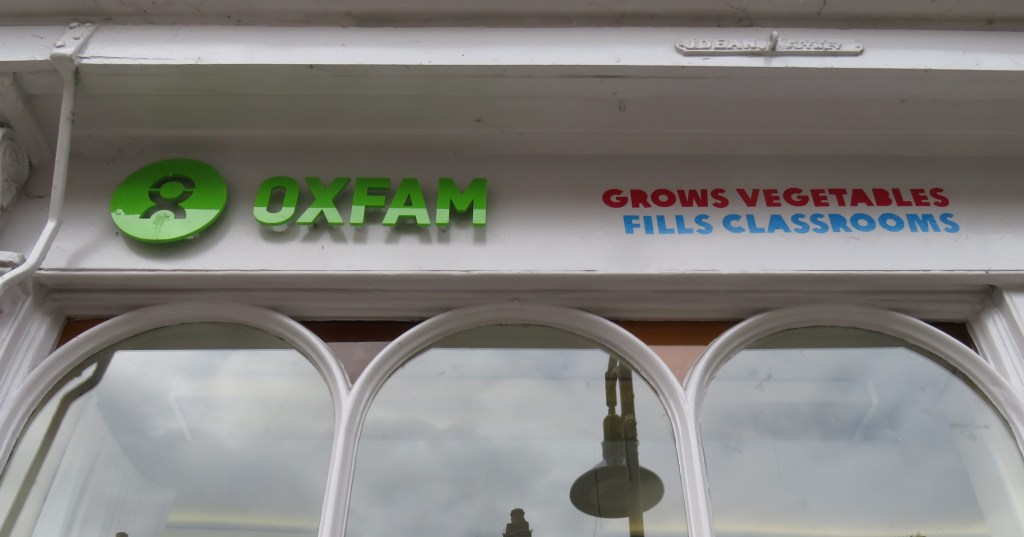
The lovely shopfront – offset to the right of the house doorway – probably dates from Prior’s time. With its round-headed arches, pinched glazing bars, amber-coloured spandrel glass and typical carboy shelf (originally concealed behind the horizontal glazing bar), it closely resembles a dated chemist’s shopfront in Lowestoft of 1851.
A colour photograph taken in the late 1960s shows that Henry Barton had added a metal stall plate bearing the words ‘Barton chemist’. A red enamelled Gilbey’s sign projected from the front while a more modern illuminated sign over the door advertised Ilford photographic film.
Read Adams’s (or Russell’s) Grocery Store, 12 The Broadway

In Victorian times these premises – recently a pizza restaurant, then a barber’s shop – occupied a desirable position on the north side of St Ives’ thriving Bullock Market. They belonged to a succession of retail and wholesale grocers and provision dealers. The buildings may have extended as far back as East Street, and included a large wholesale department and yard.
From the 1820s, if not earlier, the business belonged to Nix & Wasdale. In Matthew Wasdale’s later years it was assigned to a manager, first Mr Allett, then Mr Clayton. After Wasdale’s death in 1857 it was taken over by Read Adams. Read Adams (1832-1889) had the distinction of being elected first major of St Ives in 1874. Upon his death in 1889, George Russell (1851-1913) – Adams’ manager since 1873 – took over. The shop appears in photographs of c.1900 with a very large canopy on spindly supports extending across the pavement, a necessity in such a sunny spot. It remained in the hands of G. Russell & Son into the mid-1960s, when advertisements claimed the business was established in 1744.
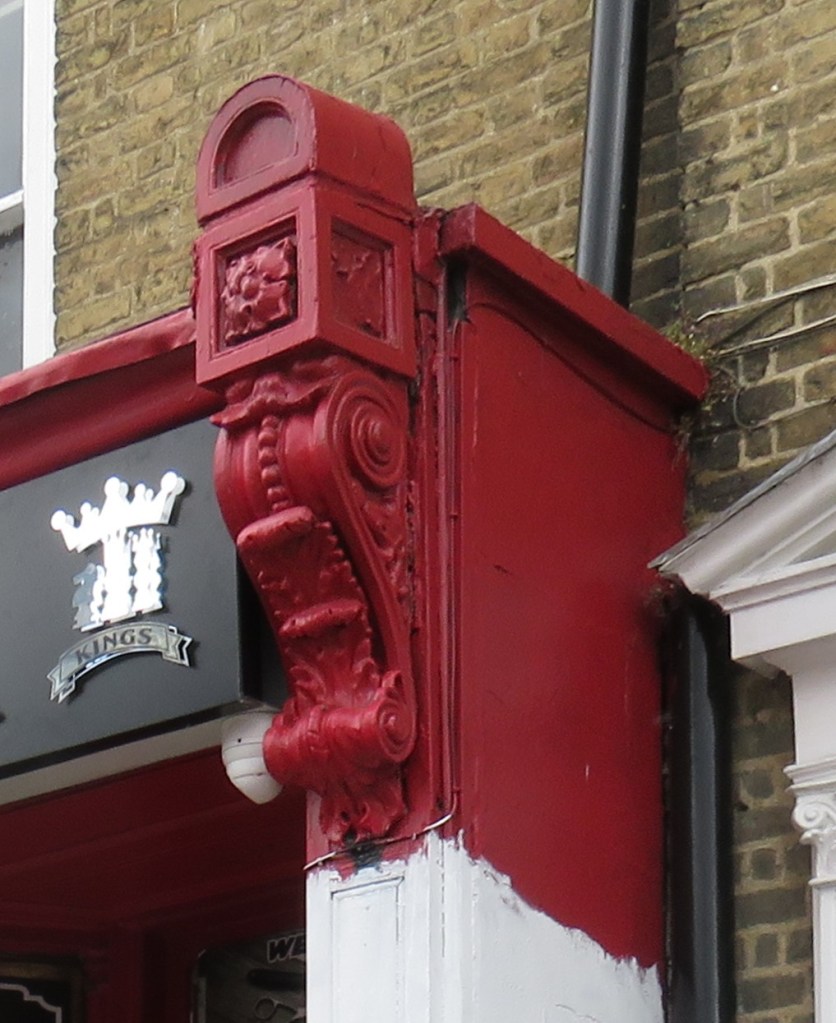
So, which of these successive occupants installed the handsome projecting shopfront? The rounded glazing bars with their small, moulded capitals, the relatively large panes of glass, and the integral entrance lobby, push the date into the second half of the 19th century, but it would have looked old-fashioned by the time Russell took over in 1889. The grilles beneath the window resemble those of 10 Bridge Street. The large scroll consoles with acanthus foliage decoration also find parallels in Bridge Street (nos. 10 and 18) and may represent the style of a local carpenter or shopfitter. All of this suggests that Read Adams installed the shopfront when he took on the business in 1857.
John Johnson’s Grocery Store, 23 Crown Street
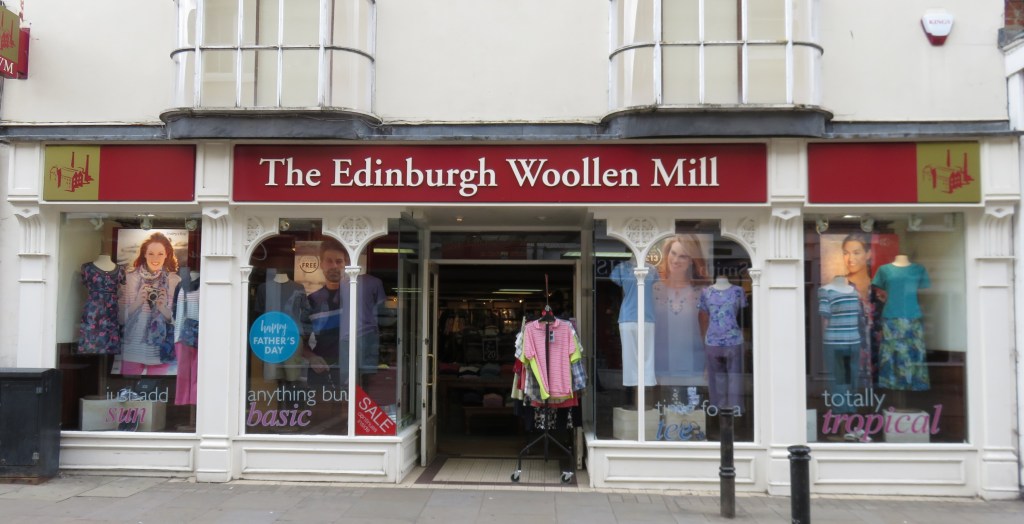
This attractive mid-Victorian shopfront appears to have been extended to either side with chunky consoles, perhaps in the 1980s, but the central section is clearly authentic.
It was installed by the grocer John Johnson (1820-1896), who began trading here between 1851 and 1861. The Johnson family lived over the shop before moving to Westwood Road in the 1880s. From his obituary, we know that Johnson was a staunch supporter of the Congregational Church.
Johnson’s business was continued into the 20th century by his son, Alderman John Johnson (1873-1944), a prominent Freemason, but by the 1920s Johnson’s (St Ives) Ltd. was managed by the London grocers F. C. and R. Eaton. In the 1960s, it was taken over by Northampton grocers G. Civil & Sons Ltd., who renamed the shop – perhaps now extended and reconfigured as a supermarket – Civils. The Civils chain was bought by the South Midlands Co-op in 1988. Later occupants of 23 Crown Street included Freeman Hardy & Willis and Edinburgh Woollen Mill.
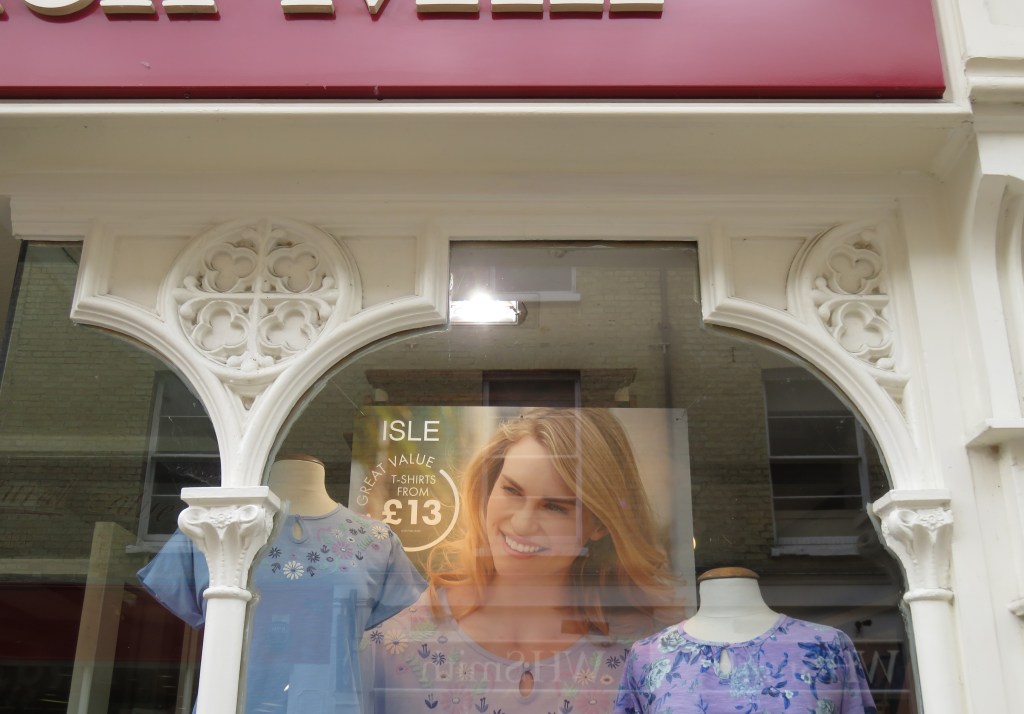
The shopfront, dating from c.1880, has spandrels and capitals in a Gothic – even ecclesiastical – style. The Caernarvon arch was popular in shopfront designs of the 1870s and 1880s, featuring in guides like Joseph Barlow Robinson’s Series of Suggestive Designs for Shop-Fronts of a Plain & Elaborate Character suitable for every trade or occupation (1869). The style expressed the substantial and reliable character of Johnson’s business.
H. Anderson Jnr., 12 The Waits

This shopfront obviously belonged to a butcher. The tiled stallriser includes a fine tube-lined panel depicting a cow in a chequered border, together with two smaller blue-and-white transfer-printed panels (almost portraits!) of a pig and a ram.
The butcher’s name – H. Anderson Jnr. – is displayed vertically to the side of the doorway, possibly to ensure that it was not hidden by carcasses hanging over the shopfront.
The Anderson family were publicans, farmers and butchers. The first butcher in the dynasty, John Anderson (1829-1895), was publican at the Horse & Jockey. When John completed the Census of 1871, he squeezed an admirable amount of information into the small box available for ‘occupation’, writing: ‘Farmer, Publican, Pork Butcher and Pig Dealer. Employs 3 men 3 boys. Farms 225 acres of land.’
John’s son Edward (1861-1947) – who served three terms as mayor – opened a pork butcher’s shop at 12 The Waits in November 1883. He lived over the premises with his family, and his son Edward died there aged 33 in 1918.
By 1921 the shop had been taken over by Edward’s nephew, Harry (1900-1961), who had trained as a butcher before serving in the RAF in 1918. It was Harry (whose father – of Westwood Farm – was also called Harry) who installed the shopfront, probably in the early 1920s.
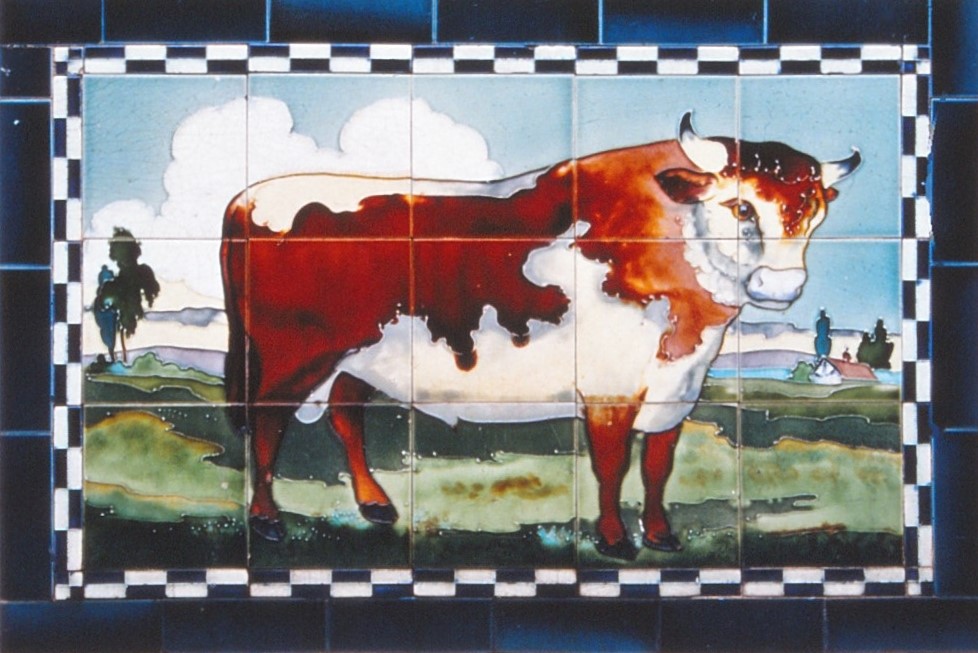
Harry was still living over the premises with his family in 1940, when a photograph of him was taken, showing that the shop window was closed by folding perforated shutters rather than glass. By 1999 they had been superseded by wide sash windows.
Harry retired in 1954 and the subsequent history of the shop is uncertain. It became Mr E’s in 1999 but was converted to offices (Pitts Architects) just a few years later.
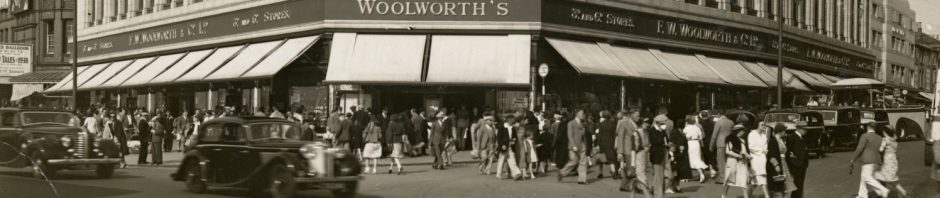
F. W. Woolworth & Co. Ltd., 19 Bridge Street
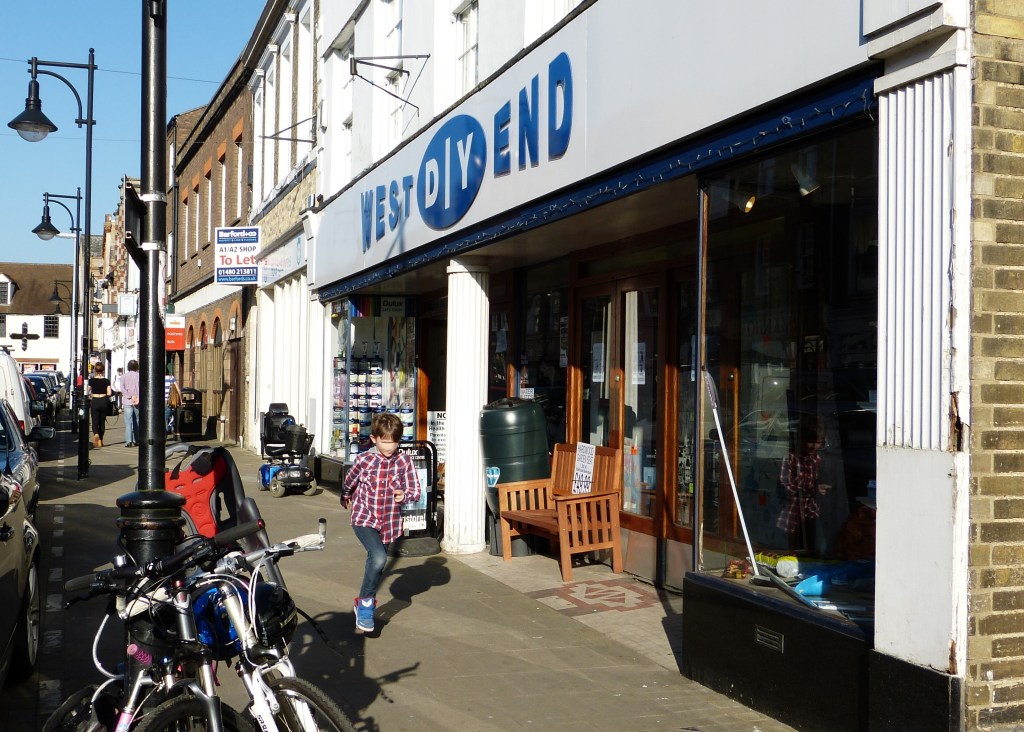
West End DIY, a small Northampton-based DIY chain, has traded from this former Woolworth’s store since c.1988. It is to be applauded for retaining the shopfront. The authenticity of its details is confirmed by images in the Historic England Archive.
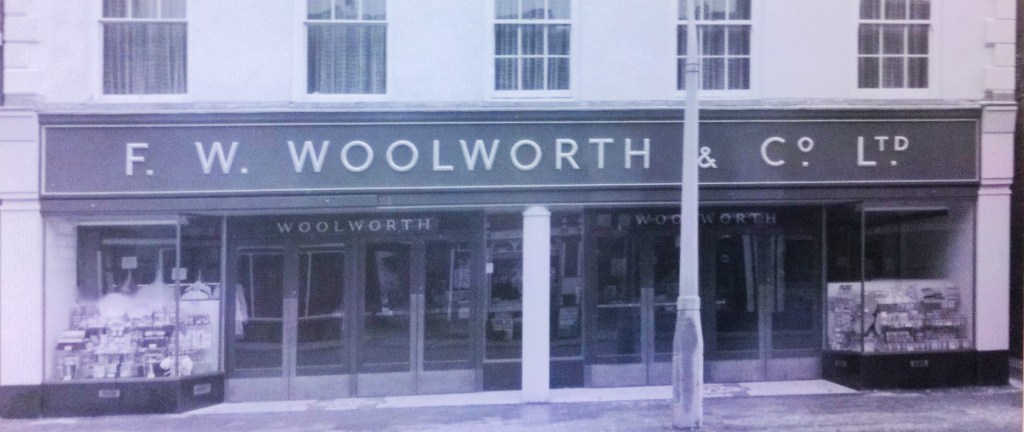
This was not one of F. W. Woolworth’s impressive portfolio of pre-war ‘3d. and 6d.’ stores. It opened as Store 869 in 1955, shortly after post-war building regulations had lifted, and did not fully comply with the firm’s house style.
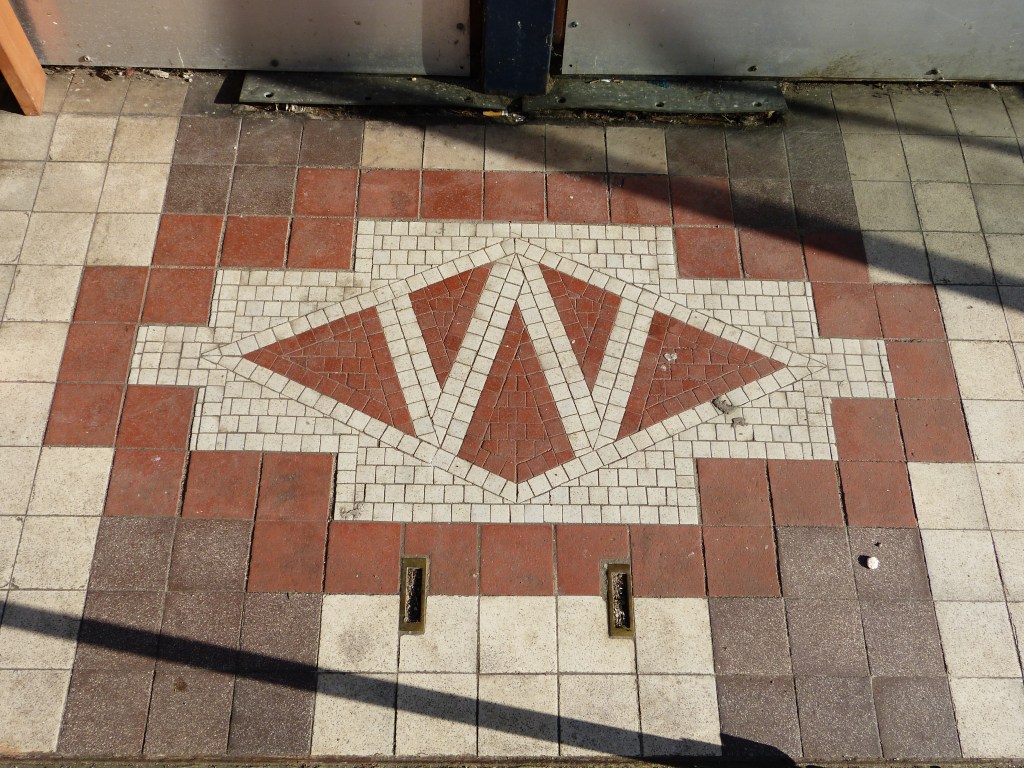
A structural column with fluted decoration (matched in the end pilasters) allowed the entrance to be recessed behind the building line. Most of the shopfront is taken up by wooden doors with kick-plates – Woolworth’s would soon prefer stainless steel — but small display windows were installed at either end. Their angled shape helped to filter customers towards the entrances. The most distinctive feature is the tiled floor, with its unusual version of Woolworth’s famous ‘diamond W’ logo.
In 1981 Woolworth’s relocated to 17 Crown Street, where it remained until the collapse of the company in 2008. Meanwhile, 19 Bridge Street is reported to have traded (briefly) as a Shoppers World (Woolworth’s catalogue format) before being taken over by West End DIY.
Text copyright K. Morrison. No AI scraping permitted.

 Building Our Past
nice post, thankyou. if you are ever in the area, go look at the next shop in abergavenny. think it dates from the early burtons tailors era. great it still exists
LikeLiked by 1 person