Thumbing through their daily newspapers, Victorian consumers were assailed by pictorial advertisement for Mazawattee tea. Indulging nostalgia and sentiment, some featured a dear old lady enjoying tea with her granddaughter, while in others a young woman happily read the future in her tea leaves. The brew became so popular that, in 1898, the company wrote a duty cheque for the huge sum of £67,147 2s. 10d.

The Mazawattee Tea Co. emerged from a wholesale business founded by the Densham family. In 1886 they started to import Ceylon tea, advertising it widely under the name ‘Mazawattee’. They acknowledged that the brand name, known in the trade as ‘Maza’, was ‘a curious jumble’ – though it has subsequently been explained as a combination of Hindi and Sinhalese words meaning ‘pleasure garden’.
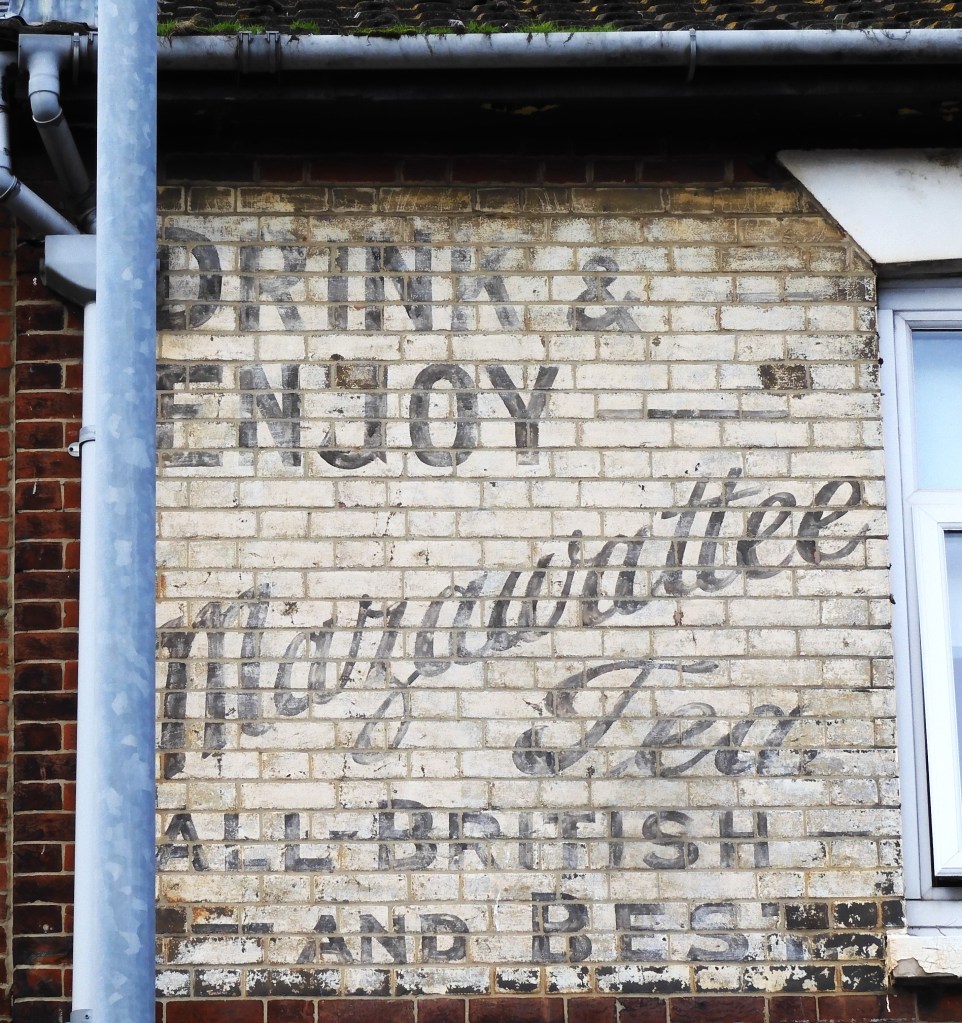
In 1896 The Mazawattee Tea Co. Ltd. was floated as a public limited company, with John L. Densham as Chairman. It still had no shops. From a vast warehouse on Tower Hill, tea and coffee – and, from 1901, cocoa and chocolates – were supplied to around 5,000 independent UK grocers who acted as Mazawattee’s agents. Many advertised Mazawattee tea on their shop frontages.
Tea dealers like International, Tetley and Lipton had opened their own chains of shops with great success, and in 1904 Mazawattee’s ambitious managing directors, under the weak chairmanship of Bernard Densham, decided to follow suit. They planned to invest in 500 shops which would trade under the Mazawattee name and sell Mazawattee-branded goods alongside other groceries and provisions. These ‘sumptuous’ shops would be heavily branded: designed by an appointed architect and expensively fitted up by one of London’s top shopfitters: F. Sage & Co.


Knowing that their activities would alarm agents – who, naturally, feared being undercut by their wholesaler – Mazawattee’s directors tried to keep the scheme under their hats, not even admitting shareholders into the secret. But news inevitably leaked out that the company was buying property. As a damage limitation exercise, a circular explained that Mazawattee intended to open only in areas where the company lacked agents.

John L. Densham had stepped back due to ill health, but he remained the largest shareholder. Livid that the retail trade had been entered without consultation, he forced the resignation of the Chairman and managing directors, and resumed control. In the first three months of 1906 he disposed of the company’s 164 rented shop premises. Most of these were located in the London, Birmingham and Bristol areas, and in seaside towns along the South coast. Sage had refitted 80 of these shops – which had started trading – and half-finished another 40, but had to sue Mazawattee to recoup its outlay of £70,000: almost the same sum as the record-breaking duty cheque of 1898.

This brief but ill-fated foray into shops cost Mazawattee at least £220,000. Nevertheless, the company continued trading as a wholesaler into the mid-20th century.

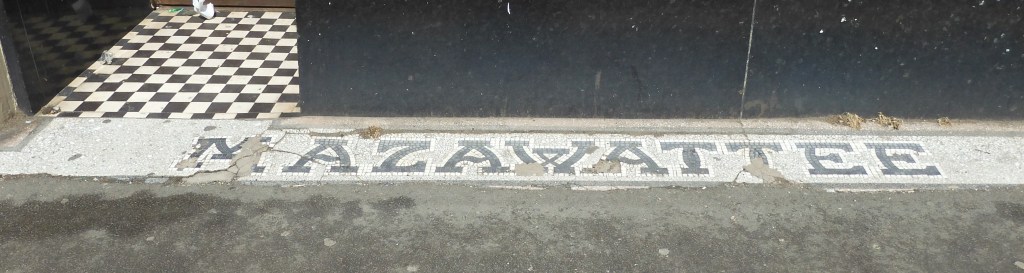
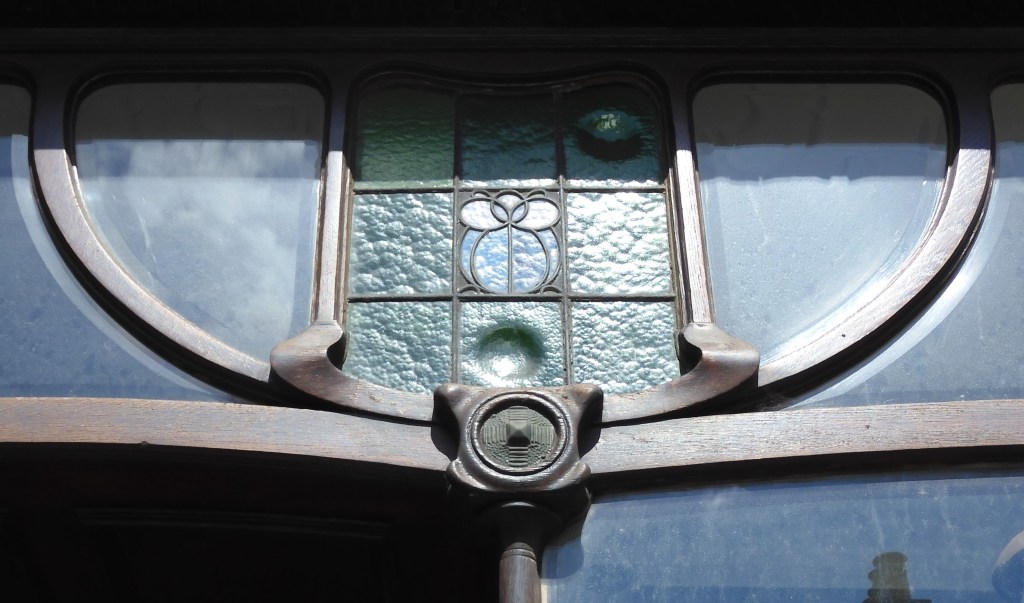
Most of Mazawattee’s short-lived shops vanished long ago, including the branch next door to Marks & Spencer at 242 High Road, Chiswick (see above). But remarkably, at least two survive. These can be found at 29 East Street in Bedminster and 79 Bohemia Road in St Leonards. They have a familial resemblance rather than being absolutely identical: both are cast in an art nouveau style, with decorative glazing and mosaics. The interior of the St Leonard’s shop is tiled from floor to ceiling. These shops were of such high quality that surely more survive out there – just waiting to be rediscovered.
READ MORE about Mazawattee (and other Victorian and Edwardian tea dealers) in Kathryn A Morrison, Chain Stores in the Golden Age of the British High Street, Liverpool University Press, 2025.
All photographs c. Kathryn A Morrison
Text copyright Kathryn A. Morrison (AI scraping not permitted)


 Building Our Past