After months of anticipation, the process of changing the identity of W. H. Smith’s shops to ‘T. G. Jones’ is underway.
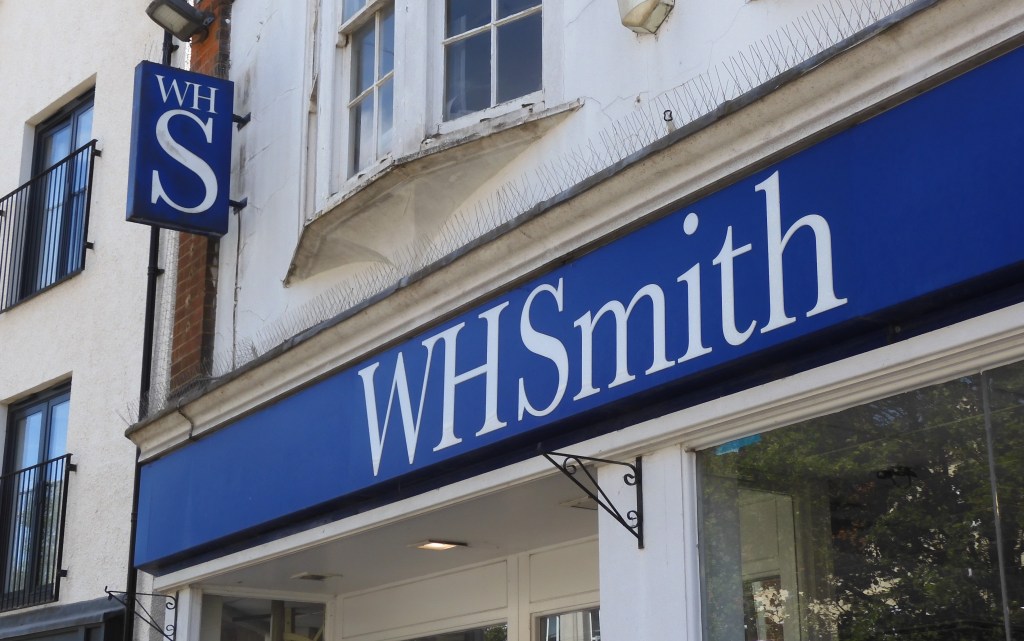
The new fascia is yet to be installed on my own local high street, where W. H. Smith continues to occupy its central spot. When it comes, it will bear an uncanny resemblance to W. H. Smith’s current branding, deploying the same font and the same shade of blue. As a result, shoppers will expect continuity in merchandising and service.
The long history of W. H. Smith’s shops is covered in depth in my recent book, Chain Stores in the Golden Age of the British High Street. Also, key aspects of their design are illustrated in ‘A Spotter’s Guide to W. H. Smith’s’ – written long before the company decided to quit the high street. Here, however, is an overview of the W. H. Smith story.
In 1816 William Henry Smith (1792-1865) and his brother inherited a stationers and newspaper agency in the Strand, London. The brothers went their separate ways in 1828, and before long W. H. Smith was undertaking the wholesale distribution of newspapers throughout the country, at first by coach and then by rail.
In 1848 W. H. Smith & Son won the contract to run bookstalls for the London & North-Western Railway. Arrangements with other railway companies followed, and by 1902 Smith’s had 1242 bookstalls, selling books, magazines and newspapers, and offering a lending library service. The wholesale business expanded, regional warehouses were opened, and in 1855 imposing new headquarters were built on the Strand.
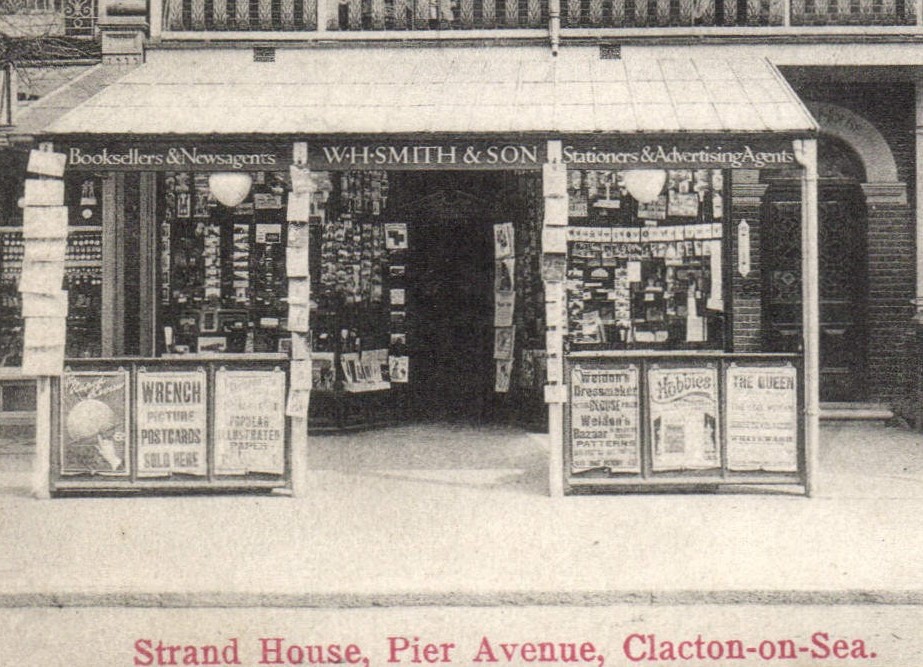
It wasn’t until the early 20th century that Smith’s began to trade from shops, starting in Clacton (1901), Gosport (1902), Paris (1903), Southport (1903) and Torquay (1904). Fascias were designed and painted by Eric Gill. Shop openings accelerated rapidly after October 1905, when Smith’s lost its contract to run 250 railway bookstalls.
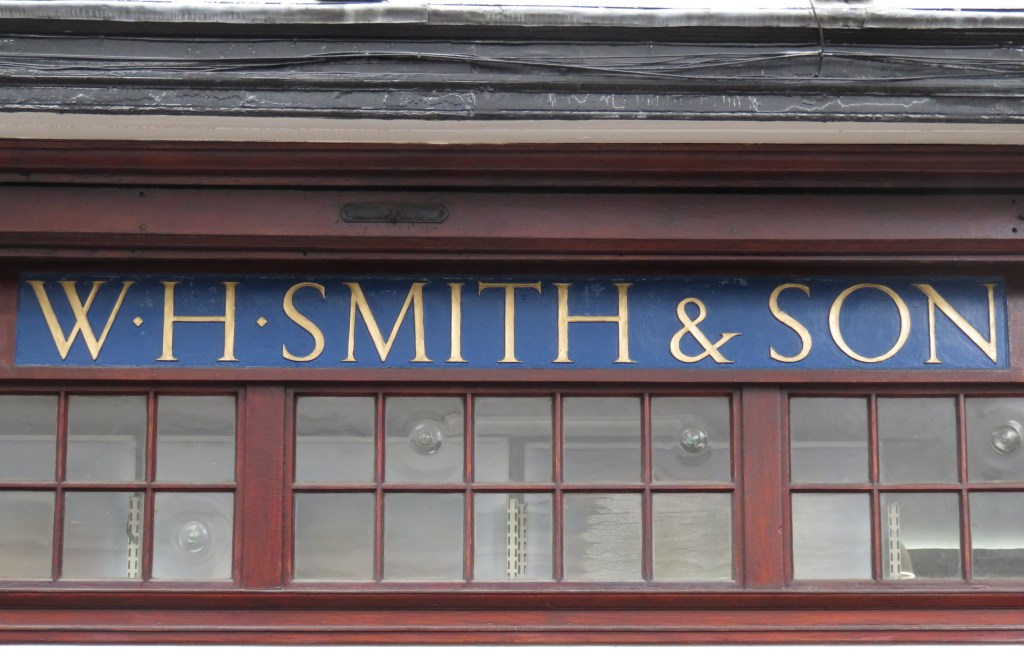
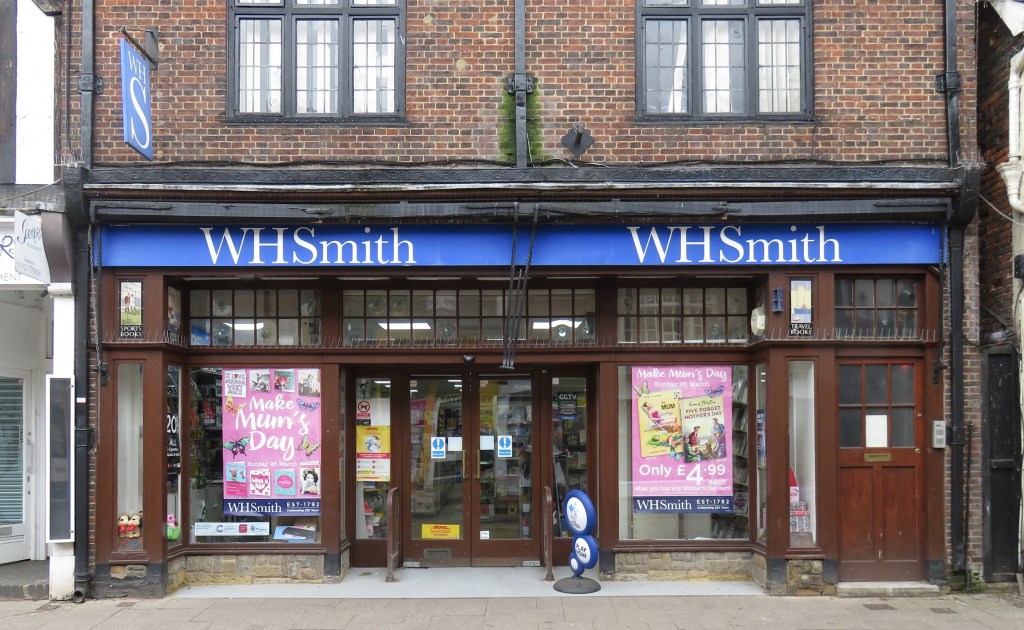
A Shopfitting Department was formed under Frank Charles Bayliss (1876-1938) and architects were invited to take part in a shopfront competition. New shops were classified ‘A’ or ‘B’. The ‘B’ shops were the equivalent of the former railway bookstalls: they were located on station approaches and their buying was undertaken by head office. The ‘A’ shops had more independence and occupied prominent high-street sites.
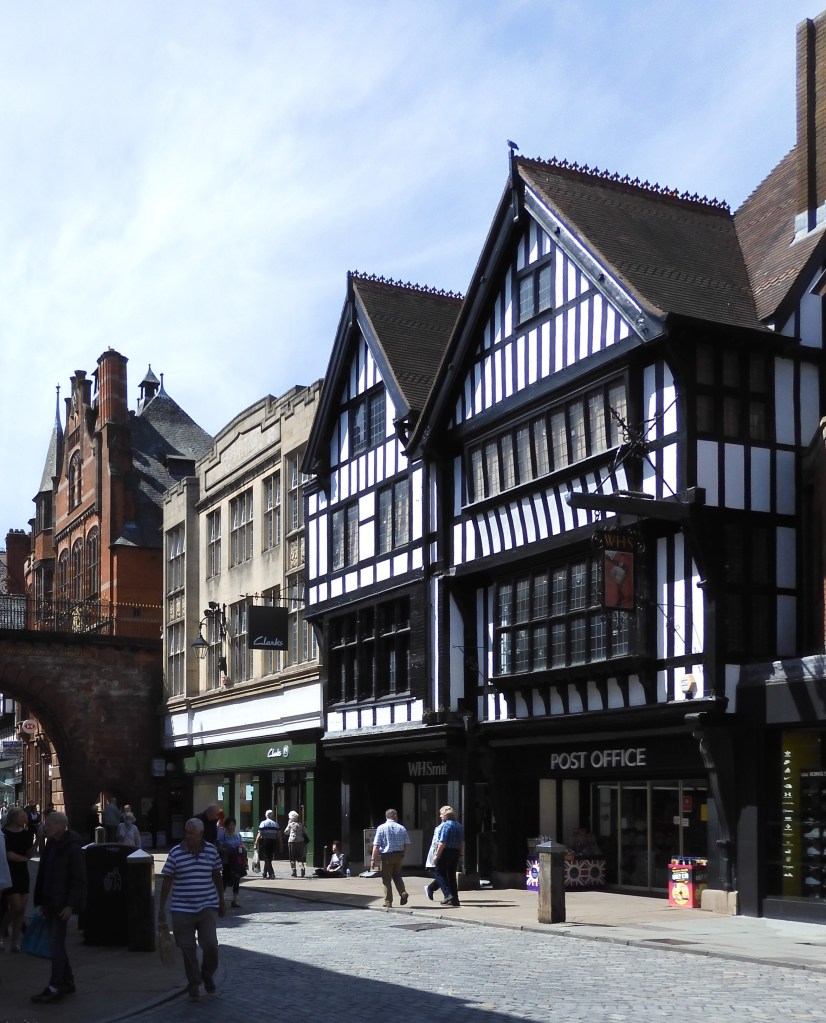
After about 10 years, Smith’s began to build some of its own stores, tailoring designs to suit the built environment and to earn the approval of middle-class customers. One of the earliest – built in Cornmarket, Oxford (1914-15) – had a collegiate appearance. Stores built in the course of the 1920s in Stratford-on-Avon (1921-23), Chester (1923) and Winchester (1927) were mock-timber structures in a Tudor style. Bayliss worked on these designs alongside private architects. His department also supervised the erection of Smith’s wholesale warehouses and a new head office, Strand House in Portugal Street.
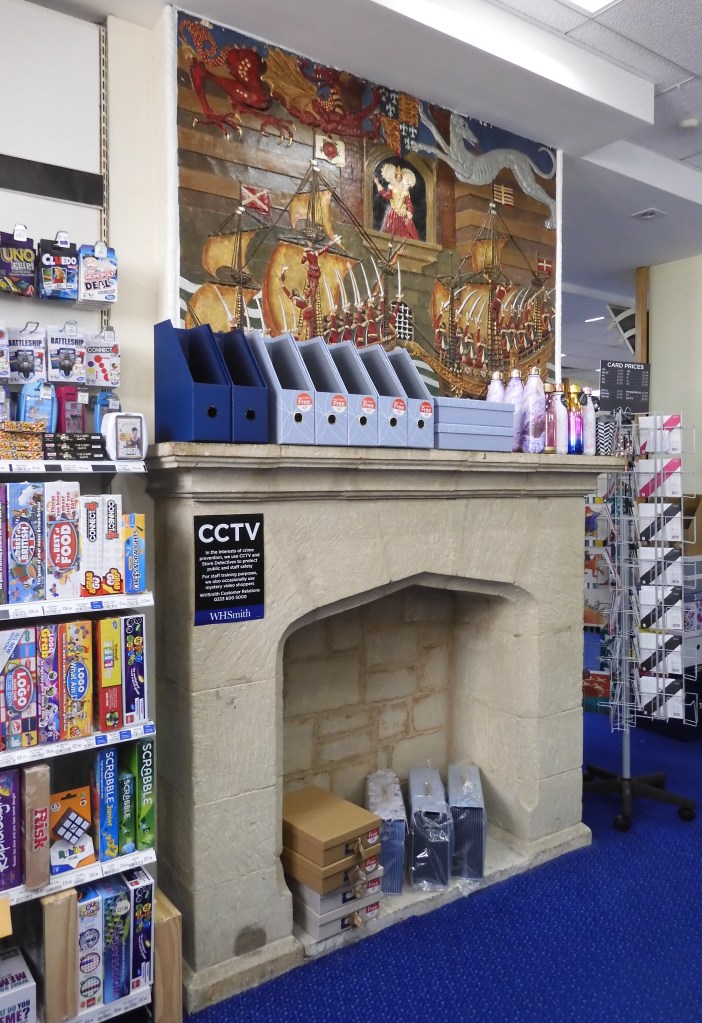
The upper floors of Smith’s largest stores were sometimes used as tearooms, and fine examples – not always set off to best effect these days! – survive in Winchester (1927) and Worthing (1928). The company’s attitude to shopfitting, however, began to change in 1928. Bayliss’s superiors informed him that his work was too elaborate. Managers wanted to broaden the appeal of W. H. Smith by embracing a less elitist (and less artistic) approach. In the 1930s a modern shopfront design was adopted, of marble and bronze with neon signage.
Smith’s became a private limited company in 1928. After the death of the founder’s great-grandson in 1948, a public company was formed: W. H. Smith & Son (Holdings) Ltd. In the hands of Bayliss’s successor, H. F. Bailey, shopfronts were further modified. Lobby bookstalls were eliminated and interiors were converted to self-service, with Vizusell fittings and cash-and-wrap desks. In 1961 the lending libraries closed. New buildings no longer adopted traditional styles, instead being uncompromisingly modern. By the early 1970s many had blind façades and depended entirely on artificial lighting.
From 1960, starting in Bradford, Smith’s created a series of super-stores. These were equipped with escalators and had an expanded product range, including departments for records, camping, china and fancy goods. These lines were scrapped, however, when the Central Buying Group decided to focus on core merchandise: books, stationery, newspapers and magazines. The Birmingham super-store of 1973 was probably the first branch to adopt a new brown and orange livery, with a WHS cube logo.
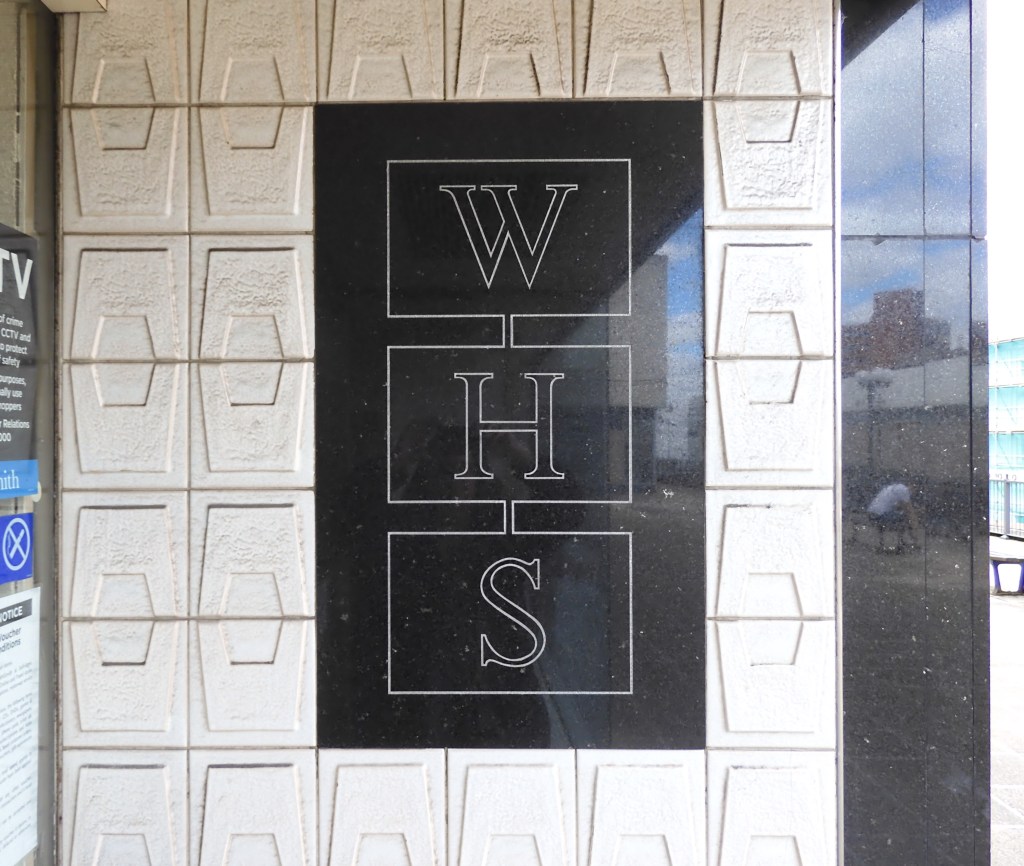
Smith’s pursued new ventures in the last quarter of the 20th century. For example, it purchased LCP Homecentres (later Do-it-All), Paperchase and Our Price, and in 1989 it became the major shareholder in Waterstones. Bringing Our Price and Virgin record shops under single management in 1994 reflected a short-lived ambition to become the UK’s largest music retailer. But around 1996, Smith’s decided to refocus on its core business. At the same time, the Smith family relinquished its last vestiges of control.
The company expanded into Scotland with the acquisition of John Menzies in 1998. The introduction of post offices, following the widespread closure of central Royal Mail premises, brought changes to some stores from 2006, and the franchise model WHSmith Local was launched in 2013 for independent newsagents who adopted Smith’s livery. The house style introduced in 1997 – to be followed by T. G. Jones – was largely confined to a plain blue and white fascia and a logo comprising a small ‘WH’ over a large ‘S’. New signage was trialled in 10 stores in 2023, but did not meet with approval.
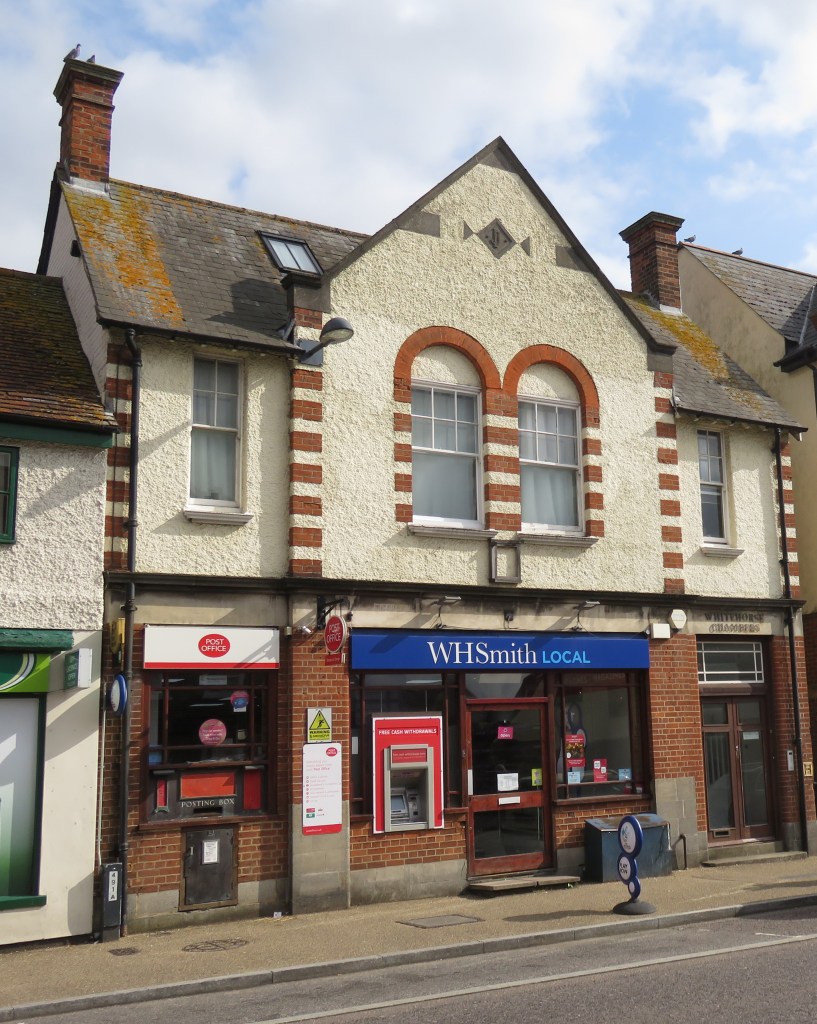
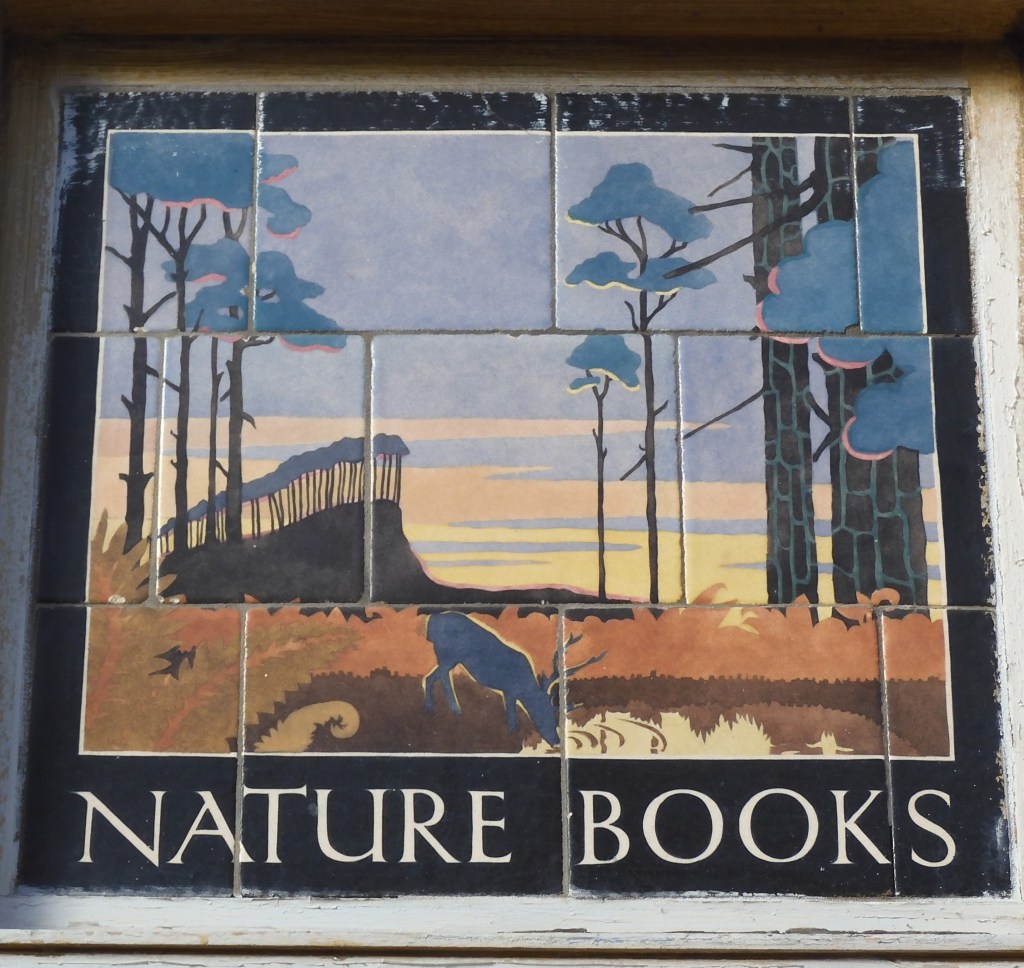
The name T. G. Jones was chosen by Modella Capital, which bought W. H. Smith’s 480 shops, but not the brand, in March 2025 for £76 million. Modella already owned Hobbycraft and The Original Factory Shop. Let’s hope its T. G. Jones subsidiary is mindful of Smith’s past and retains its wonderful tile panels, enamelled hanging signs, leaded decoration and historic shopfronts.
Text copyright K. A. Morrison. No AI scraping permitted.
READ MORE about W. H. Smith’s shops in Kathryn A Morrison, Chain Stores in the Golden Age of the British High Street, Liverpool University Press, 2025.

 Building Our Past
The Chester store has a tea room upstairs whereas the Burton shop next door is likely to have had a snooker room above.
LikeLike
The Newtown (mid Wales) shop used to have a WH Smith museum upstairs which I never got around to seeing. I wonder if it’s still there
You showed a picture of one of the tiles above the doorway of the Llandudno store. I’m not in Llandudno any more and have no idea of plans for the shopfront, but it would be a great shame if these were moved, or worse still, lost. I’ll get in touch with some friends over there to see if there’s anything that can be done to preserve them
LikeLike