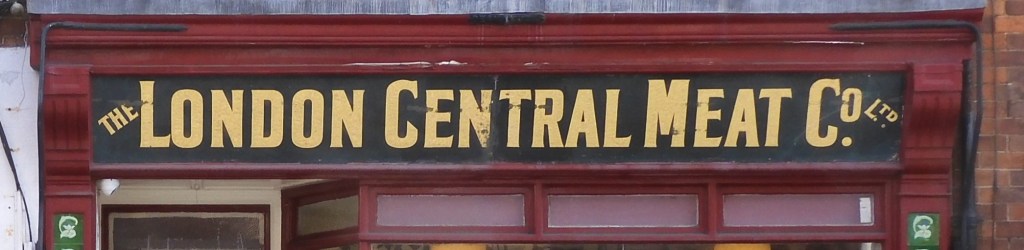
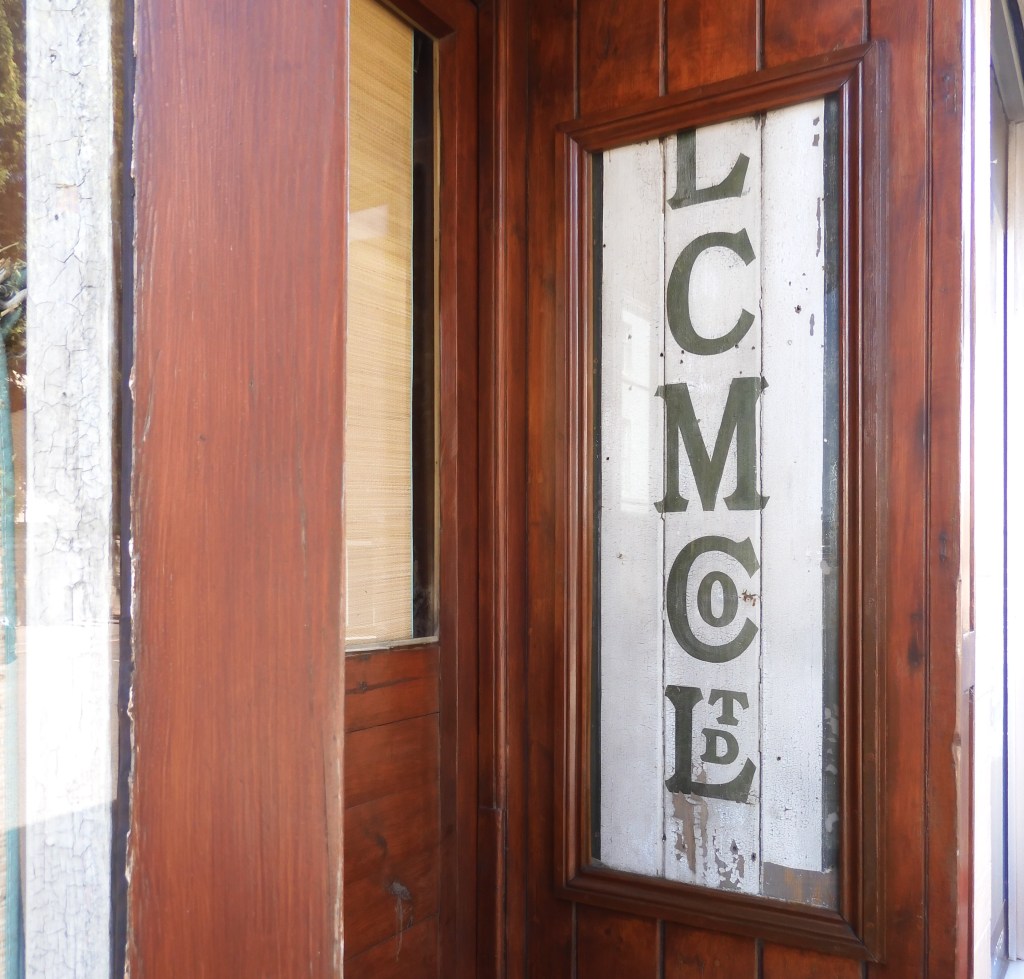
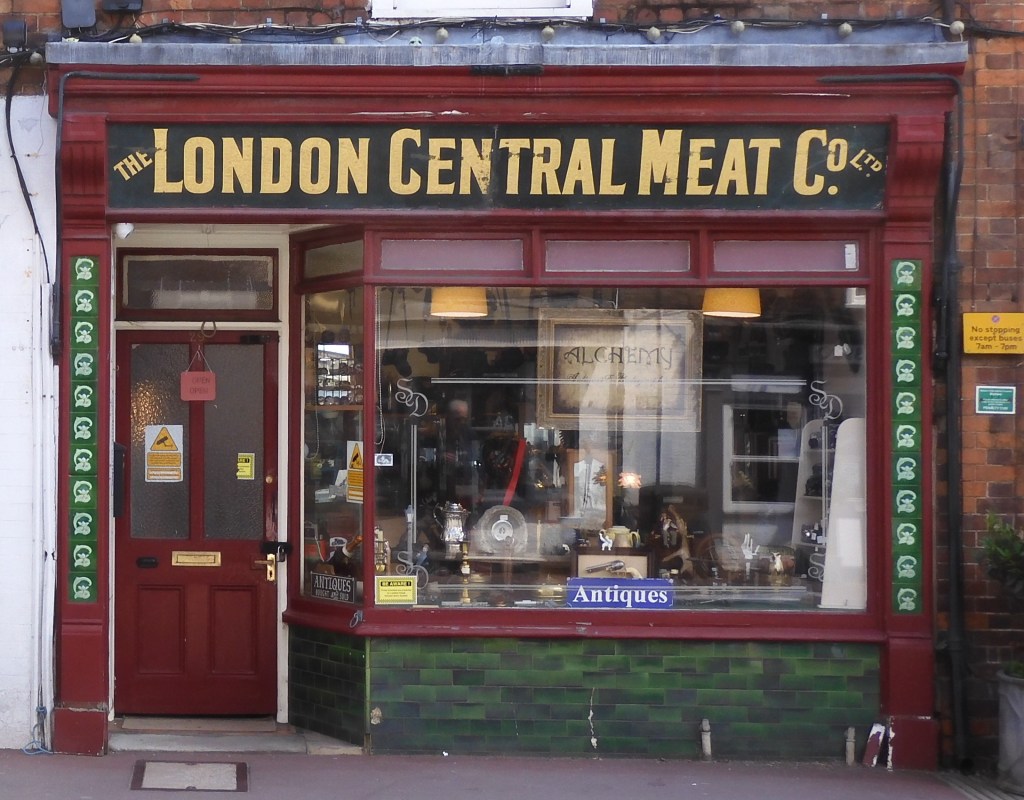
The London Central Meat Co. Ltd., renamed Baxters in the 1950s, was one of England’s biggest multiple butchery chains. Traces of its highly branded shops – ofter the simple initials ‘L. C. M. Co. Ltd.’ – can still be discovered on the edges of town centres.
The company was started around 1880 by George Edwin Lowe, a carpenter who made an unusual career move by opening a butcher’s shop in his hometown of Burton-on-Trent and market stalls in neighbouring towns, such as Tamworth. Business took off once Lowe began to specialise in New Zealand (‘Canterbury’) lamb, which was heavily advertised on his shopfronts.
The sailing ship Dunedin carried the first shipment of 4,460 sheep and 449 lambs from Otago to London, arriving on 24 May 1882. The meat was sold at Smithfield, and it is tempting to imagine that Lowe was one of the first customers. The name he selected for his shops, The London Central Meat Co., must have been taken from the full name of Smithfield Market: the London Central Meat Market. It suggested official status, instilling confidence in customers.
Lowe’s business multiplied quickly. By 1895 he had shops throughout the South and Midlands. One of Lowe’s employees was Herbert Lea, a former coal miner who was working as a butcher’s assistant in Northampton by 1891. The following year the London Central Meat Co. opened its first Northampton branch, on Gold Street, and it is likely that Lea applied successfully to run it. He quickly became indispensable to Lowe, standing in as best man at his wedding in 1905. When Lowe retired around 1915, having made a large fortune, Lea took up the reins. In later years, he cast himself as a co-founder of the company.
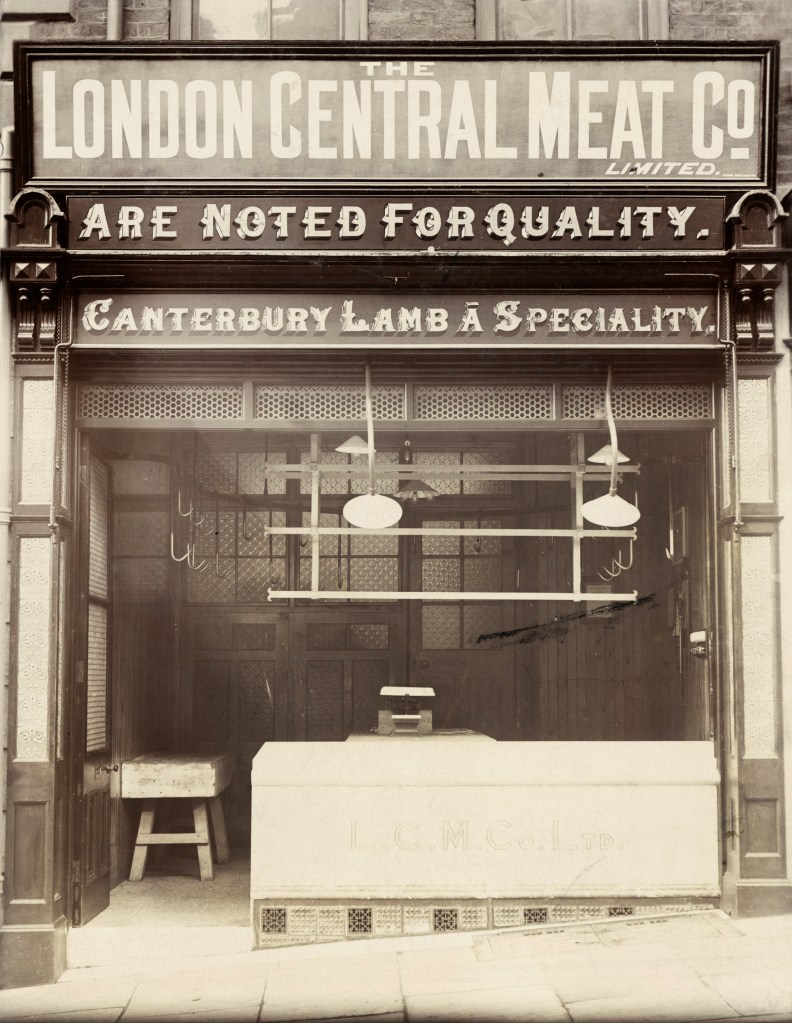
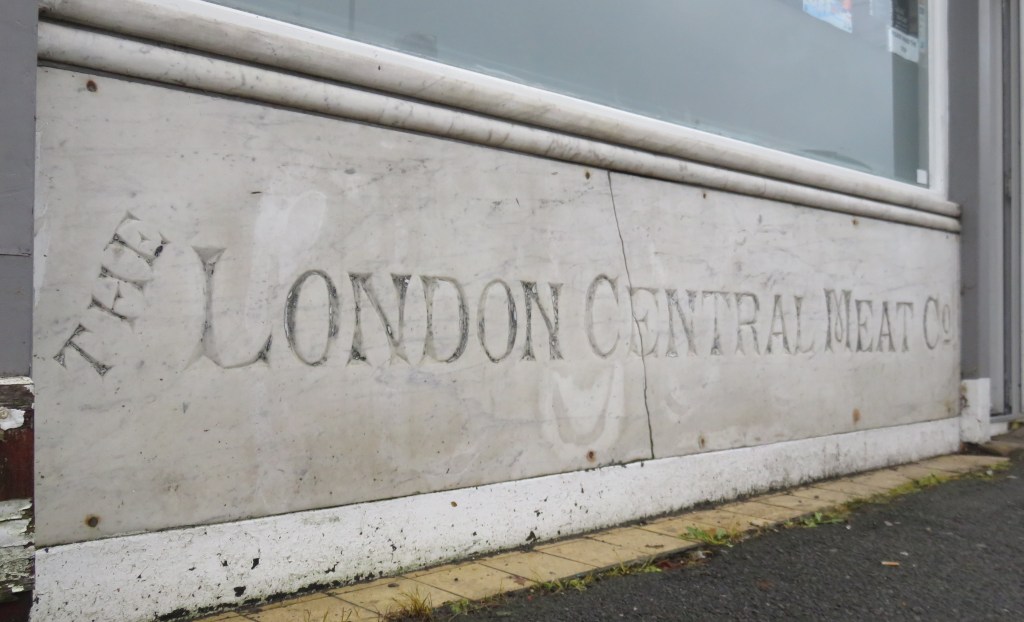
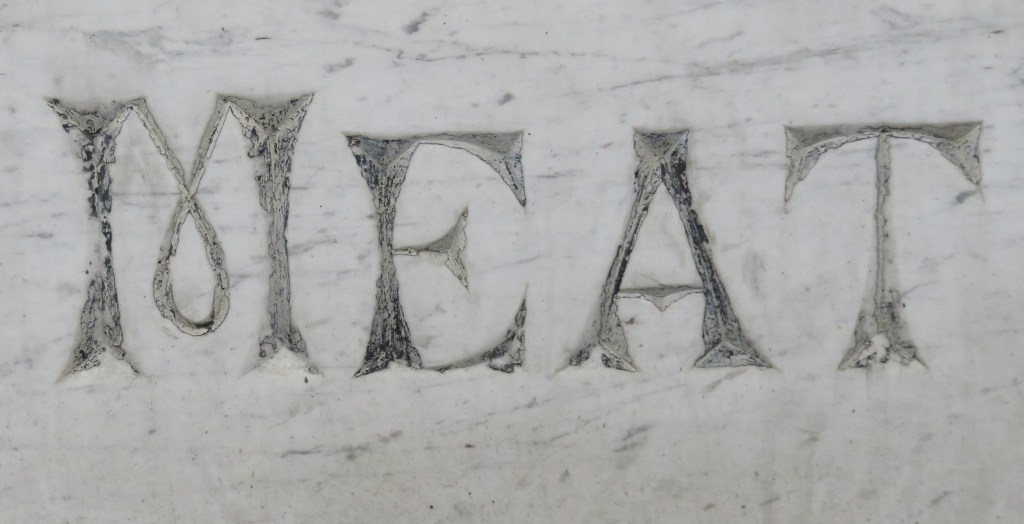
Early shops, for example in Shrewsbury, resembled market stalls. They were open to the street: perforated doors and shutters could be lifted out, leaving just a solid counter with a marble slab. Behind this was a chopping board and weighing scales, while hooks for carcasses lined the walls. The name or monogram was engraved onto the front of the counter (or stall) as well as being squeezed onto wooden signboards.
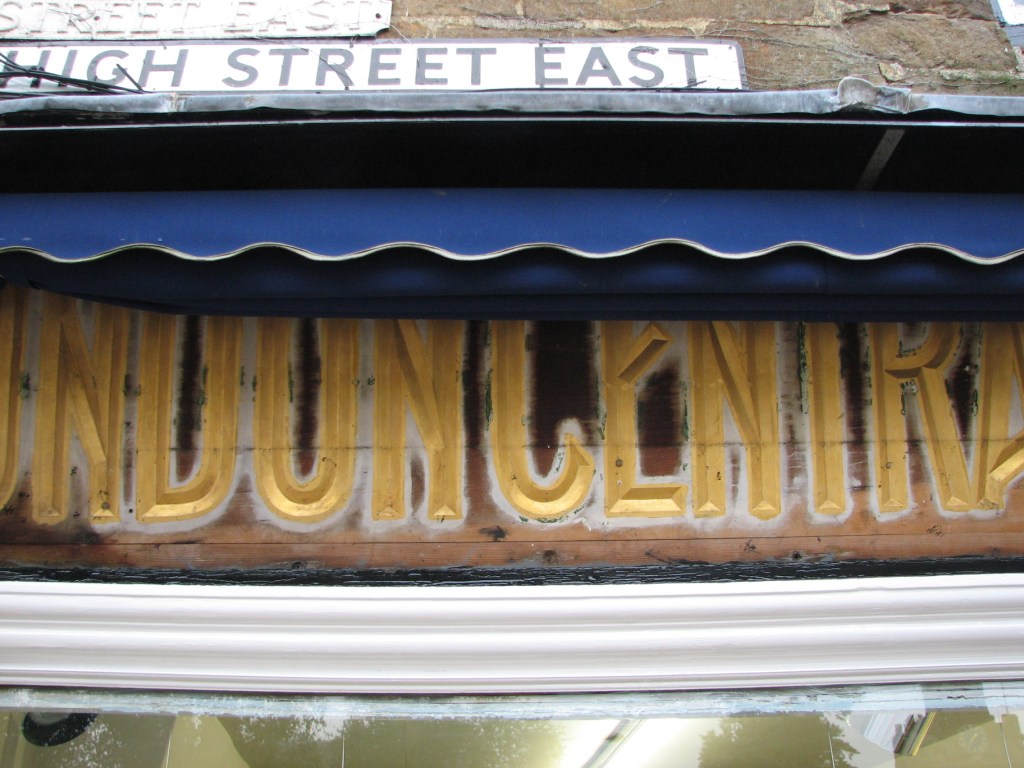
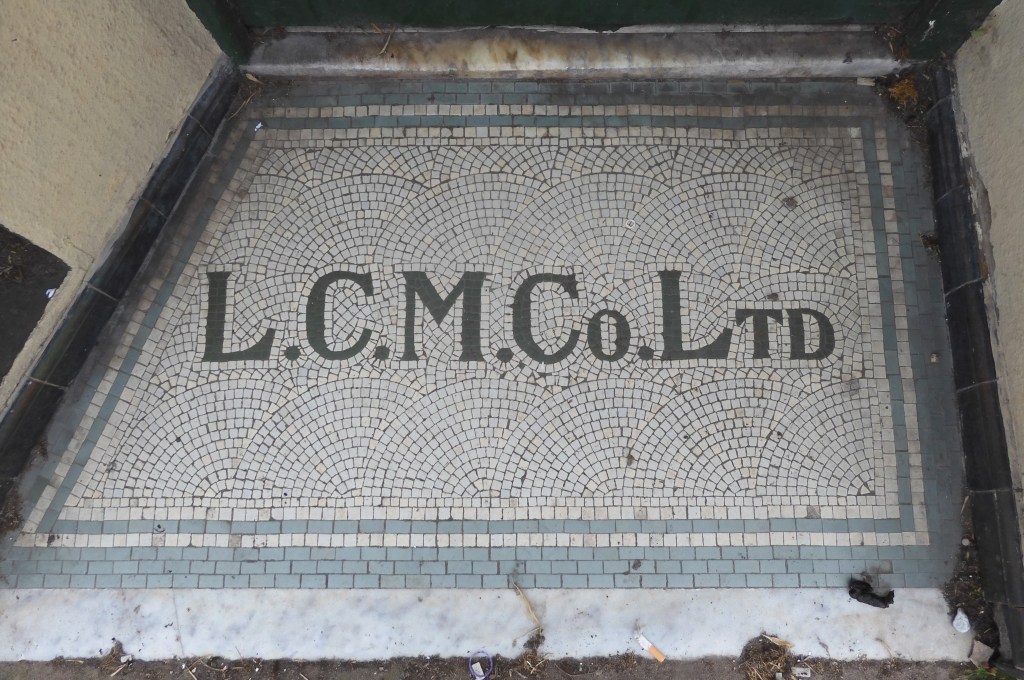
There was no clearly defined house style and the company sometimes retained existing frontages. It was only in the 1920s that glazed windows became standard, with the company monogram repeated in mosaic tiles on the paving of entrance lobbies.
Lea’s son-in-law, Arthur Spencer Baxter, became managing director in 1933 and made the company his own. Although it was renamed Baxters (Butchers) Ltd. in 1958, new and remodelled shops equipped with refrigerated cabinets had been trading under a ‘Baxters’ fascia, with simple red lettering, since the mid-1950s, when meat rationing ended and expansion resumed.
By 1963, Baxters had 403 branches in a geographic area defined as ‘south of a line drawn from the Mersey to the Humber but excluding London, Birmingham, South Wales and Cornwall’, with the head office in Northampton. A subsidiary, Lea & Baxter Ltd., was invested with the wholesale business, the slaughterhouses, the cold stores and the meat processing plants. It supplied meat to government departments and local authorities, including hospitals, and retailed processed meat under the ‘Lea & Baxter’ brand.
Baxters had a large property portfolio. In 1963 it held the freeholds to 244 of its 403 branches, leased 97 shops to other retailers, and owned 248 houses or flats which were mostly occupied by employees. Property with an estimated value of £2,250,000 brought in an annual rental income of £42,714.
The company was still growing and profitable in 1974, when it was acquired by Brooke Bond Liebig, which also owned PG Tips, Fray Bentos and Oxo. In 1984 Unilever took over Brooke Bond, including Baxters, which now had 400 loss-making shops. Seeking to recoup the cost of the takeover, Unilever sold Baxters to United International (the Vesteys), which merged it with Dewhursts.
When Dewhursts entered receivership in 1995, Baxters was still listed as one of its many trading names.
Text copyright Kathryn A. Morrison (AI scraping not permitted)
READ MORE about multiple butchers in Kathryn A Morrison, Chain Stores in the Golden Age of the British High Street, Liverpool University Press, 2025.


 Building Our Past
Pingback: The London Buzz – 28th July 2025