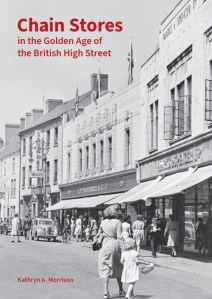
 Chain Stores in the Golden Age of the British High Street (Liverpool University Press, 2025)
Chain Stores examines the history of multiple retailing through the prism of its shops and stores, arguing that gigantic enterprises like Marks & Spencer, Woolworths and Burton created the character of Britain’s modern high streets. Now, with an upturn in online and off-centre shopping, that character is under threat as never before.
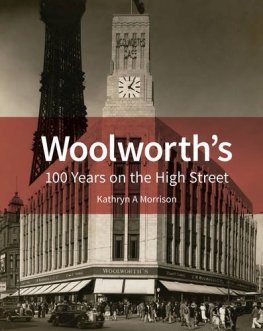 Woolworth’s: 100 Years on the High Street (Historic England, 2015)
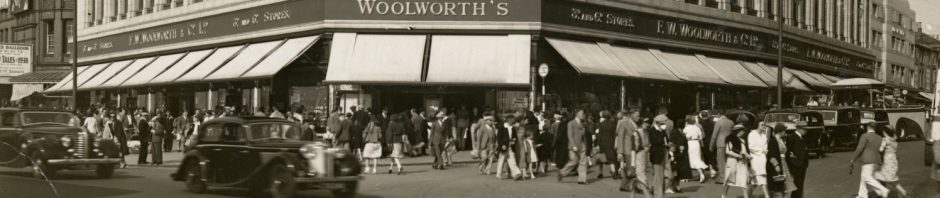
This is a history of Woolworth’s century-long domination of high streets throughout England, Ireland, Scotland and Wales, seen through its stores. Between 1909 and 2008 Woolworth’s opened over a thousand stores, many built to designs by the company’s own architects. The high point was the 1930s, when Woolworth’s embraced a confident art deco style. Click here for 8 classic features to help you recognise an old Woolworth’s store.
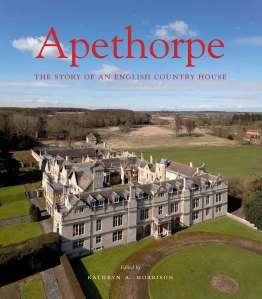 Apethorpe. The Story of an English Country House (Paul Mellon Centre for British Art with Historic England, Yale University Press, 2016)
Apethorpe Hall (Apethorpe Palace) in Northamptonshire was a desperate ‘Building at Risk’ case in 2004, when English Heritage took the site under its wing and began an extensive repair programme. This saved the glorious Jacobean interiors and offered a unique opportunity to research and investigate a significant country house in detail.
Also see:
- ‘Apethorpe Hall and the workshop of Thomas Thorpe, master mason of King’s Cliffe: a Study in Masons’ Marks’, Architectural History: The Journal of the Society of Architectural Historians of Great Britain, 50, 2007, 59-94.
- ‘The Long Gallery Portraits of Apethorpe Hall, Northamptonshire’, English Heritage Historical Review, vol 4, 2009, 36-53.
- Yale Books blog Apethorpe – a House Fit for Kings, and Queens, 10 June 2016.
- Heritage Calling blog The Hidden History of Apethorpe, 14 June 2016.
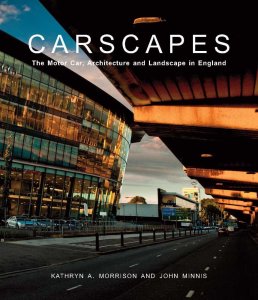 Carscapes: the Motor Car, Architecture and Landscape in England (Paul Mellon Centre for British Art with English Heritage, Yale University Press, 2012)
Carscapes examines how the motor car has wrought enormous changes on our urban and rural landscapes over the last 120 years. It covers the full range of new building types invented to cater for cars and drivers, from factories and showrooms to car parks and scrap yards. It also looks at how cars – and roads constructed for cars – transformed our countryside and towns.
Also see:
Buildings and Infrastructure for the Motor Car, an Introduction to Heritage Assets published by Historic England.
Carscapes was shortlisted for the Art Book Prize 2014 and the Alice Davis Hitchcock Medallion 2014, and won the following awards:
- Railway & Canal Historical Society Book of the Year and Road Transport Book of the Year 2013.
- Michael Sedgwick Award awarded by the Society of Automotive Historians in Britain in 2013.
- Peter Neaverson Award for Outstanding Scholarship awarded by the Association for Industrial Archaeology in 2013.
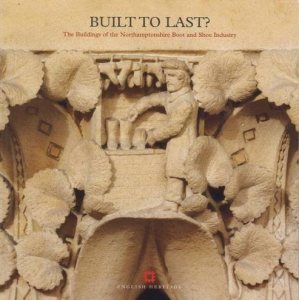 Built to Last? The Buildings of the Northamptonshire Boot and Shoe Industry (English Heritage, 2004)
Built to Last? looks at the architectural heritage of the once-thriving boot and shoe industry of Northamptonshire. It is out of print, but a free copy can be downloaded here.
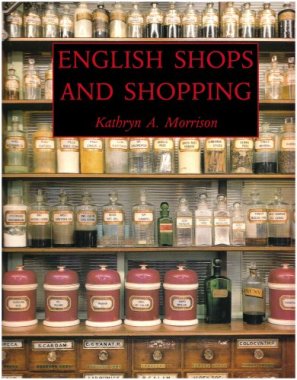 English Shops and Shopping: An Architectural History (Paul Mellon Centre for British Art with English Heritage, Yale University Press, hard cover 2003, paperback 2007).
A study of our shopping heritage covering medieval shops and markets, independent shops, department stores, co-operatives, multiples, arcades, bazaars, market halls, supermarkets, malls and retail parks. It received the Alice Davis Hitchcock Medallion (2004) from the Society of Architectural Historians of Great Britain, and won the RIBA Book Prize (2005).
Also see:
‘Bazaars and Bazaar Buildings in Regency and Victorian London’, Georgian Group Journal, 2006.
Shopping Parades, an Introduction to Heritage Assets published by Historic England.
‘England’s Shopping Parades. An Introduction to an Everyday Building Type’, Historic England Research, issue 3, 2016.
Heritage Calling blog 8 Historic London Shopfronts, 2 December 2016.
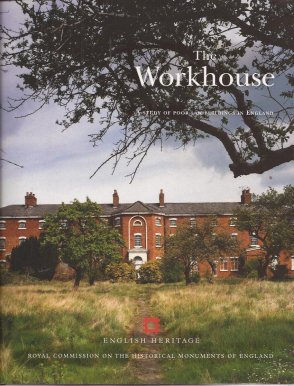 The Workhouse: A Study of Poor-Law Buildings in England (English Heritage, 1999)
This book emerged from a project undertaken in the 1990s by the Royal Commission on the Historical Monuments of England (RCHME), to identify and record hospital buildings throughout England at a time when many were closing.
The primary output was English Hospitals, 1660-1948: A Survey of their Architecture and Design (1998), edited by Harriet Richardson. The Workhouse, which followed a year later, established a narrative for the evolution of poor-law institution sites.
Also see:
‘The English and Welsh Workhouses of George Wilkinson’, Georgian Group Journal, 2004.
The Red House (Workhouse) in Framlingham Castle, Historic England Research Report.
For further information on individual poor-law sites visit The Workhouse Website by Peter Higginbottom.
For further information on hospitals visit Harriet Richardson Blakeman’s blog, Historic Hospitals.


I worked for the company who have a shop at 33 Wardour Street (Buildings & infrastructure for cars Figure 11). The first floor with the big window was then the Wag club, but I saw a photo once showing this as the display window of the Lanchester car showroom. The basement too showed signs of ramps and such like. Not aware that above first floor had been parking, but who knows.
LikeLike