Arndale Shopping Centres were amongst the best-known post-war developments in Britain, symbolic of progress and economic rebirth. However, they were routinely scorned by architectural critics and developed a tawdry reputation.
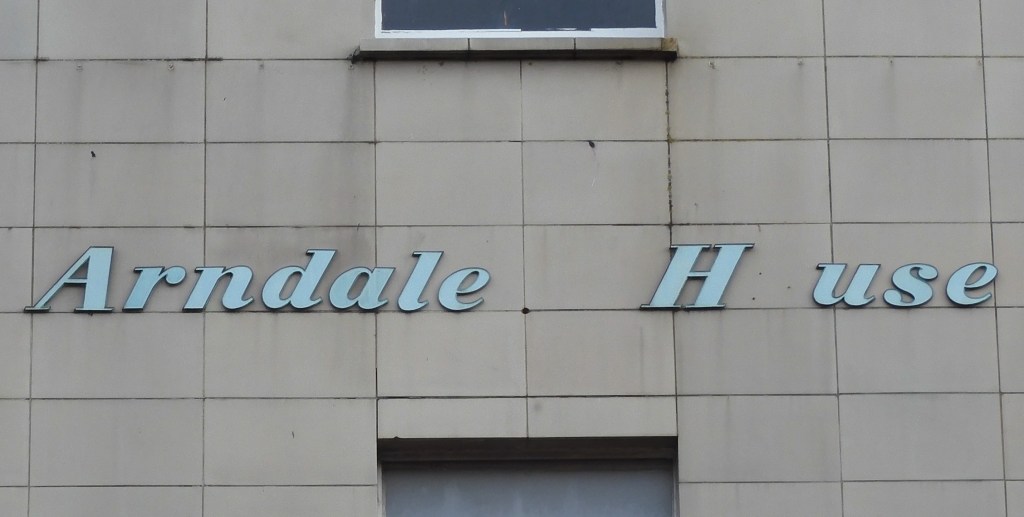
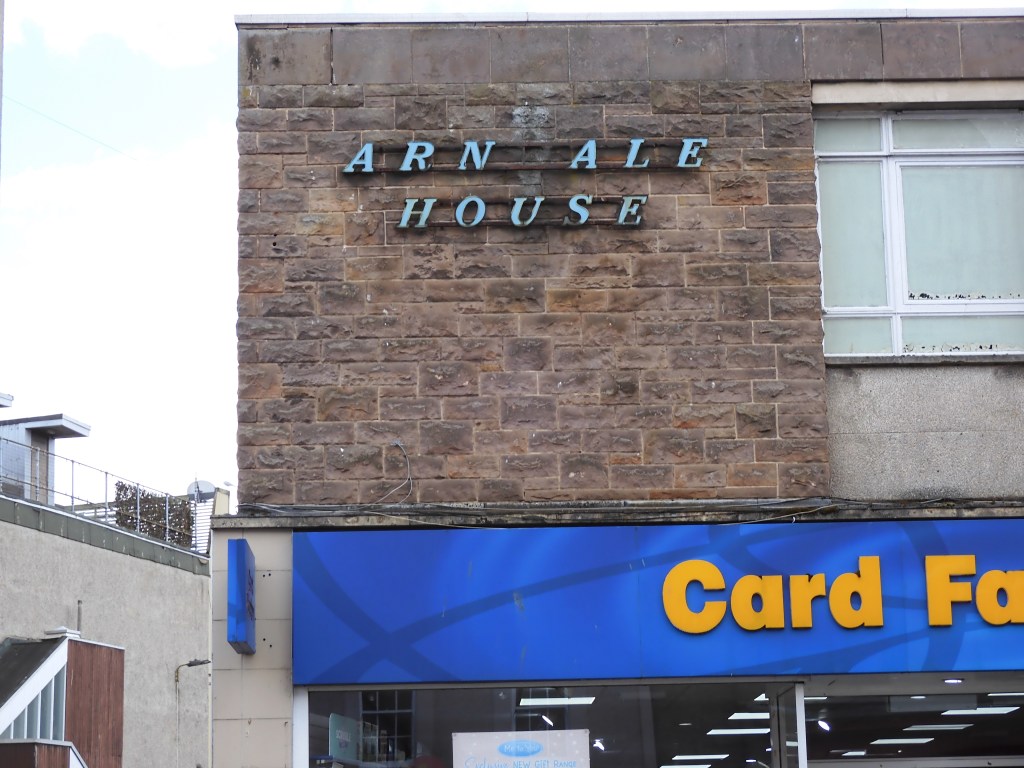
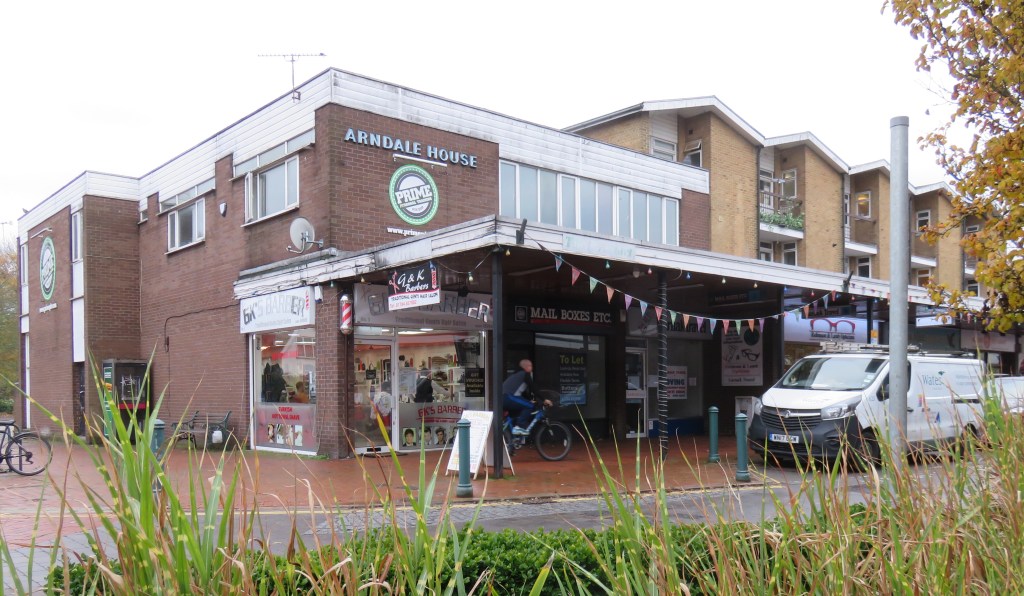
Most of Arndale’s artificially lit and air conditioned malls have been revamped since the 1980s, chiefly to admit more natural daylight and ventilation. They have also been rebranded – with Manchester and Morecambe famously holding out. Nevertheless, classic mid-century lettering still spells out ‘ARNDALE HOUSE’ on shop and office developments throughout Britain.
Arndale Centres were developed by the Arndale Property Trust. This conflated the names of the founders – Arnold Hagenbach (1904-2005) and Sam H. Chippindale (1909- 90). These two Yorkshiremen had complementary skills in the intersecting worlds of multiple retailing and property development.
Hagenbach’s Wakefield-based family bakery, comprising five restaurants and 31 shops, catered for the Festival of Britain in 1951. By the time his chain was sold to Allied Bakeries in 1957, Hagenbach was concentrating on property. He and Chippindale grouped their various interests, in October 1950, as a public company: Arndale Property Trust Ltd.
Chippindale – possibly a descendant of the furniture designer Thomas Chippendale – was Arndale’s chief negotiator. Having learned the trade, he set up his own estate agency in 1931, selling property, developing housing estates, and scouting for multiples like M&S, BHS and Littlewoods. Towards the end of his extraordinary career, Chippindale estimated that he had worked with 55 local authorities on over 70 shopping schemes: 16 covered centres (listed below) and 57 precincts, parades or standalone blocks.
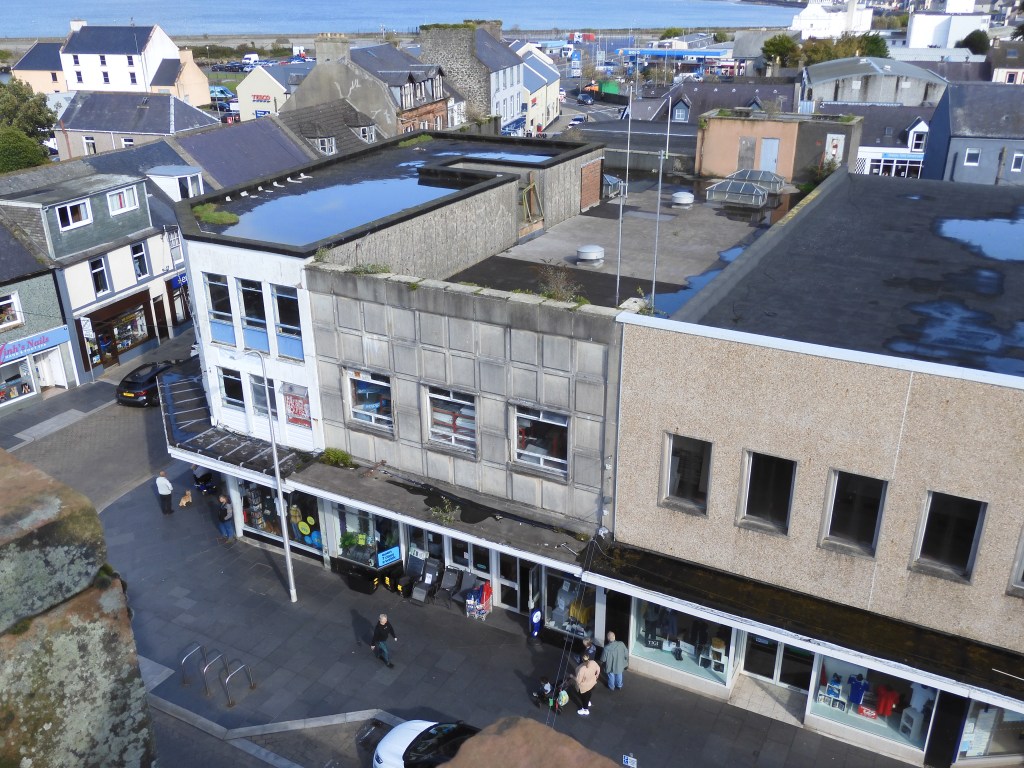
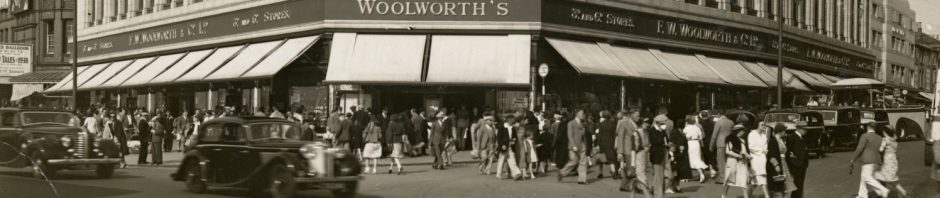
As soon as building licences were abolished in 1954, Arndale began to work with local authority partners to build shopping parades and precincts, often including an Excel bowling alley. By 1960 Arndale could list 24 schemes in the North of England and six in Scotland. Sites were amassed by the piecemeal acquisition of neighbouring properties in key locations. Some were purchased directly by Arndale (deploying loans from insurance companies like Clerical Medical), others by councils wielding compulsory purchase powers at Arndale’s behest. Before schemes left the drawing board, multiples were persuaded to sign up for the largest units – Chippindale reportedly had a powerful contact at Woolworth’s, which became a key partner in many projects. Upon completion, leases for standardised secondary units were managed by Chippindale’s agency, S. H. Chippindale & Co., which was taken over by Arndale in 1964.
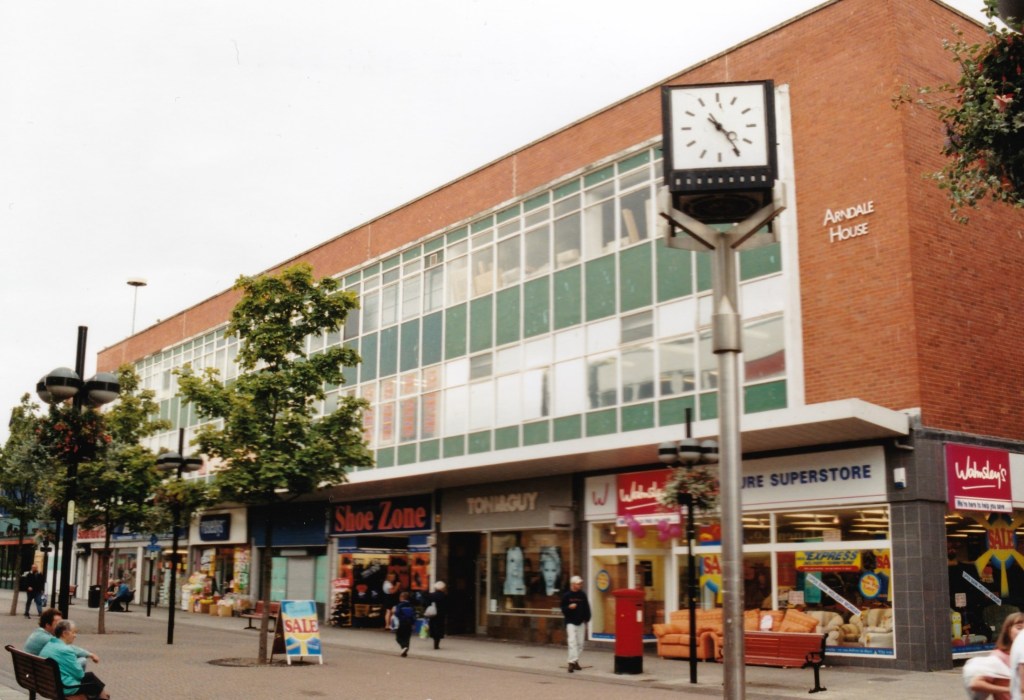

Arndale reshaped the heart of Shipley. The second of three contracts in the Market Square Redevelopment Area comprised a block called the Arndale Shopping Centre: the first to bear that name. Designed by Arndale’s in-house architect Gerald M. Baxter, with Shingler & Risdon as consultant architects, it was opened by Bruce Forsyth in 1960. Inside was a 40ft. wide ‘brightly decorated covered precinct’, with a terrazzo floor, suspended laylights, and – a typical Arndale flourish – a central water feature. This sounds like an arcade, or even a mall, yet the shops still respected the street frontages.
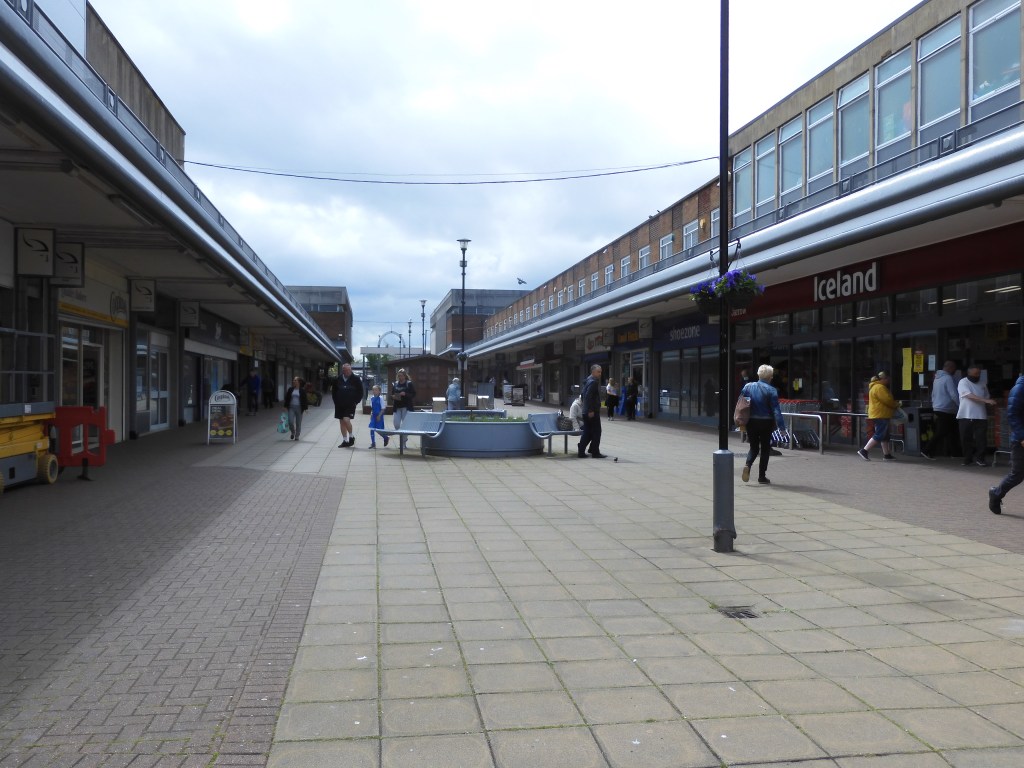
The Arndale Shopping Centre in Jarrow – again by Baxter with Shingler & Risdon – opened in 1961. The open-air Bede and Viking Precincts met at right angles to form a new town centre. Chippindale’s gift of a statue of two chunky Vikings, carved by Colin M. Davidson, proved controversial, but remains in place.
Arndale’s directors travelled in Europe to keep abreast of recent shopping developments. But it was a visit to America in 1960 that convinced them of the future of malls. The concept was resisted by UK local authorities so Arndale turned to Australia, where the company built its first air conditioned mall at Kilkenny, near Adelaide, in 1963. Hagenbach frequently travelled to Australia to oversee Arndale’s developments and kept a bushbaby in his back garden in Dorset.

In 1964 Arndale’s offices relocated from Wakefield to the top floors of a tower block with heavily gridded elevations in Charles Street, Bradford. This adjoined Howard House, built in 1956 to designs by Frank Chippindale – Sam’s architect brother – and local architect Alan Sunderland, with Brown, Muff & Co. occupying the shop below the offices of S. H. Chippindale & Co.
The architects of the new tower, John Graham & Partners of Seattle and New York, had designed ground-breaking shopping malls in North America in the 1950s before collaborating with Arndale in Australia. They designed the Arndale Shopping Centre in Doncaster (1964-69) alongside Arndale’s regular consultant architect, Percy Gray. Gray, of Gray Birch Associates, worked on Arndale schemes, alongside other architects, from 1963 into the 1980s.

The first covered Arndale Centre in Britain opened at Crossgates, Leeds, in 1967, just three years after the seminal Bull Ring in Birmingham. It was designed by the notorious architect John Poulson – who was involved in three Arndale schemes before losing their confidence, and was later imprisoned for corruption.

Crossgates was followed by Arndale Centres in Nelson (Percy Gray with Shingler & Risdon; 1966-68), Stretford (Michael Lyell & Waller; 1969), Bolton (Gray Birch Associates; 1971) and Morecambe (Michael Lyell & Waller with Turner, Lansdown, Holt & Partners; 1970-72). In Morecambe, original plans of 1962 by Charles B. Pearson, Son & Partners had included a glass-covered precinct, but were modified over the next eight years.
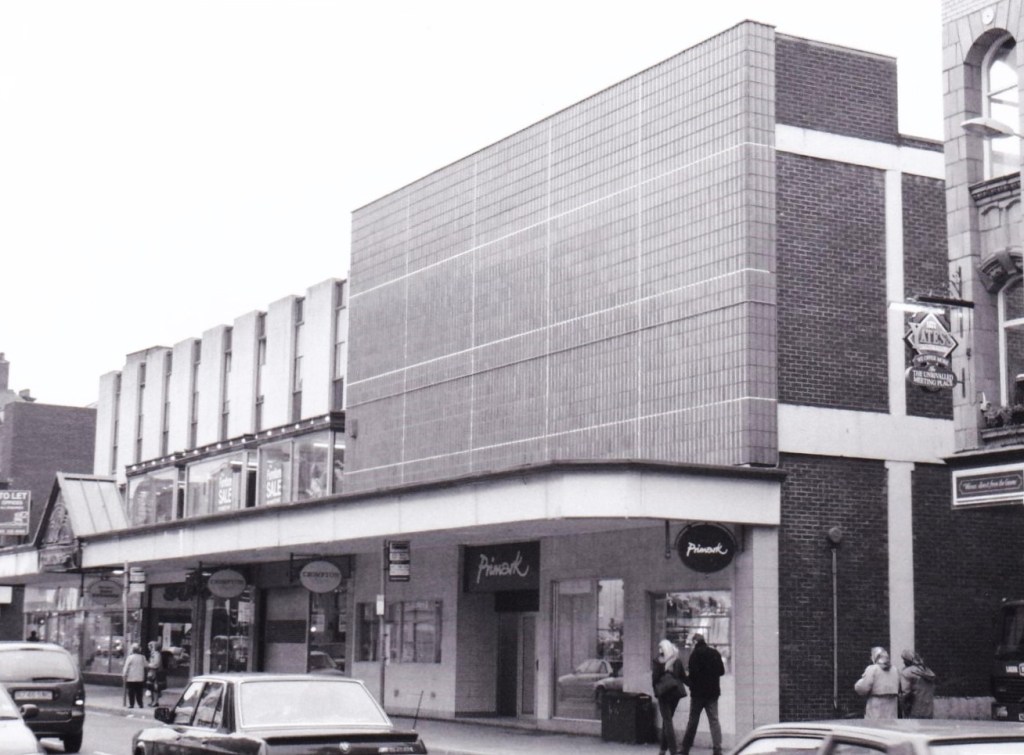
Initially northern in focus, Arndale opened a London office in 1962. One of its first southern developments was in Egham (1965-68). Over the next decade fully fledged malls reached completion in Poole (Leslie Jones & Partners; 1967-69), Wandsworth (J. Seymour Harris & Partners; 1966-71), Dartford (J. Seymour Harris & Partners; 1973-75) and Luton (Leonard Vincent, Raymond Gorbing & Partners, with Percy Gray; 1970-77).
Mall projects took a long time to reach fruition. Having won a competition for the ambitious Luton scheme in 1966, Arndale persuaded the local authority to opt for a mall rather than a precinct. The process of compulsory purchase and site clearance meant that the first phase could not open before 1972. Completion of the final, fifth, phase had to wait until 1977. While Luton included a hotel and a multi-storey car park with a spiral ramp, Wandsworth had tower blocks with 500 flats.

Arndale’s biggest mall – dubbed ‘the big daddy’ by Chippindale – erased much of the historic streetscape of central Manchester, feeding a backlash against comprehensive redevelopment. The vast site was assembled over decades before building work could commence in 1972. The mall (Hugh Wilson & Lewis Wormersley, with Percy Gray and Ian Fraser, Roberts & Partners as consultant architects) opened five years later. It was hailed as ‘the longest lavatory wall in Europe’. Within a few years alterations were under way to admit daylight, and more extensive refurbishment and rebuilding followed an IRA bombing in 1996.

A shopping centre built in Nottingham in 1971-75 was supposed to be called the Arndale Broad Marsh Centre until 1971, when the Corporation insisted that it be changed to ‘The Broadmarsh Centre’. Maybe the ‘Arndale’ name was already accruing negative associations. Broadmarsh’s architects, Turner, Lansdown, Holt & Partners, had been involved in both Morecambe and Middleton. Middleton (1971) featured an American-style Woolco store. One other vast development undertaken by Arndale in these years was the Arndale Centre (Kirkgate Centre) in Bradford (John Bruton & Partners; 1976), currently (2024) under threat of demolition.

Arndale overstretched itself financially in the late 1960s, a situation that strained relations between Hagenbach (the Chairman) and Chippindale (the managing director). The upshot, in April 1968, was a takeover by Town & City Properties Ltd. which developed shops in the South under the leadership of Barry East.

Hagenbach stood down, but Chippindale continued with Town & City until March 1977. Then, aged 67, with his personal finances in disarray, he quit to set up his own company, proposing to develop shopping centres hand-in-hand with Tayor Woodrow. He had to forfeit the ‘Arndale’ name, so these new developments would be called ‘The Cascades’. Sam’s go-to architects were now the Tripe & Wakeham Partnership.
Meanwhile, Town & City opened a few schemes that had been in the pipeline for some time, like the Arndale Centres in Wellingborough (1974-77) and Eastbourne (Percy Gray; 1977-82). But the business was running out of puff. By 1987 Arndale Shopping Centres Ltd. ran a portfolio of just 10 centres on behalf of P&O, which had merged with Town & City’s parent company in 1985.
Chippindale’s twilight solo career was not wholly successful. Taylor Woodrow Chippindale Properties Ltd. was dismissed when schemes in Leicester, Whitechapel and Eastleigh fell through. Pitches to several other towns came to nothing. Nevertheless, Chippindale completed Cascades developments in Rotherham (1983-85) and Portsmouth (1987-89).

Zita Adamson, Sam Chippindale’s biographer, wrote that he ‘changed the face of British retailing, pioneered covered shopping centres and brought new life into towns all over the country’. Others might argue that Arndale damaged the built environment with developments that have not withstood the test of time.
Text © K. Morrison.
List of covered shopping centres (malls) developed by Arndale in the UK (with new names in brackets): Bolton (Crompton Centre); Bradford (Kirkgate Centre); Dartford (Priory Shopping Centre); Doncaster (Frenchgate Shopping Centre); Eastbourne (The Beacon); Leeds (Crossgates Shopping Centre); Luton (The Mall Luton; The Point); Manchester; Middleton (Middleton Shopping Centre); Morecambe; Nelson (Pendle Rise Shopping Centre); Broadmarsh Centre, Nottingham (intu Broadmarsh, dem.); Poole (Dolphin Shopping Centre); Stretford (Stretford Mall); Wandsworth (Southside); Wellingborough (Swansgate Shopping Centre).
For a longer read about Arndale, see Alistair Kefford‘s excellent article, published in 2022.
Text copyright Kathryn A. Morrison (AI scraping not permitted)


 Building Our Past
Fascinating article and I remember the Hagenbach shops in Wakefield before they were taken over. I the Cross Gates Arndale centre which, although out of town from the centre of Leeds attracted many shoppers.
With regards to John Poulson, he had a house built just outside of Pontefract and named it Manasseh. This house won the Ideal Homes House of the year in 1958. As such, there was an open day to the house one Sunday and, as the firm Drake & Warters had constructed the main staircase, on which my father worked, we all visited and marvel at such a large house and fittings.
Steve Hodgson.
LikeLiked by 1 person
Bovis built some of the Arndales, like Luton, before both businesses were taken over by P&O
LikeLike
Yes, indeed! I mention the connection with Leslie & Co and Gilbert-Ash (both Bovis group) in the caption to Sunderland. I think Gilbert-Ash may even have shared Arndale’s head office? Not sure!
LikeLike
Yes, I’m not sure about sharing the Head Office (and most of my friends who worked for Leslie and GA are now dead, so can’t ask them!). I joined Bovis in 1976 when they were moving away from the lump-sum work, but GA was still being used as a name for work like Arndale. We (as Bovis) did much of the post-terrorism work in Manchester
LikeLiked by 1 person
Oddly, my family, who were prominent shipbuilders in Sunderland, lived in High St West in the 19th century (not the shopping centre!)
LikeLike
Pingback: Shipley Woolworths – Store 964 – Woolies Buildings – Then and Now
nice piece, but you refer to the arndale centre in bolton as the crompton centre. are you sure about that? i’m from bolton, worked in the town centre when it was built, and while crompton was and is a big name in bolton’s history – samuel crompton invented the spinning mule, the machine that made lancashire the centre of the cotton spinning world, although it did him bugger-all good – i’ve never heard of the place being so named. interestingly, there is now a new shopping centre called crompton gates built on the back of what was the market hall
LikeLike