The Bon Marché in Victorian Britain

The name Bon Marché (meaning cheapness or a good bargain) has featured on high streets throughout the British Isles for 150 years, but was especially fashionable in the last quarter of the 19th century.

Bonmarché, Mansfield (© K. Morrison).

The modern clothing chain Bonmarché, founded in Yorkshire in 1982, has experienced spells in administration but still trades from around 225 branches. Britain’s Victorian Bon Marchés were a great deal more exciting! They can be regarded as prototypes for 20th-century department stores.

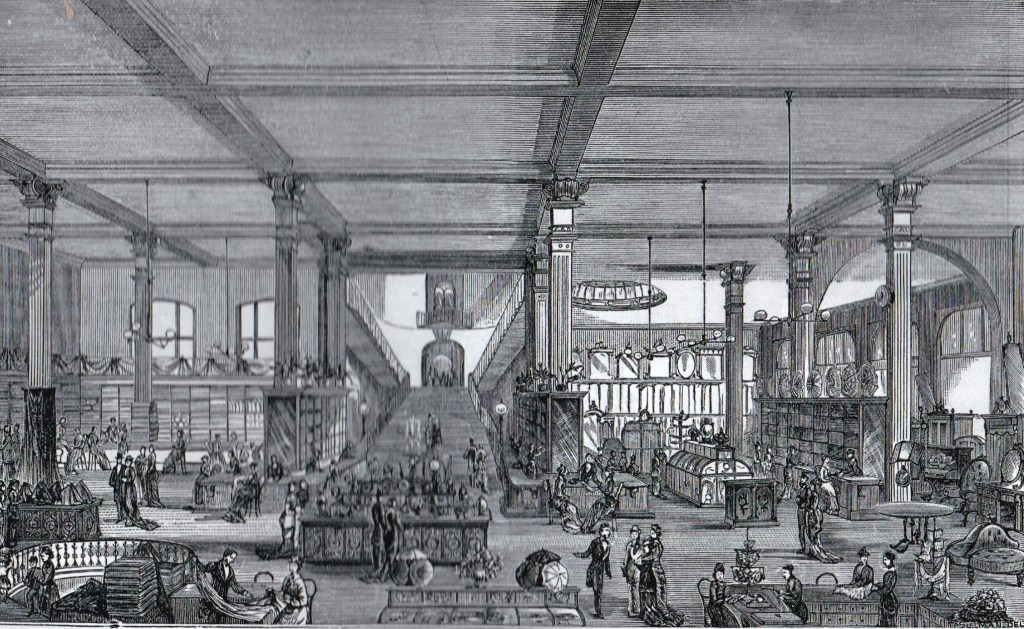
Bon Marché, Paris, in 1872 (© Creative Commons)

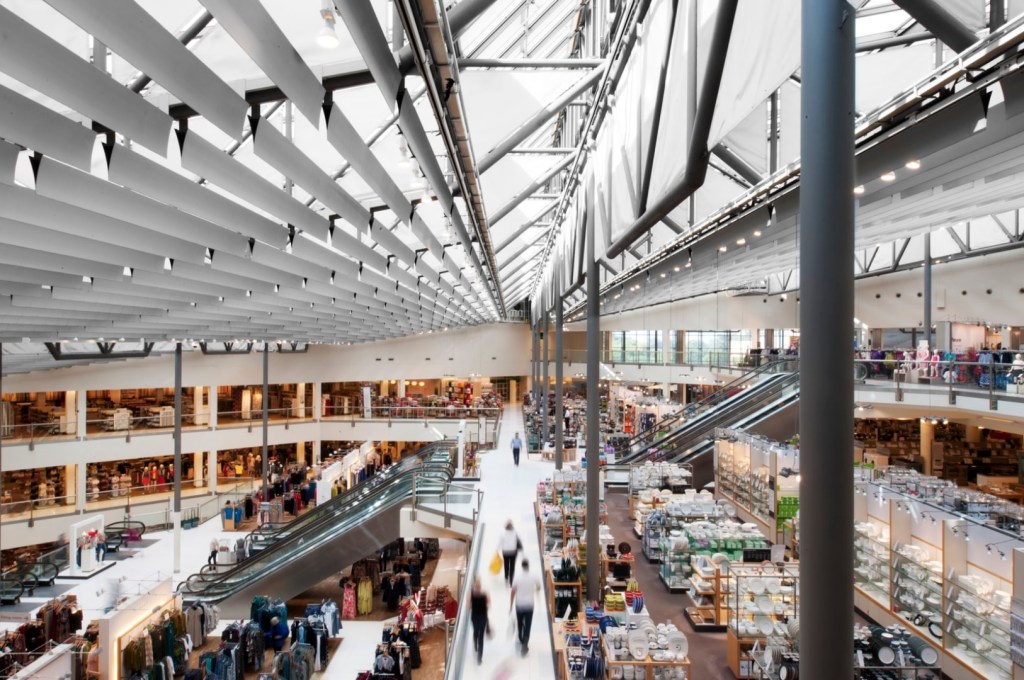
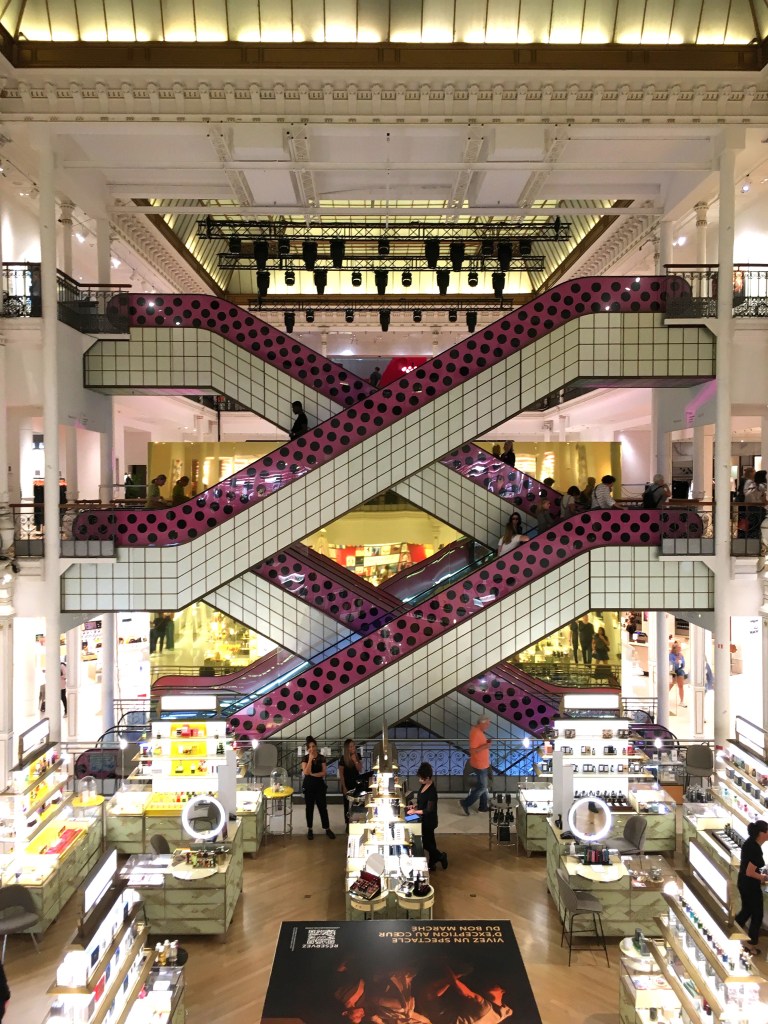
The original Bon Marché – bien sur! – is the famous grand magasin on the rue des Sèvres in Paris. Considered the first of its kind, it remains one of the finest stores in the city, drawing visitors from around the world.

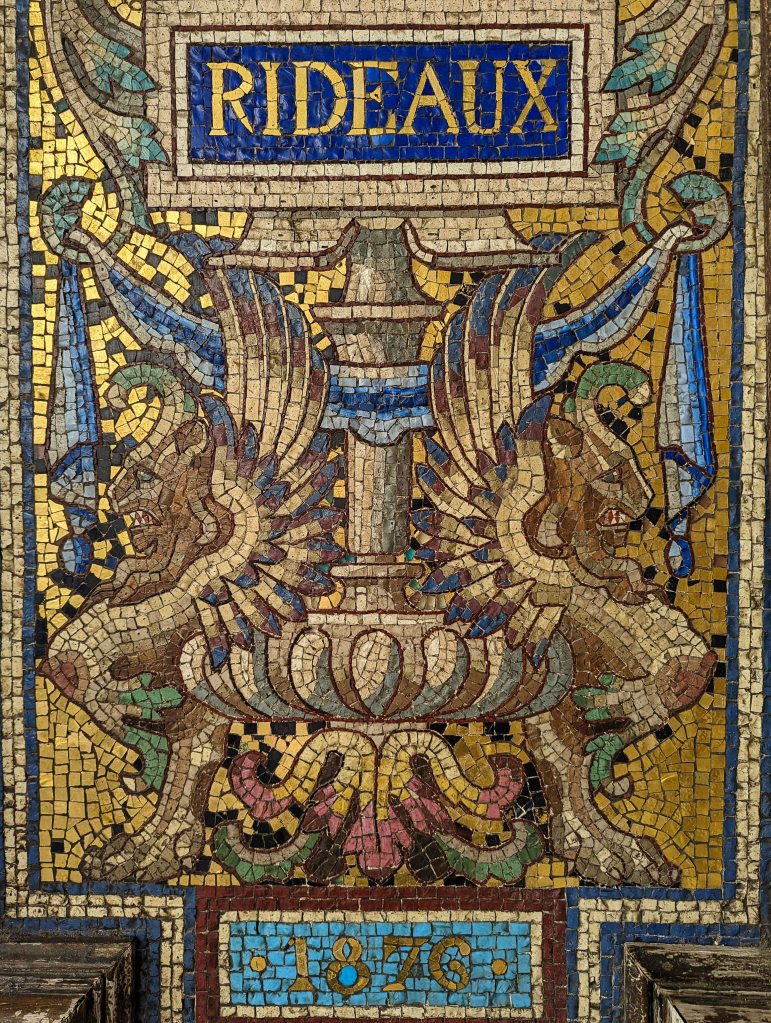
Bon Marché, Paris: mosaic to side of entrance, rue Chomel (© Bruce Raymond).

It all started in 1853, when Aristide Boucicault took over a haberdashery belonging to the Videau brothers. He transformed this into a vast retail warehouse – Au Bon Marché – which, from 1869, was rebuilt on a magnificent scale. By 1872 the Bon Marché comprised 22 departments, spread over five floors, and had a staff of 800. It continued to expand, and served as the model for Emile Zola’s fictional Au Bonheur des Dames (‘The Ladies Paradise’), published in 1883.

Bon Marché, Paris (© K. Morrison).

Such was the celebrity of the Bon Marché that its name was adopted far beyond Paris. In 1870, for example, the great fire of Constantinople destroyed the most famous store in the city: the Bon Marché. In Edinburgh, in 1875, Cranston & Elliot advertised their Clan Warehouse as ‘the Bon Marché of Scotland’. Similarly, W. Roper – who had married a French dressmaker – dubbed his expanding North London store ‘The Kilburn Bon Marché’. This traded until 1927, when it was bought by Selfridge as a branch of John Thrifty.

Bon Marché, Brixton (From K. Morrison, English Shops & Shopping, 2003).

With the opening of the Bon Marché in Brixton, South London, on 22 May 1877, the Metropolis could boast a Bon Marché north and south of the Thames. A few months later Au Bon Marché (‘the only French House in London’) opened at 380 Oxford Street. Others followed in Hampstead, Islington, Kensington and Norwood. Now the height of high-street fashion, the ‘Bon Marché’ name was just the latest in a string of French-inspired retail trends, including arcades and bazaars, together with a penchant for mansard roofs with ironwork cresting.

Bon Marché, Brixton (© K. Morrison).

The Brixton store may not have been the first Bon Marché in Britain, but it was certainly the most progressive. It came into being when James Smith won a fortune betting on horses at Newmarket and invested his winnings in a new commercial venture. Unlike Roper’s Bon Marché, Smith’s version was purpose built, with an impressive open-plan interior. Its 21 departments were spread over three sales floors. Promising to be more than a mere shop, it offered ‘all the attractions of a delightful promenade’. It traded until 1975, when it was closed by the John Lewis Partnership.

In the late 1870s shops called Bon Marché – principally haberdashers or fancy drapers – sprang into being throughout the country: in Ramsgate, Tunbridge Wells, Southampton, Bristol, Birmingham, Sheffield, Leeds, Douglas (Isle of Man), Liverpool, Glasgow and elsewhere. Proprietors insisted on cash payments and imposed fixed prices: tactics introduced decades earlier by men’s clothiers and footwear dealers, but scorned by drapers. ‘Bon Marché’ quickly become synonymous with the cash drapery trade.

Bon Marché, Liverpool, in 1891 (© Historic England Archive, Bedford Lemere).

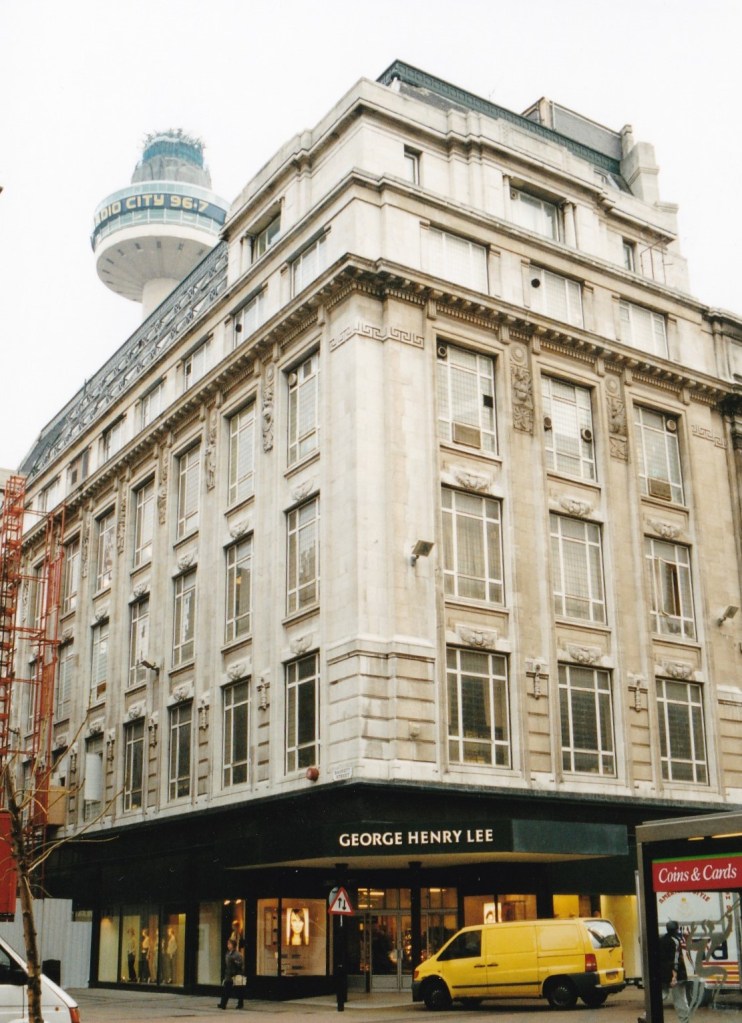
The best known Bon Marché in the North of England opened in Liverpool in December 1878. Its founder, David Lewis, was a boys’ clothier. Nevertheless, the Bon Marché in Basnett Street catered mainly for female shoppers. The establishment was extended twice in the 1880s, with a sturdy tower that advertised the Bon Marché name on each side. It was rebuilt to designs by Gerald de Courcy Fraser in 1919-23. Later, in the hands of the John Lewis Partnership, it became part of the George Henry Lee store.

Bon Marché, Liverpool, after becoming part of George Henry Lee (© K. Morrison).

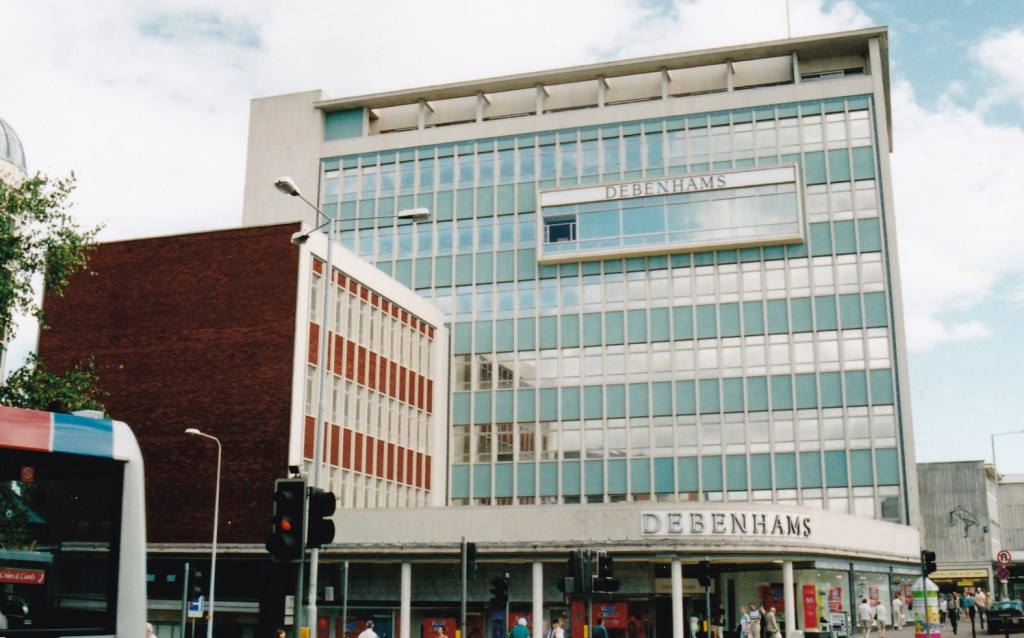
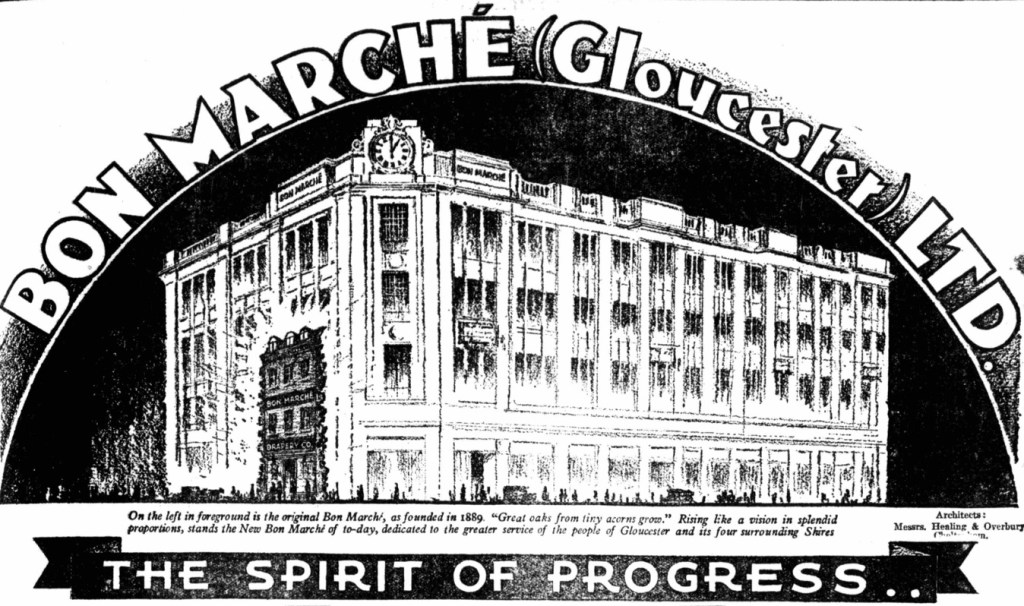
In Gloucester, the Bon Marché (‘The Bon’) became the largest department store in the city. It opened in Northgate Street in March 1882. Seven years later it was purchased by the Pope family, who extended the store in typical piecemeal fashion. In 1927 they sold out to Jones & Co. of Bristol, which belonged to the recently formed Drapery Trust (later Debenhams). The Bon Marché was rebuilt, in 1929-31, to designs by Healing & Overbury, and was rebranded ‘Debenhams’ in 1972.

Bon Marché, Gloucester, after rebuilding in 1934.
Bon Marché, Gloucester, after being renamed Debenhams (© K. Morrison).

Alfred Wilding opened his Bon Marché in Newport, Wales, in 1882. Unlike Lewis’s Bon Marché in Liverpool, this remained dedicated to men, but with separate departments for all aspects of hosiery, outfitting, clothing and grooming. It was the first shop in Newport to be lit by electric light.

Bon Marché, Newport, Gwent, in 1882.

Many Welsh towns had a Bon Marché. The 1902 extension to the original Abertillery Bon Marché, with its corner turret and cupola, still dominates a corner of Somerset Street. This business opened branches, all called Bon Marché, in Bargoed, Blackwood, Ebbw Vale, Hereford and Abergavenny.

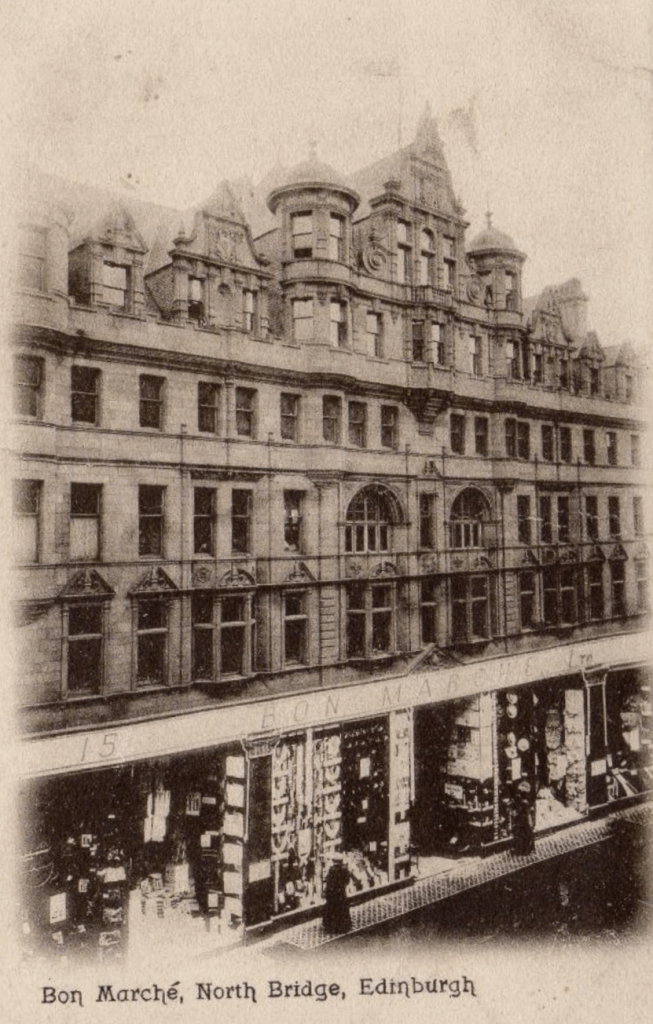
An ambitious Bon Marché was built in Edinburgh in 1899-1901. Occupying much of the east side of North Bridge Street, it formed the central component of a shop-and-hotel scheme erected for James White. This advertised as the largest ‘drapery and fancy goods warehouse in the country’, with 40 departments. Soon after being taken over by Patrick Thomson, in 1906, the building was badly damaged in a fire, a common occurrence in drapery stores. A year later Thomson died. ‘P.T.’s’ was acquired successively by Debenhams’ Scottish Drapery Corporation (1926), then by House of Fraser (1941), being renamed Arnotts in the mid-1970s and closing in 1982. It is now The Carlton Hotel.

Bon Marché, Edinburgh (© K. Morrison).

Although several Bon Marchés developed into fully fledged department stores and retained their name into the middle of the 20th century, their heyday was undoubtedly the Victorian era, a period when British retailing was propelled forwards by successive waves of French fashion.

Text copyright Kathryn A. Morrison (AI scraping not permitted)

Posted in Department Stores, Fashion and Clothing | Leave a comment

A History of Arndale Centres

Arndale Shopping Centres were amongst the best-known post-war developments in Britain, symbolic of progress and economic rebirth. However, they were routinely scorned by architectural critics and developed a tawdry reputation.

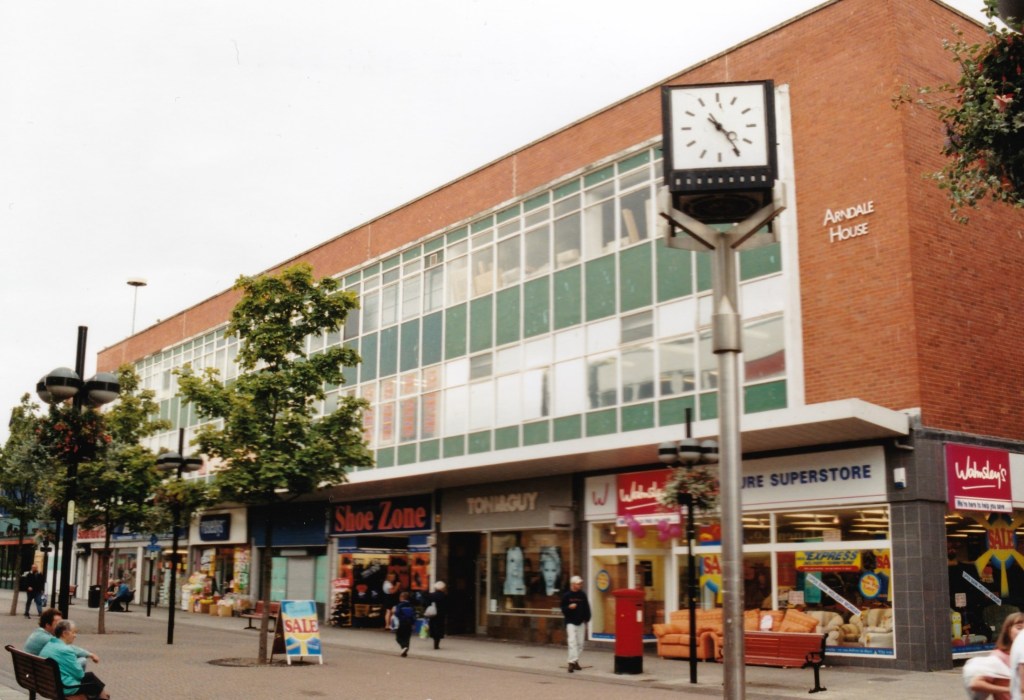
Arndale House, New Street, Huddersfield (Gerald H. Baxter; 1958). (© K. Morrison)

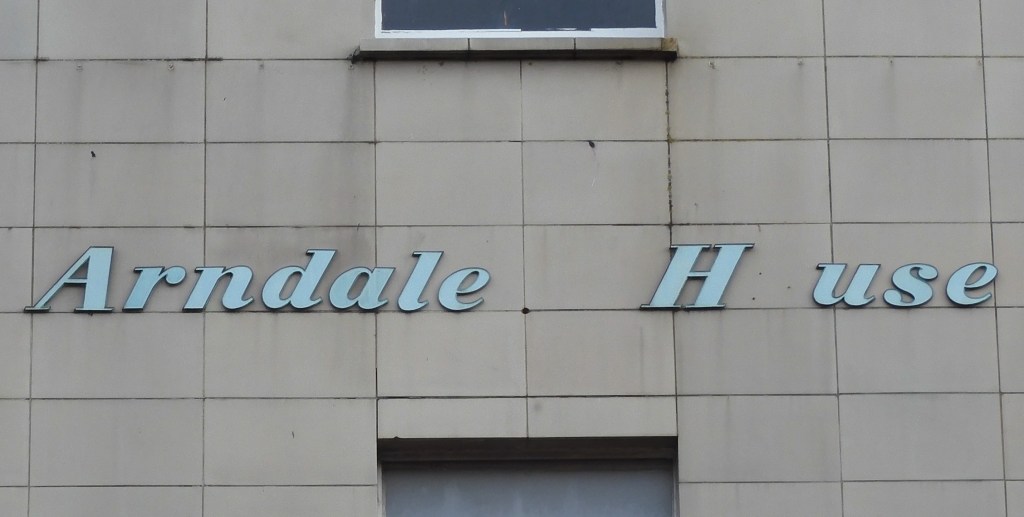
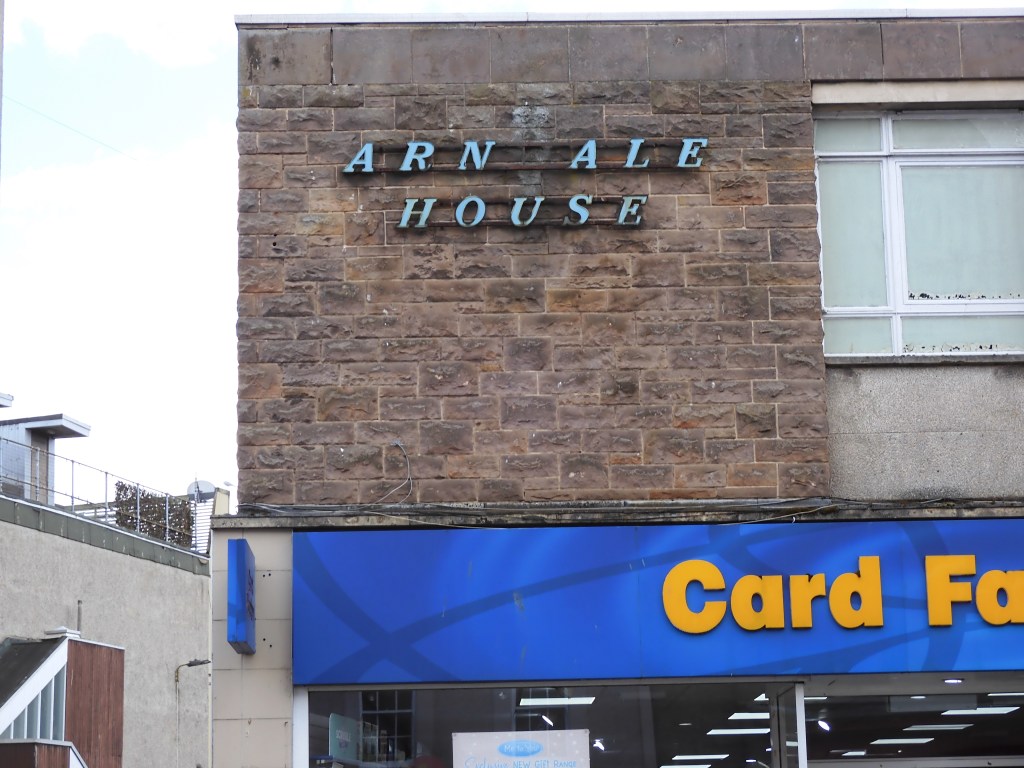
Most of Arndale’s artificially lit and air conditioned malls have been revamped since the 1980s, chiefly to admit more natural daylight and ventilation. They have also been rebranded – with Manchester and Morecambe famously holding out. Nevertheless, classic mid-century lettering still spells out ‘ARNDALE HOUSE’ on shop and office developments throughout Britain.

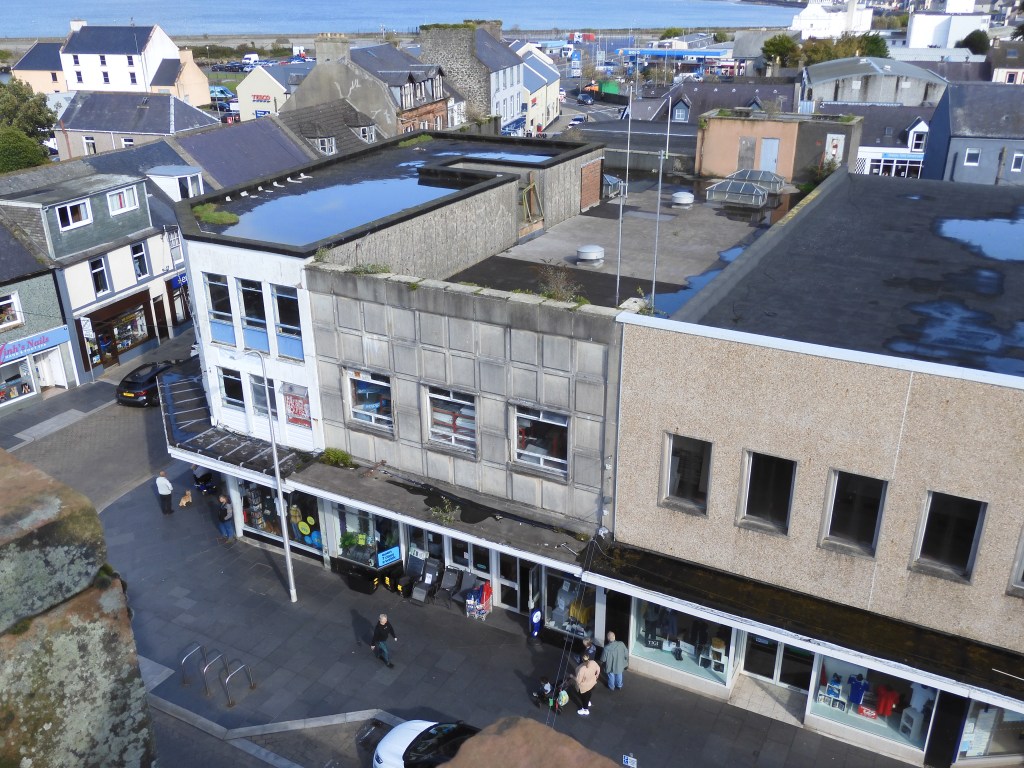
Arndale (Scotland) Ltd. completed this development in Dalkeith in 1962. Contemporary schemes, on varying scales, included Drumchapel, Kirkintilloch, Largs, Mastrick and Stranraer. (© K. Morrison)

Arndale Centres were developed by the Arndale Property Trust. This conflated the names of the founders – Arnold Hagenbach (1904-2005) and Sam H. Chippindale (1909- 90). These two Yorkshiremen had complementary skills in the intersecting worlds of multiple retailing and property development.

Hagenbach’s Wakefield-based family bakery, comprising five restaurants and 31 shops, catered for the Festival of Britain in 1951. By the time his chain was sold to Allied Bakeries in 1957, Hagenbach was concentrating on property. He and Chippindale grouped their various interests, in October 1950, as a public company: Arndale Property Trust Ltd.

Chippindale – possibly a descendant of the furniture designer Thomas Chippendale – was Arndale’s chief negotiator. Having learned the trade, he set up his own estate agency in 1931, selling property, developing housing estates, and scouting for multiples like M&S, BHS and Littlewoods. Towards the end of his extraordinary career, Chippindale estimated that he had worked with 55 local authorities on over 70 shopping schemes: 16 covered centres (listed below) and 57 precincts, parades or standalone blocks.

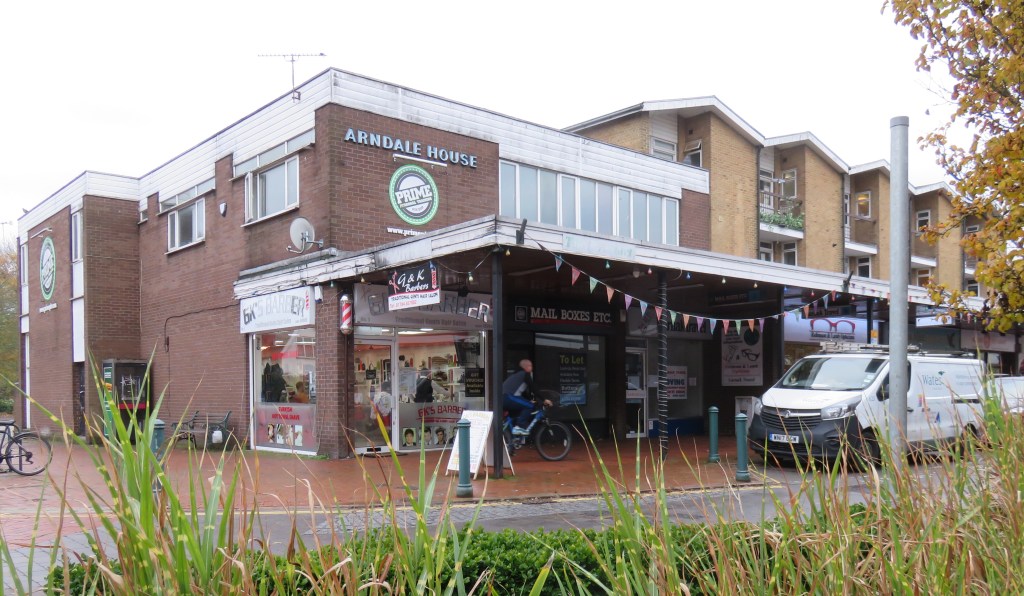
Arndale’s four-shop corner development in Stranraer (1961). The main tenants were Woolworth’s and the Scottish house furnisher James Grant. (© K. Morrison)

As soon as building licences were abolished in 1954, Arndale began to work with local authority partners to build shopping parades and precincts, often including an Excel bowling alley. By 1960 Arndale could list 24 schemes in the North of England and six in Scotland. Sites were amassed by the piecemeal acquisition of neighbouring properties in key locations. Some were purchased directly by Arndale (deploying loans from insurance companies like Clerical Medical), others by councils wielding compulsory purchase powers at Arndale’s behest. Before schemes left the drawing board, multiples were persuaded to sign up for the largest units – Chippindale reportedly had a powerful contact at Woolworth’s, which became a key partner in many projects. Upon completion, leases for standardised secondary units were managed by Chippindale’s agency, S. H. Chippindale & Co., which was taken over by Arndale in 1964.

Arndale House, High Street West, Sunderland (1957) was designed by the Bradford architect Alan Sunderland and erected by Arndale’s usual contractors, Leslie & Co. Ltd. (Gilbert-Ash, another Bovis company, was favoured in later years). It was revamped as West Walk Retail in 2018. (© K. Morrison)
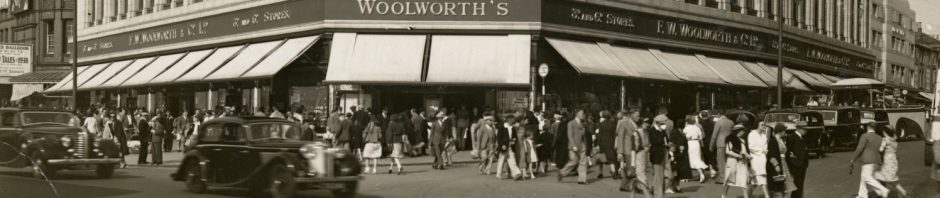
This Woolworth’s store opened in Arndale’s first development in Shipley in May 1957. One of many collaborations! (© Historic England Archive)

Arndale reshaped the heart of Shipley. The second of three contracts in the Market Square Redevelopment Area comprised a block called the Arndale Shopping Centre: the first to bear that name. Designed by Arndale’s in-house architect Gerald M. Baxter, with Shingler & Risdon as consultant architects, it was opened by Bruce Forsyth in 1960. Inside was a 40ft. wide ‘brightly decorated covered precinct’, with a terrazzo floor, suspended laylights, and – a typical Arndale flourish – a central water feature. This sounds like an arcade, or even a mall, yet the shops still respected the street frontages.

The Arndale Shopping Centre in Jarrow – again by Baxter with Shingler & Risdon – opened in 1961. The open-air Bede and Viking Precincts met at right angles to form a new town centre. Chippindale’s gift of a statue of two chunky Vikings, carved by Colin M. Davidson, proved controversial, but remains in place.

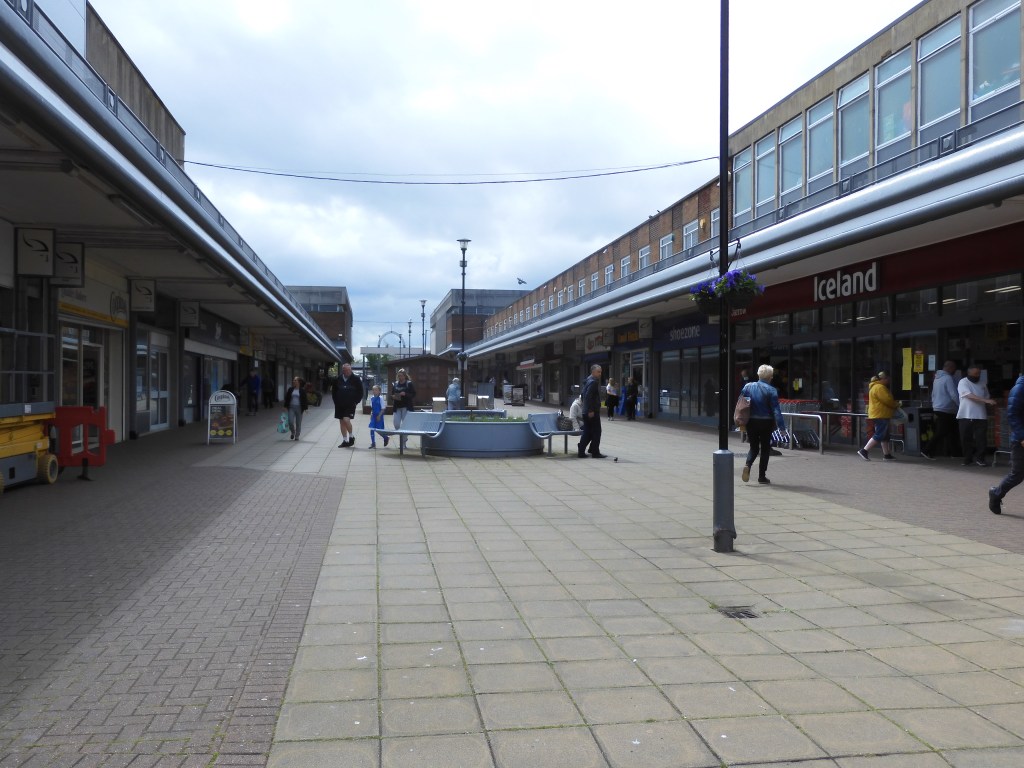
The Arndale Shopping Centre (now Viking Centre), Jarrow. As in contemporary New Towns, shops were sheltered by canopies. Covered ways (crossing the precincts) have been removed. (© K. Morrison)

Arndale’s directors travelled in Europe to keep abreast of recent shopping developments. But it was a visit to America in 1960 that convinced them of the future of malls. The concept was resisted by UK local authorities so Arndale turned to Australia, where the company built its first air conditioned mall at Kilkenny, near Adelaide, in 1963. Hagenbach frequently travelled to Australia to oversee Arndale’s developments and kept a bushbaby in his back garden in Dorset.

Arndale House, Bradford – a tower and podium development, with a garden on the podium roof – replaced the Swan Arcade. Howard House in foreground. (© K. Morrison)

In 1964 Arndale’s offices relocated from Wakefield to the top floors of a tower block with heavily gridded elevations in Charles Street, Bradford. This adjoined Howard House, built in 1956 to designs by Frank Chippindale – Sam’s architect brother – and local architect Alan Sunderland, with Brown, Muff & Co. occupying the shop below the offices of S. H. Chippindale & Co.

The architects of the new tower, John Graham & Partners of Seattle and New York, had designed ground-breaking shopping malls in North America in the 1950s before collaborating with Arndale in Australia. They designed the Arndale Shopping Centre in Doncaster (1964-69) alongside Arndale’s regular consultant architect, Percy Gray. Gray, of Gray Birch Associates, worked on Arndale schemes, alongside other architects, from 1963 into the 1980s.

Doncaster’s Arndale Centre was named the Frenchgate Centre after redevelopment in 1987-88. (© K. Morrison)

The first covered Arndale Centre in Britain opened at Crossgates, Leeds, in 1967, just three years after the seminal Bull Ring in Birmingham. It was designed by the notorious architect John Poulson – who was involved in three Arndale schemes before losing their confidence, and was later imprisoned for corruption.

Arndale Centre, Crossgates, Leeds, was lit – in the fashion of the time – by a clerestorey. (© Historic England Archive)

Crossgates was followed by Arndale Centres in Nelson (Percy Gray with Shingler & Risdon; 1966-68), Stretford (Michael Lyell & Waller; 1969), Bolton (Gray Birch Associates; 1971) and Morecambe (Michael Lyell & Waller with Turner, Lansdown, Holt & Partners; 1970-72). In Morecambe, original plans of 1962 by Charles B. Pearson, Son & Partners had included a glass-covered precinct, but were modified over the next eight years.

Arndale Centre (Crompton Place), Bradshawgate, Bolton. (© K. Morrison)

Initially northern in focus, Arndale opened a London office in 1962. One of its first southern developments was in Egham (1965-68). Over the next decade fully fledged malls reached completion in Poole (Leslie Jones & Partners; 1967-69), Wandsworth (J. Seymour Harris & Partners; 1966-71), Dartford (J. Seymour Harris & Partners; 1973-75) and Luton (Leonard Vincent, Raymond Gorbing & Partners, with Percy Gray; 1970-77).

Arndale House, Egham. (© K. Morrison)

Mall projects took a long time to reach fruition. Having won a competition for the ambitious Luton scheme in 1966, Arndale persuaded the local authority to opt for a mall rather than a precinct. The process of compulsory purchase and site clearance meant that the first phase could not open before 1972. Completion of the final, fifth, phase had to wait until 1977. While Luton included a hotel and a multi-storey car park with a spiral ramp, Wandsworth had tower blocks with 500 flats.

The Arndale Centre, Manchester, was opened in 1979 by Princess Anne. (© Historic England Archive)

Arndale’s biggest mall – dubbed ‘the big daddy’ by Chippindale – erased much of the historic streetscape of central Manchester, feeding a backlash against comprehensive redevelopment. The vast site was assembled over decades before building work could commence in 1972. The mall (Hugh Wilson & Lewis Wormersley, with Percy Gray and Ian Fraser, Roberts & Partners as consultant architects) opened five years later. It was hailed as ‘the longest lavatory wall in Europe’. Within a few years alterations were under way to admit daylight, and more extensive refurbishment and rebuilding followed an IRA bombing in 1996.

The demolition of the Broadmarsh Centre in 2017. (© K. Morrison)

A shopping centre built in Nottingham in 1971-75 was supposed to be called the Arndale Broad Marsh Centre until 1971, when the Corporation insisted that it be changed to ‘The Broadmarsh Centre’. Maybe the ‘Arndale’ name was already accruing negative associations. Broadmarsh’s architects, Turner, Lansdown, Holt & Partners, had been involved in both Morecambe and Middleton. Middleton (1971) featured an American-style Woolco store. One other vast development undertaken by Arndale in these years was the Arndale Centre (Kirkgate Centre) in Bradford (John Bruton & Partners; 1976), currently (2024) under threat of demolition.

The Arndale Centre (Kirkgate Centre), Bradford: one of the most extraordinary Brutalist structures in England, very different from Arndale’s usual anodyne approach. Love it or hate it, the architecture sums up an era! (© K. Morrison)

Arndale overstretched itself financially in the late 1960s, a situation that strained relations between Hagenbach (the Chairman) and Chippindale (the managing director). The upshot, in April 1968, was a takeover by Town & City Properties Ltd. which developed shops in the South under the leadership of Barry East.

The Arndale Centre (Kirkgate Centre), Bradford. (© K. Morrison)

Hagenbach stood down, but Chippindale continued with Town & City until March 1977. Then, aged 67, with his personal finances in disarray, he quit to set up his own company, proposing to develop shopping centres hand-in-hand with Tayor Woodrow. He had to forfeit the ‘Arndale’ name, so these new developments would be called ‘The Cascades’. Sam’s go-to architects were now the Tripe & Wakeham Partnership.

Meanwhile, Town & City opened a few schemes that had been in the pipeline for some time, like the Arndale Centres in Wellingborough (1974-77) and Eastbourne (Percy Gray; 1977-82). But the business was running out of puff. By 1987 Arndale Shopping Centres Ltd. ran a portfolio of just 10 centres on behalf of P&O, which had merged with Town & City’s parent company in 1985.

The Arndale Centre in Eastbourne undergoing transformation into The Beacon in 2017. (© K. Morrison)

Chippindale’s twilight solo career was not wholly successful. Taylor Woodrow Chippindale Properties Ltd. was dismissed when schemes in Leicester, Whitechapel and Eastleigh fell through. Pitches to several other towns came to nothing. Nevertheless, Chippindale completed Cascades developments in Rotherham (1983-85) and Portsmouth (1987-89).

The Cascades, Portsmouth (© K. Morrison).

Zita Adamson, Sam Chippindale’s biographer, wrote that he ‘changed the face of British retailing, pioneered covered shopping centres and brought new life into towns all over the country’. Others might argue that Arndale damaged the built environment with developments that have not withstood the test of time.

Text © K. Morrison.

List of covered shopping centres (malls) developed by Arndale in the UK (with new names in brackets): Bolton (Crompton Centre); Bradford (Kirkgate Centre); Dartford (Priory Shopping Centre); Doncaster (Frenchgate Shopping Centre); Eastbourne (The Beacon); Leeds (Crossgates Shopping Centre); Luton (The Mall Luton; The Point); Manchester; Middleton (Middleton Shopping Centre); Morecambe; Nelson (Pendle Rise Shopping Centre); Broadmarsh Centre, Nottingham (intu Broadmarsh, dem.); Poole (Dolphin Shopping Centre); Stretford (Stretford Mall); Wandsworth (Southside); Wellingborough (Swansgate Shopping Centre).

For a longer read about Arndale, see Alistair Kefford‘s excellent article, published in 2022.

Text copyright Kathryn A. Morrison (AI scraping not permitted)

Posted in Arndale Centres, Shopping Centres, Woolworths | 5 Comments

Department Store Parking: A Brief History

‘Drive your car in London. Not so difficult as many women think’, urged Margaret Montague Johnstone in the pages of The Motor in March 1933. As well as being a keen shopper and motorist, Johnstone was the daughter of the first man to go around the world on a bicycle!

Johnstone recommended several choice parking spots around Oxford Street, noting that ‘Debenhams and Freebody have their own private parking ground with an attendant’. You can almost hear the conspiratorial whisper as she adds, ‘how on earth can he tell whether you are really going to shop at Debenham’s or pop down the road to some rival establishment?’

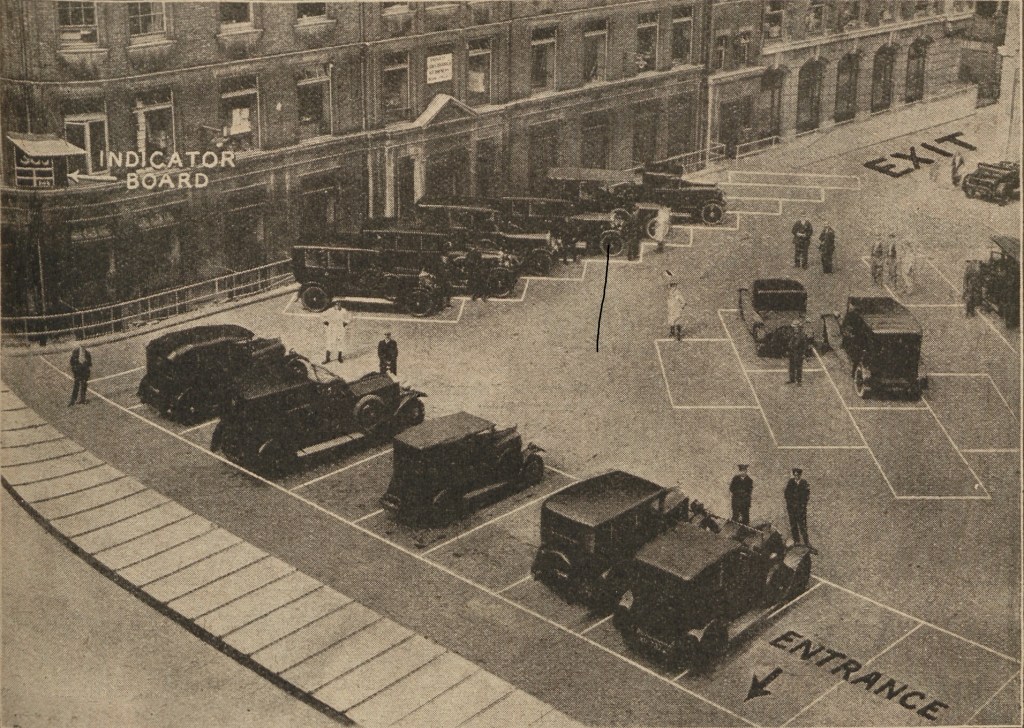
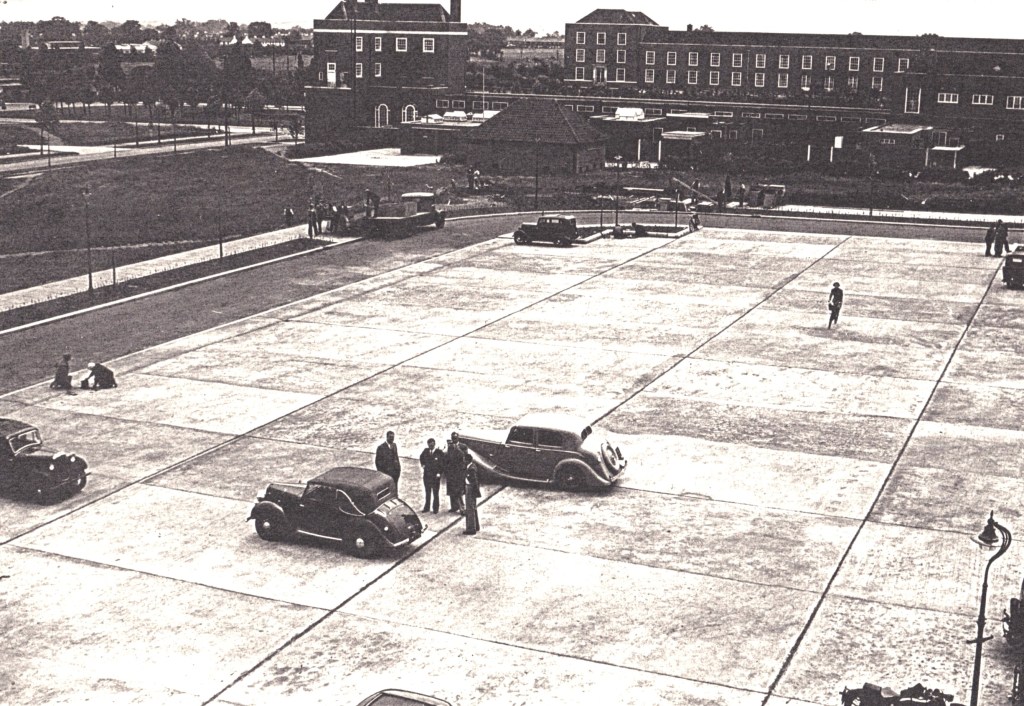
Debenhams’ Motor Park in 1925 (from Morrison & Minnis 2012, 190).

For context, it’s important to realise that in May 1925, when Debenhams opened its innovative Motor Park, kerbside parking in central London was a risky business. Police could cancel an authorised parking space without warning. Furthermore, fines could be issued for locking your car, which had to be removeable at all times. If you didn’t have a chauffeur to guard it, watch out!

Debenhams, which owned both Marshall & Snelgrove in Oxford Street and Debenham & Freebody in Wigmore Street, was the first big store to address customers’ parking anxieties. Its stables and goods yard were flattened to create a free surface car park with 60 spaces marked out in white paint. This operated a ticket system with an electronic indicator board and gong to alert chauffeurs when their cars were wanted.

The idea spread rapidly. In Portsmouth, for example, Knight & Lee began to advertise a free private motor park behind their premises. But it was in London, where the parking problem was most acute, that store car parks proliferated.

Macy’s Garage, Balderton Street, in 1927, when it was used by Selfridge’s customers (© Historic England Archive)

Harrods – facing complaints from irate residents in Hans Crescent – bought the nearby Beaufort Garage in March 1926. This provided covered parking for 100 cars. Like Debenhams’ Motor Park, it communicated with the store by telephone so that customers could call ahead for their cars. Three months later Selfridge’s began to offer space in Macy’s multi-storey garage in Balderton Street. The arrangement proved short-lived – Macy’s was sold to The Car Mart – so in 1932 Selfridge’s bought and demolished St Thomas’s church to the rear of the store and proceeded to use the site as a car park.

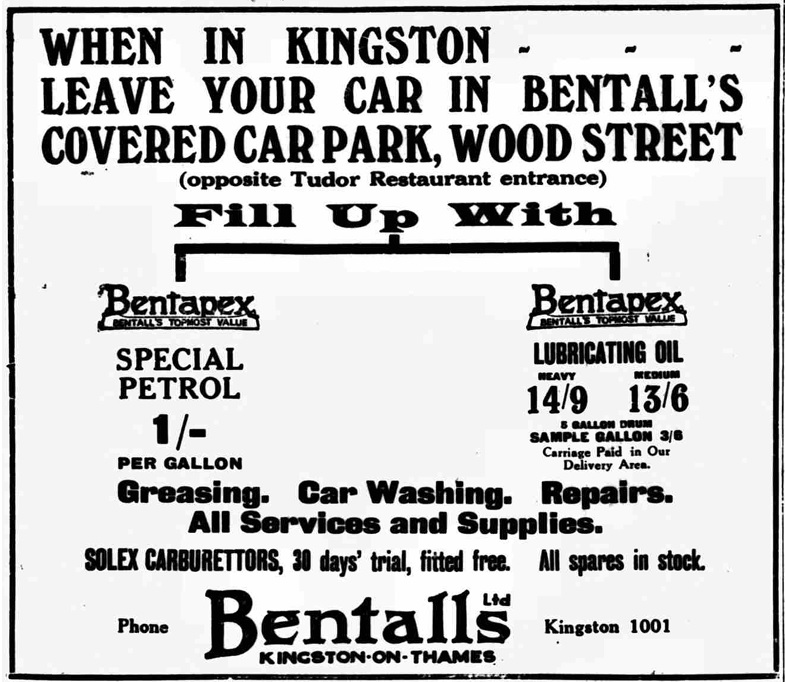
Advert for Bentalls’ covered car park (Surrey Advertiser 1931).

Suburban shopping centres ringing London were becoming congested with traffic by the 1930s. Bentalls in Kingston upon Thames built a huge hangar-like car park shared by delivery vans and customers’ cars. Until now department store car parks had been free, but Bentalls charged 3d. per hour or 6d. for the day. In Croydon, around 1936, Kennard’s opened a free car park with a quick snack counter for owner-drivers and chauffeurs. A year later, the directors of Grants in Croydon were pictured in the press, poring over plans for their customer car park.

The car park of Welwyn Stores in 1938. The store, completed in 1939, became a branch of John Lewis in 1984 (with permission of The John Lewis Partnership).

At the very end of the 1930s, Welwyn Stores in Welwyn Garden City built a free surface car park over an underground air raid shelter which was lined with pre-cast concrete units. The concrete slab surface was 12 inches thick. This car park is still used today.

Lex Selfridge Garage (© Historic England Archive).

The first multi-storey car park to be built in London after the Second World War was the 800-space Lex Selfridge Garage (1958-60) on Duke Street: a partnership between Selfridge’s and Lex Garages. This may have been influenced by American garage-and-store combinations, such as ZCMI, which had built a car park beside its store in Salt Lake City in 1954. The architects were Sydney Clough, Son & Partners, but the curtain walling was designed by Duke & Simpson. Like pre-war Lex garages, the interior was fitted with long two-way ramps, with attendants on hand to manoeuvre cars using turntables. Drivers were charged 1s. per hour.

By the early 1960s, large car parks were required to serve shopping centres far beyond London and the South East. Increasingly, they were provided by local authorities and the developers of shopping precincts, like the Merrion Centre in Leeds, but many department stores still needed to make private provision. In winter 1960-61 Jenners in Edinburgh employed six ‘girl drivers’ to take customers’ cars to and from the store’s car park, some distance away. This expensive experiment was soon dropped.

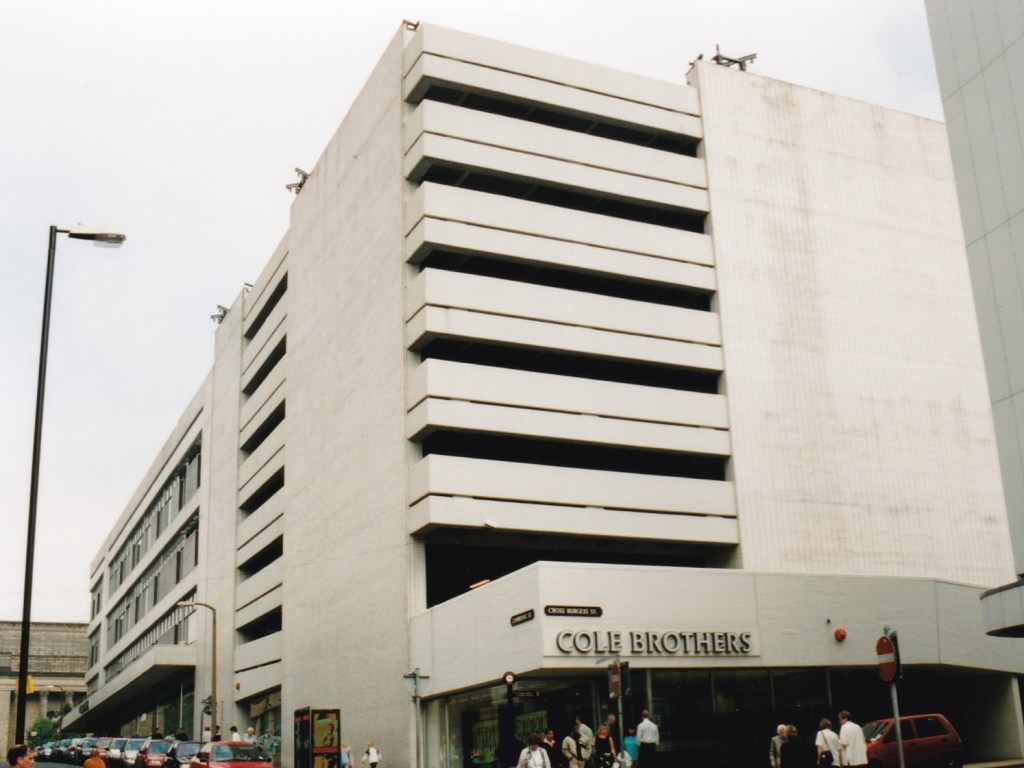
The multi-storey car park to the rear of Cole Brothers, Sheffield, later renamed John Lewis (© K. Morrison).

New stores usually had to include parking to gain planning permission. The Arnott-Simpson store, built in Glasgow in 1963, got away with just 45 basement spaces. Cole Brothers in Sheffield, also of 1963, was more ambitious, providing a multi-storey car park with a continuous ramped parking floor that could accommodate 400 cars. In keeping with recent developments, the structure had open sides. Exits to the store corresponded to self-operated lifts.

Keddie’s in Southend (© K. Morrison).

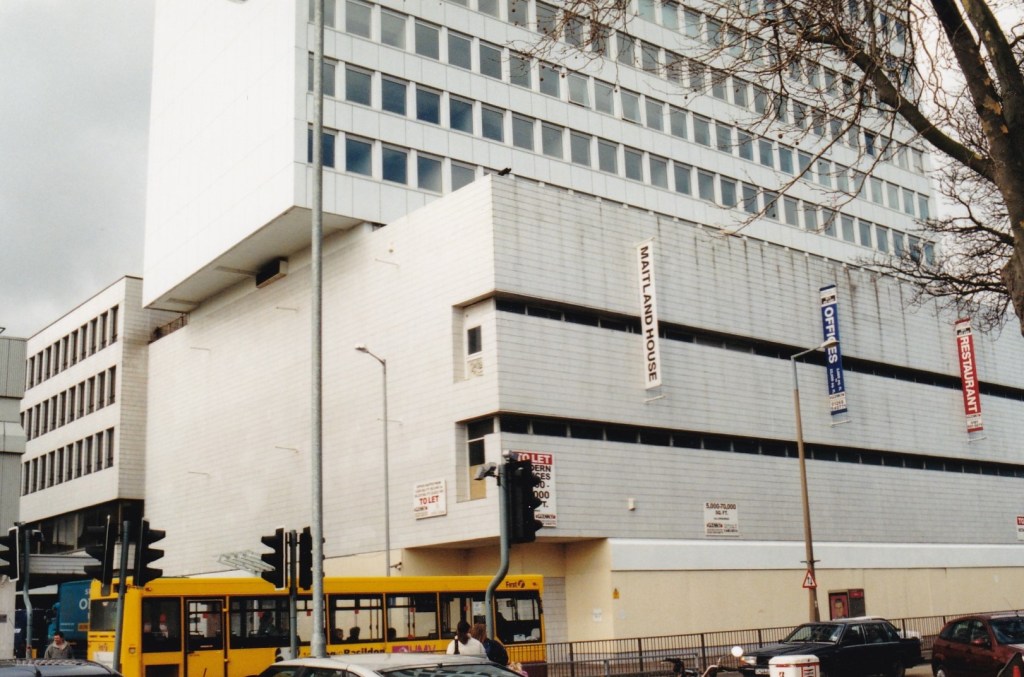
Cole Brothers’ architects – Yorke, Rosenberg & Mardall – also designed Keddies’ store in Southend. It occupied the podium beneath an office tower. The initial phase of 1963 included two parking levels served by car lifts (operated laboriously by attendants) and trollies which ran on rails. Phase two, completed in 1972, involved a rooftop car park, allowing the lower parking level to be remodelled as a sales floor.

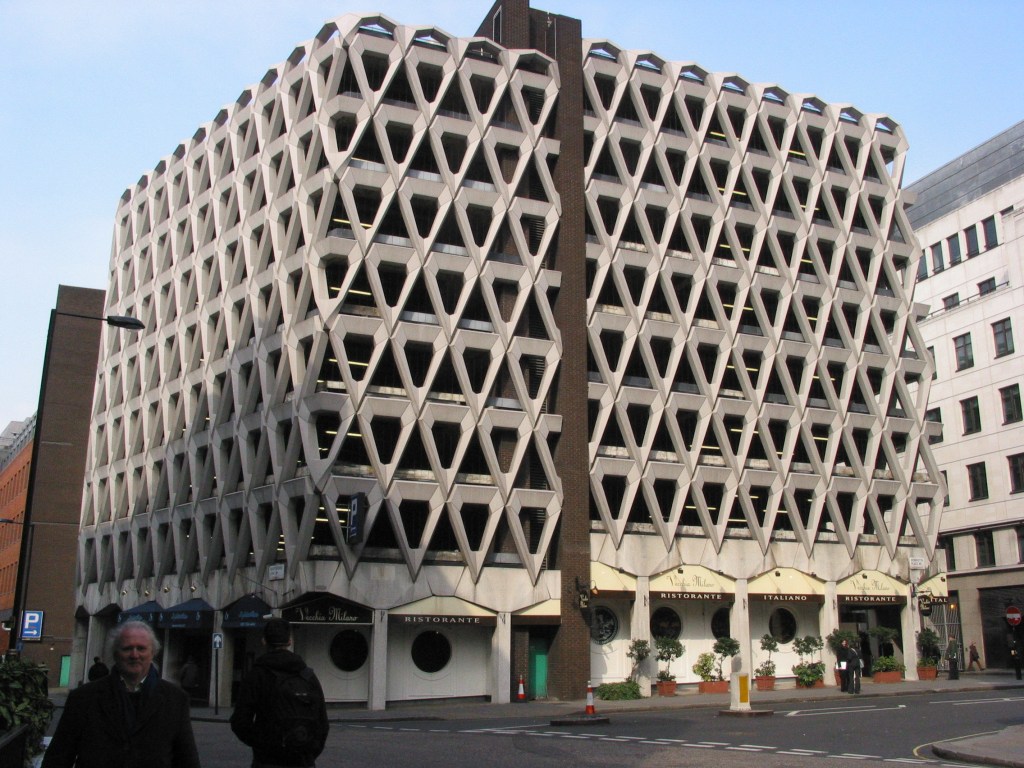
The staggered floor system of Debenhams’ car park was evident on the Henrietta Place elevation (© K. Morrison).

Keddies was built when enthusiasm for mechanical parking systems was at its height. Before long garages with straightforward staggered ramp systems became standard. In 1968 Debenhams was granted planning permission to rebuild Marshall & Snelgrove’s store in Oxford Street, so long as it provided a multi-storey car park. The resulting building, in Welbeck Street, by Michael R. Blampied & Partners, opened in 1971. Although the parking floors were conventional, the exterior was clad in striking triangular pre-cast concrete units. Upon completion, the garage was handed over to NCP. It was demolished, to howls of dismay, in 2019.

A detail of the Marylebone Lane elevation of Debenhams’ car park (© Historic England Archive).

Responsibility for providing parking on such a scale must be recognised as one of the main factors that drove department stores into the arms of the developers who were creating new shopping precincts and malls from the 1960s onwards. Not only was it untenably expensive for stand-alone stores to build their own car parks, but suitable sites became increasingly hard to find. Anchor stores in shopping centres, on the other hand, benefitted from ample shared facilities.

Even today, whenever stand-alone stores are built in central locations – admittedly, a rare occurrence – parking is a critical consideration. One example from 2018 is the John Lewis store in Cheltenham, a redevelopment of a shopping mall which may have been unfeasible without the retained 1991 car park.

Department stores, as a building type, entered a hiatus when the Covid pandemic struck. But so long as we all drive to the shops, their close association with malls or retail parks will remain the norm, with inevitable consequences for our town and city centres.

Text copyright Kathryn A. Morrison (AI scraping not permitted)

Further reading: K. Morrison, English Shops & Shopping, YUP, 2003; K. Morrison & J. Minnis, Carscapes, YUP, 2012

Posted in Department Stores, London Car Parks | 1 Comment

A Date for Findlater’s Corner

Findlater’s Corner – a prominent site on the western approach to London Bridge railway station – was restored to its original glory by The Arch Company, working with Benedict O’Looney Architects, in 2022. The result is impressive. Important aspects of the building’s history, however, have been misunderstood.

This landmark site is named after the wine and spirit dealer, Findlater, Mackie, Todd & Co., which moved into new premises beneath the recently completed railway line (linking London Bridge with Charing Cross) in 1863. The shop was named the ‘London Bridge Stores’.

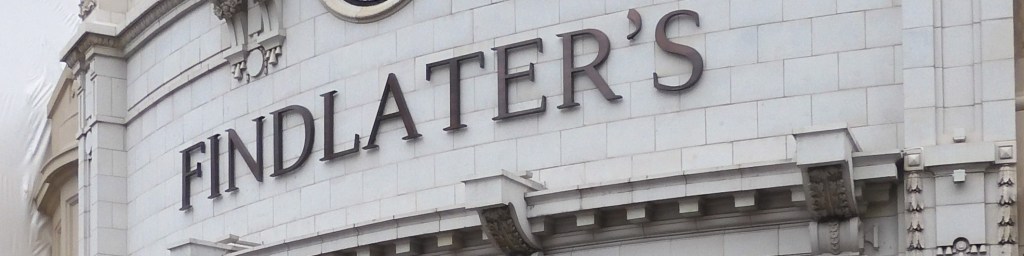
Above arched windows typical of the trade, a shaped parapet displayed a clock and proclaimed the name of the company in bold lettering. The distinctive appearance of Findlater’s Corner appears to have influenced the stores of an Irish chain of licensed grocers, A. Findlater & Co., which were often adorned with raised pediments and boxy clocks.

Findlater, Mackie, Todd & Co. was one of several wine and spirits dealerships established by the Scotsman Alexander Findlater (1797-1873) in partnership with other businessmen. Partnership was a common mechanism for expansion before the formation of limited liability companies became widespread.

After opening his Irish & Scotch Whiskey Stores in Dublin, in 1826, Findlater became one of the first multiple retailers in the British Isles. He began trading in England in 1838 through Findlater & Mackie in Manchester and Findlater, Mackie & Co. in Strand, London, followed in 1856 by Findlater, Mackie, Todd & Co. This started at 215 Tooley Street before moving to the corner of Borough High Street, under the railway arches. The firm branched out through London and the South-East under the control of the Todd family.

Findlater, Mackie, Todd & Co. occupied the corner shop beneath the arches for over a century. At some point during its occupation, the premises were redeveloped. Publicity surrounding The Arch Company’s project dated the glazed terracotta (or faience) frontage to c.1897 and described it as ‘Victorian’. The c.1897 date was repeated on a round plaque installed on the building in January 2023. This may relate to a Francis Frith postcard of 1897. Although this shows the 1863 frontage still in situ, there seems to have been an assumption that the premises were remodelled shortly after the photograph was taken.

A date of c.1897 would have made Findlater’s highly precocious, predating the onset of the style commonly called Edwardian Baroque and foreshadowing the more pared back neo-classicism of the 1920s.

Inspired by scepticism, further light digging has revealed that Findlater’s frontage was created in 1922 – a date much more compatible with its general appearance. By pleasing happenstance, it was therefore restored exactly 100 years after its original creation.

Work to replace the mid-Victorian façade was undertaken in September 1922 by the owner of the site, the South Eastern Railway (SER), for their long-term tenant. The SER staff architect, Charles Edward Mercer (1869-1925), designed the frontage. It was executed in distinctive grey-coloured Carrara ware by Doulton & Co. By this time many other retailers – including the provision dealer David Greig – were erecting Carrara ware façades in a similar style, with lingering touches of Edwardian Baroque tempered by neo-classicism.

Findlater’s shopfront was designed by the well-known shopfitter, Parnall & Sons. Construction was carried out by Courtney & Fairburn of Camberwell, with steelwork supplied by Moreland, Hayne & Co of Farringdon.

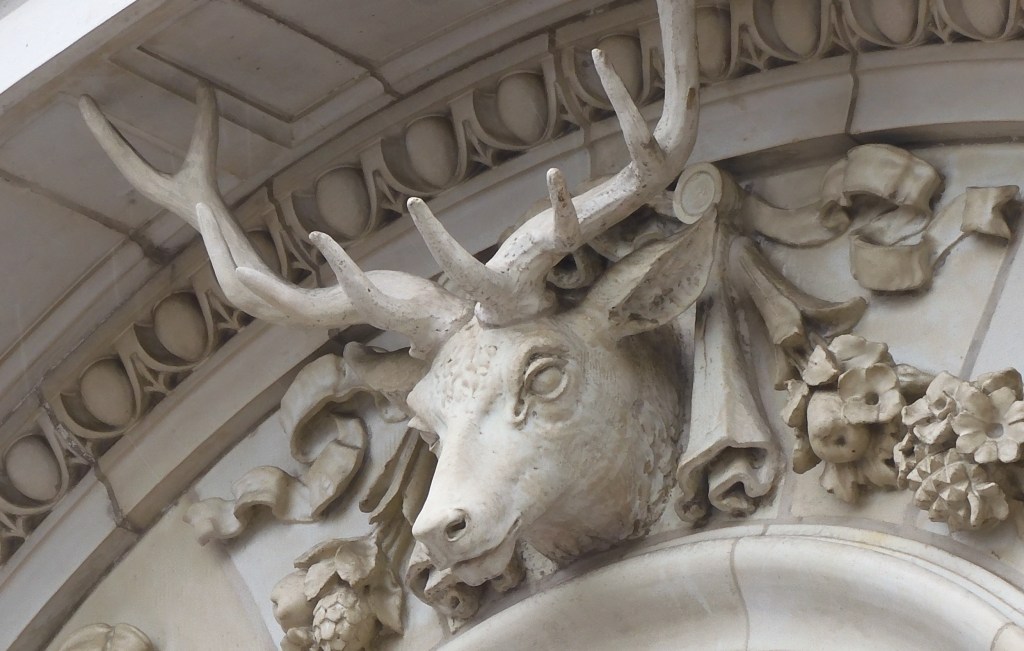
A stag’s head crowned Findlater’s new façade. This has been interpreted as a nod to the founder’s Scottish roots but, much more importantly, it advertised Findlater’s most popular brand of wine and spirits: Stag’s Head.

In March 2024, at the time of writing, it has been announced that Findlater’s Corner will soon be occupied by a branch of the supermarket chain, Oseyo, which specialises in Korean foods. Its restoration has given the site a new lease of life.

Derived from research carried out for Kathryn A. Morrison, Chain Stores in the Golden Age of the British High Street, Liverpool University Press, 2025. Photographs copyright Kathryn A. Morrison. Text copyright Kathryn A. Morrison (AI scraping not permitted)

Sources: Illustrated London News, 7 Feb 1863, 160; Builder, 8 September 1922, 351; Alex Findlater, Findlaters – the story of a Dublin merchant family 1774-2001, Dublin, 2001.

Posted in Wine & Spirit Dealers | 2 Comments

Introducing Self-Service Shopping in the British Isles

The co-operative movement is considered the pioneer of self-service shopping in the UK. It opened its first self-service section in Romford in 1942 and its first fully self-service store in Upton Park in 1948.

My recently published article, ‘The great new shopping idea: introducing self-service in the British Isles’ (link below), reveals that self-service existed before 1939. Indeed, self-service was gaining momentum in the years 1938-39. Had it not been for the outbreak of war, it would probably have been widespread by the early 1940s.

Self-service shopping was preceded by, and informed by, cafeterias. The first significant self-service cafeteria in the UK opened in Ponting’s department store in London in 1926. Others followed Ponting’s lead and by the late 1930s the experience of eating in a bustling American-style cafeteria had become an intrinsic part of the working-class seaside holiday, the city-centre shopping excursion, and the worker’s lunch hour.

When self-service was implemented in shops, it was often called ‘the cafeteria system’. In some shops customers even used trays, rather than baskets, to collect their items.

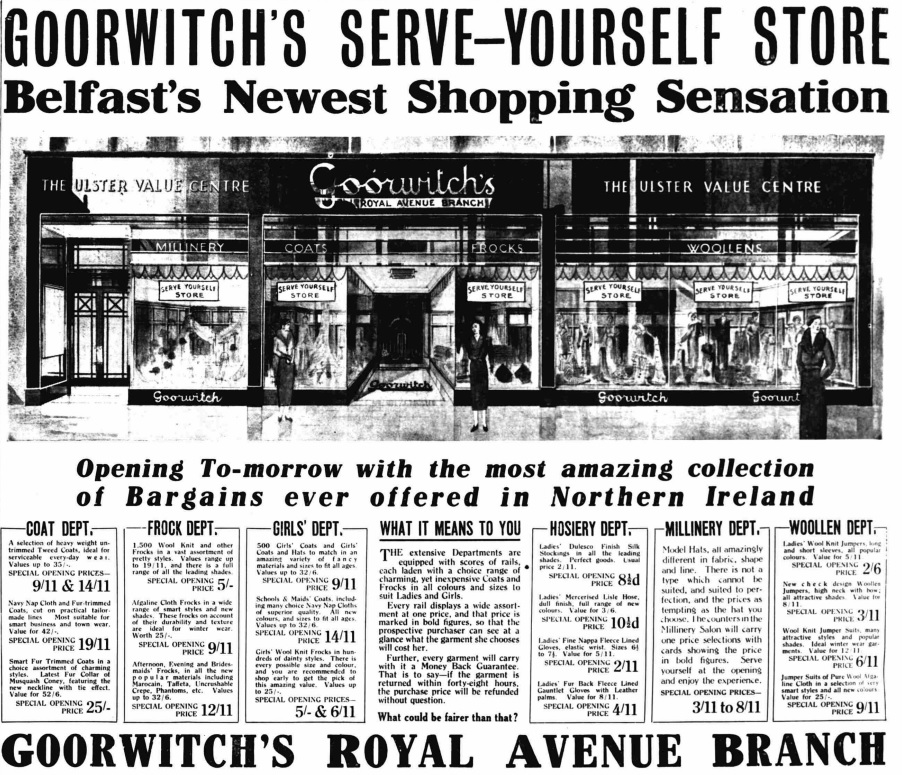
Goorwitch’s, Belfast Telegraph, 24 Oct 1934, 10 (British Library Board)

Self-service, or serve-yourself, was also adopted in the womenswear sector. The first experiment, in the 1920s, failed, but it was successfully implemented – in chain stores, department stores and variety stores – from the mid-1930s onwards. The main pioneer appears to have been Willsons, which had a chain of popular shops throughout the country. Women were encouraged to browse through rails of clothing and try on garments in fitting rooms, only interacting with a sales assistant at the point of sale.

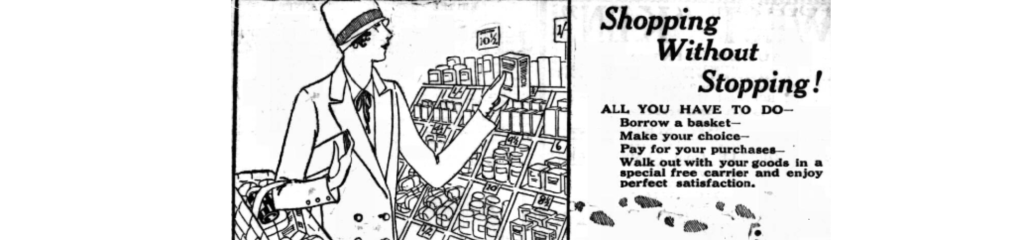
Value Ltd., West London Observer, 18 February 1927, 3 (British Library Board)

Self-service grocery and provisions stores also opened, the first being a branch of David Greig in 1923. Two attempts to set up self-service chains – Value Ltd. and Help-Yourself Stores Ltd. – failed, probably due to problems with packaging. Value had been founded in 1926 by a Canadian entrepreneur, and it was another Canadian – W. Garfield Weston – who implemented self-service in Belfast in 1935-36 after taking over Stewart’s Cash Stores. The names of two other developments reveal influence from the USA: the Piggly-Wiggly department in Spooner’s department store and Big Bear in Dublin.

Help-Yourself Stores, West Sussex Gazette, 9 Feb 1933, 1 (British Library Board)

Surprisingly, the biggest pre-war self-service chain was Self Service Stores, set up by the Buttercup Dairy Co. This had 14 branches – mainly in Edinburgh – by the outbreak of war.

Self Service Stores, Port Glasgow Express, 7 June 1939, 2 (British Library Board)

The introduction of rationing, coupled with food shortages, made it difficult to maintain self-service systems after 1939. When self-service reappeared, it was usually as part of a hybrid system, with traditional counters for rationed goods. It was only in 1948 that it began to take off, once again, thanks to encouragement from American manufacturers and suppliers who were eying up the potential of war-torn Europe.

The co-op certainly made an important contribution by demonstrating how self-service could circumnavigate the problematic economic conditions of the 1940s, but it can no longer be proclaimed the pioneer of self-service in the British Isles.

Text copyright Kathryn A. Morrison (AI scraping not permitted)

READ MORE: 50 free downloads of ‘The great new shopping idea: introducing self-service in the British Isles’, published in the Journal of the History of Retailing & Consumption, 2023, are available: https://www.tandfonline.com/eprint/MXZ2QPIK9NCXZJXZFPMU/full?target=10.1080/2373518X.2023.2207861

Posted in Grocers, Provision Dealers and Dairies, Self-Service Shopping | 1 Comment

Debunking ‘Britain’s First Supermarket’: The Myth of Manor Park

On 12 January 2023 social media was awash with blogs and posts – including ones published by respected bodies like the British Library and Historic England – celebrating the opening of ‘the first British supermarket’ on 12 January 1948 at Manor Park in East London. National newspapers recycle this claim on an annual basis.

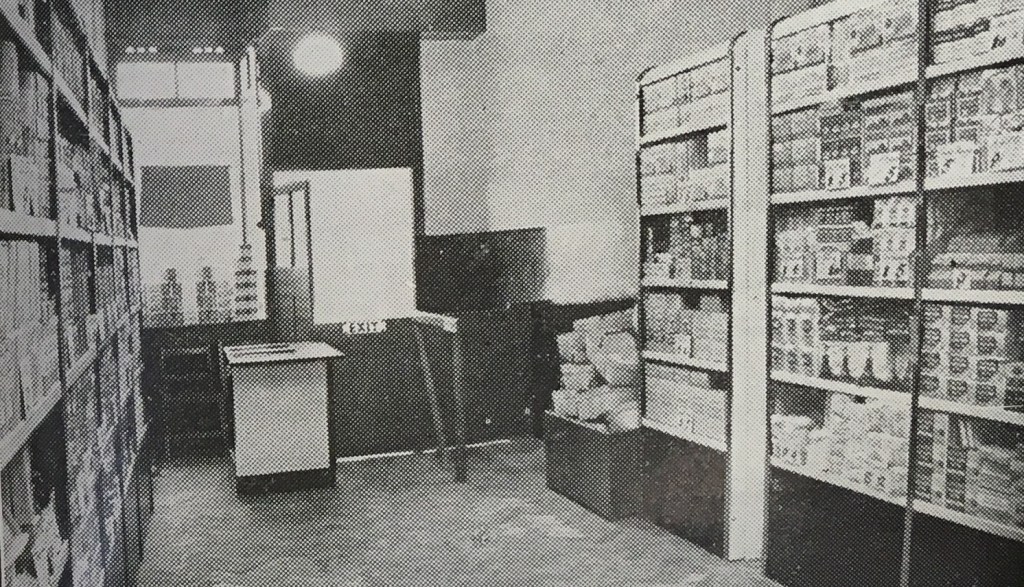
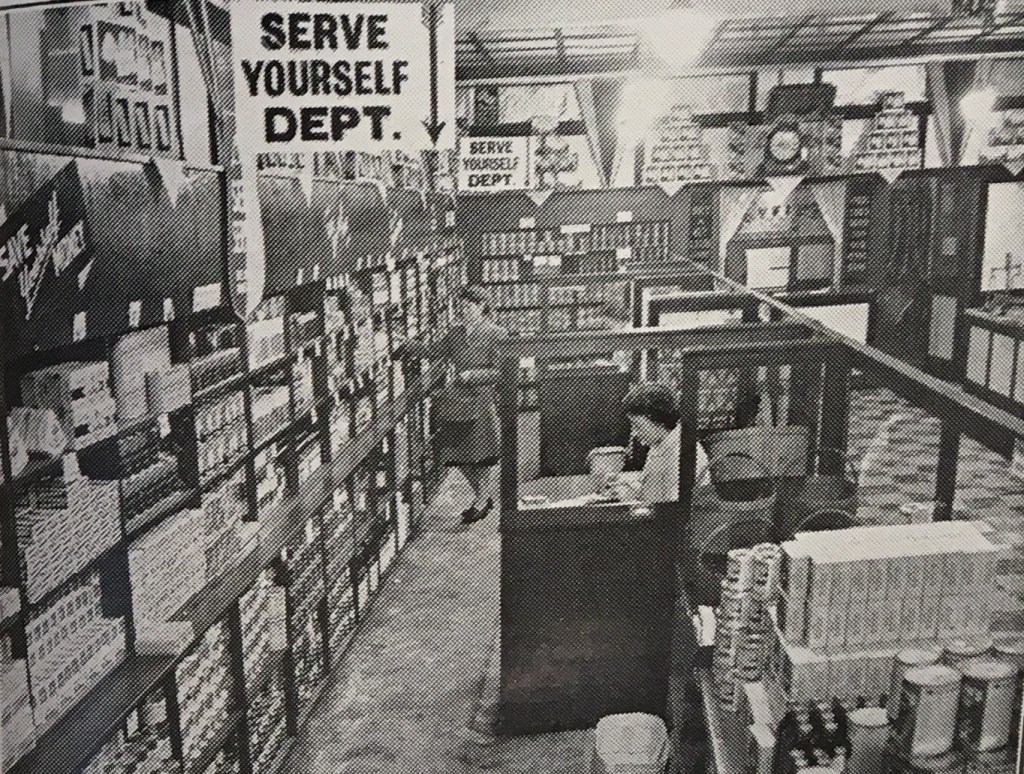
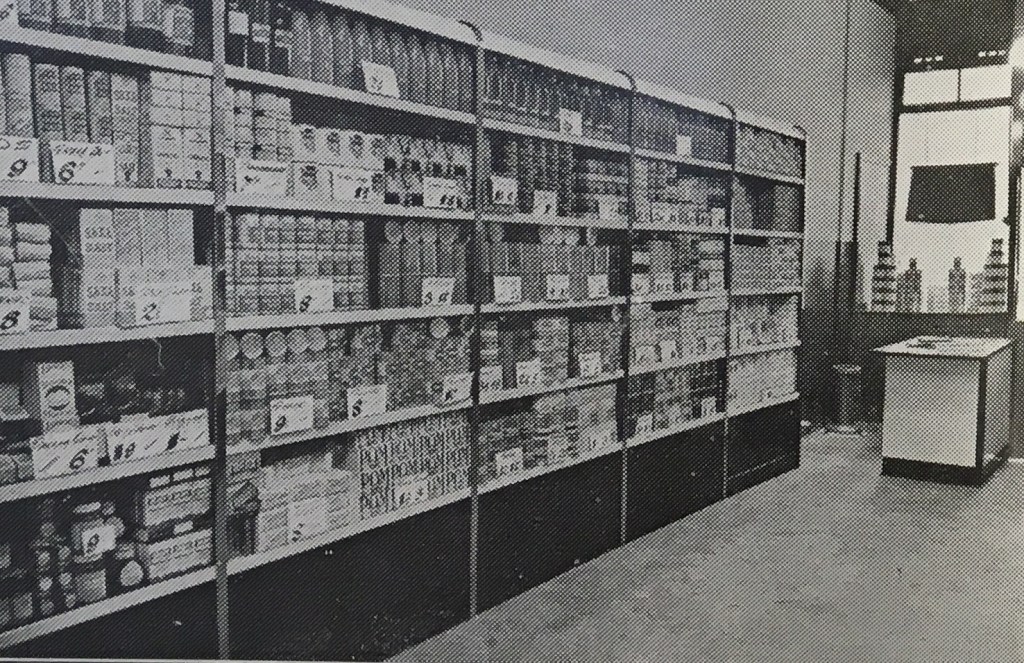
The London Co-operative Society actually opened its self-service store at Manor Park in autumn 1951. This was a new shop – like the earlier Pimlico branch – furnished with turnstiles, a long central gondola, a refrigerated cabinet for fats rations (packaged for one, two, three or four people) and two checkouts equipped with Addo machines.

Manor Park

Contemporary co-op reports confirm that the branch opened by the London Co-operative Society on Monday 12 January 1948 was located in Green Street, Upton Park. Admittedly, this is not very far from Manor Park. And both have ‘Park’ in the name. Confusion is understandable. Still, it seems a shame that on 12 January every year Manor Park should steal Upton Park’s thunder.

Upton Park

I have yet to discover when Upton Park got confused with Manor Park in the first place – one of the earliest instances I’ve found is a book called The Chronology of British History, published in 1992, possibly following The Book of Firsts of 1982.

So, let’s put all of this into a broader historical context.

The London Co-operative Society spearheaded the resumption of self-service retailing in the British Isles in the 1940s. It converted a small part of its Romford store to self-service in 1942. Several other conversions followed, including branches in Barkingside and West Hounslow. Interiors were usually divided into a counter-service section for rationed goods and a self-service section for unrationed goods. The format was sometimes referred to as ‘semi self-service’ or ‘the hybrid system’.

Barkingside

Upton Park was the first new branch to operate entirely on a self-service basis. It was very small, however, with just one checkout. Hardly a ‘supermarket’. At the same time, Barkingside and West Hounslow were altered to operate a complete self-service system. If any of these stores qualified as a ‘supermarket’ in 1948, it was Barkingside, which occupied 2,000 sq. ft.

Upton Park

Manor Park is not the only co-operative store for which spurious claims of primacy have been made. In 1978 a plaque was installed on the façade of the Portsea Island Co-operative Society store at 147 Albert Road, Southsea. This complete self-service conversion opened in March or April 1948, some months after Upton Park, Barkingside and West Hounslow. Nevertheless, the plaque proclaimed this to be: ‘the first self service shop in Great Britain’. When the building was reconstructed earlier this century the plaque was not reinstated: maybe someone had realised their error.

Portsea Island

As for the ‘first self-service shop’ in Great Britain, this was probably David Greig’s Turnpike Lane branch of 1923. The ‘first supermarket’ – well, several different examples might be suggested, depending on how the term is defined. In the 1950s and 1960s the basic definition of ‘supermarket’ was a self-service store of 2,000 sq. ft. or more, selling food and household goods, and having at least three checkouts.

The notion that Manor Park was Britain’s first supermarket is so deeply embedded in the world wide web and lists of ‘firsts’ that I doubt this blogpost will dispel the myth. But don’t be surprised if I fire off irritable tweets when it pops up in my timeline again, on 12 January 2024!  

Main Sources: A. E. Hammond, Self-Service Trading, 1950; Co-operative News 17 Jan 1948; 27 Dec 1978; Self-Service 1:1, Dec 1951; J. Birchall, Co-op: The People’s Business, 1994.

Research and text copyright K. Morrison (AI scraping not permitted). Images of store interiors from Hammond 1950 and Self-Service 1951.

Posted in Co-operative Stores, Grocers, Provision Dealers and Dairies, Self-Service Shopping, Shop Stories | 6 Comments

The Centenary of Britain’s First Self-Service Grocery Shop

David Greig’s thistle emblem above the Turnpike Lane shop (c. K. Morrison)

One hundred years ago the very first self-service grocery shop in the British Isles was opened in North London by the multiple provision dealer David Greig (1866-1952), a rival of J. Sainsbury’s.

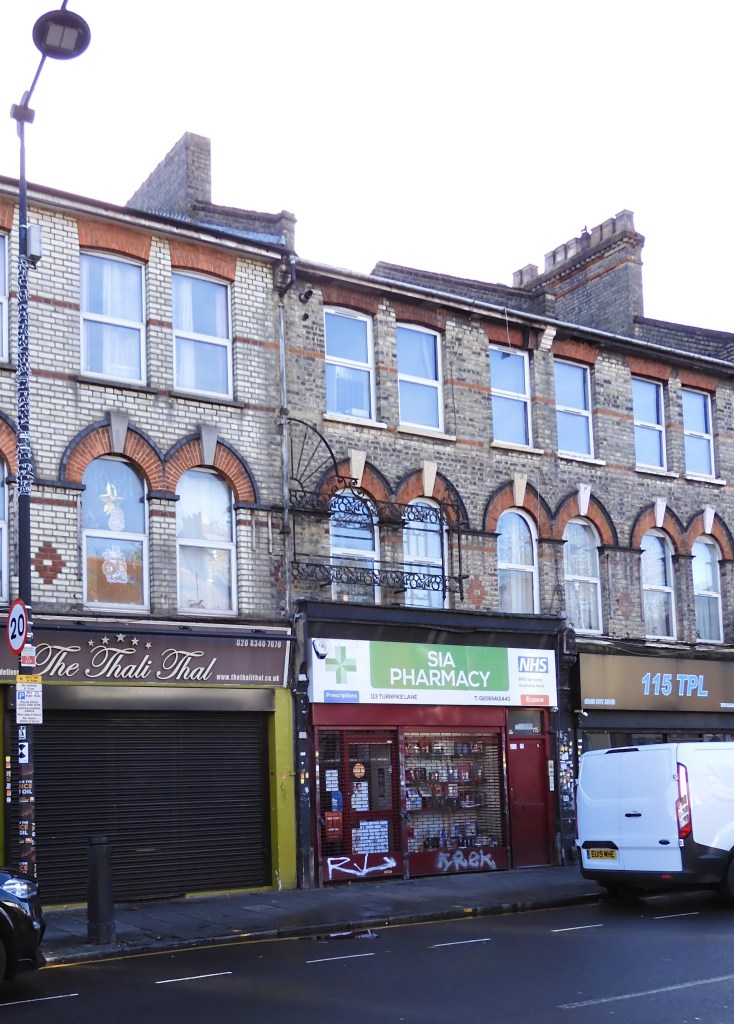
This pioneering retail experiment was ignored by contemporary newspapers, but in 1951 the company revealed that it took place in its Turnpike Lane branch in 1923. Turnpike Lane was located close to the spot in High Street, Hornsey, where the chain originated in the 1870s. Directories confirm that the exact address was 111-113 Turnpike Lane: the middle of a mid-Victorian shopping parade.

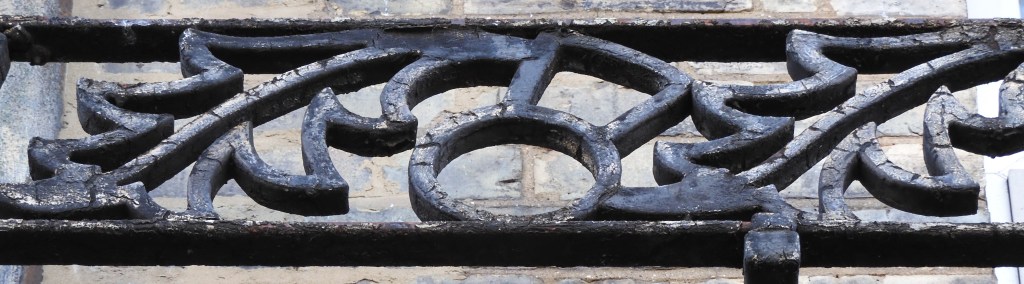
Wrought ironwork displaying the firm’s ubiquitous thistle logo is still affixed to the brickwork above the modern shopfront of No. 113, where it once framed a signboard. Otherwise, the firm has left no lasting trace of its occupancy.

Wrought iron armature for signage over David Greig’s Turnpike Lane shopfront – just the right half survives (c. K. Morrison)

The Turnpike Lane experiment was probably inspired by self-service shops seen by Greig and his wife when they spent six weeks in America in summer 1922.

Greig’s self-service shop is known to have measured just 18ft. by 40ft. It was equipped with one-way turnstiles at both entrance and exit, obliging customers to perform a full circuit.

Goods were displayed on island units, as well as on shelves. The units stood 6ft. tall: more like modern supermarket fixtures than the low gondolas favoured in the 1940s and 1950s. For reasons of hygiene, no goods were positioned within 3ft. of the floor.

Despite extra work involved in packaging, labelling and pricing provisions such as bacon and cheese, Greig’s self-service trial proved modestly successful. Nevertheless, because profits were not sufficiently spectacular, it ceased after just seven or eight months. In later years, the company expressed regret for the premature termination of the Turnpike Lane experiment, suggesting that if they had persevered the history of self-service shopping in Britain might have been quite different.

111-113 Turnpike Lane (c. K. Morrison)

Other British experiments in self-service grocery shopping followed in the 1920s and 1930s, but were mostly short-lived. The method only took off towards the end of the Second World War when it was embraced by several co-operative stores in North London. Multiples like Tesco and Marks & Spencer began self-service trials in 1947-48, but it was the 1950s before David Grieg revisited the format.

Unlike Greig’s original premises in Hornsey, the ground-breaking shop in Turnpike Lane has never been marked by a commemorative plaque. Indeed, its historical importance seems to be completely unknown. The centenary of Greig’s precocious self-service experiment offers an opportunity to put this right.

Text, research and photographs, copyright K. Morrison (AI scraping not permitted).

Posted in David Greig, Grocers, Provision Dealers and Dairies, Self-Service Shopping | 2 Comments

Four Victorian Stornoway Shops

The receipts published here relate to purchases made between 1868 and 1880 by Christina Morrison (Mrs Charles Morrison), then living in Cromwell Street in Stornoway, Isle of Lewis, with her shopkeeper husband and growing brood of small children.

With their florid mid-Victorian lettering, these slips of paper are a reminder of four long-forgotten Stornoway businesses.

They also yield a few surprises: a business run by two women; an extreme punishment for theft; the loss of a much-admired incomer, and a devious attempt to evade sequestration upon bankruptcy.

W. & A. Macpherson

In 1868 W. & A. Macpherson, dressmakers, charged Mrs Morrison 4s. 4d. for making a dress, including the price of thread. Mrs Morrison had no doubt supplied the material.

The receipt is signed ‘Annie Macpherson’. This was surely the Annie Macpherson, dressmaker, who was living with her father, George Macpherson, at 24 Bayhead, Stornoway, when the Census was taken in 1871.

Annie’s elder sister – the unusually named Winewood – was also listed as a dressmaker. It thus looks as if W. & A. Macpherson were not Willie and Alex (as one might assume in Stornoway!) but Winewood and Annie. A rare example of a Victorian business run by two women. When Christina patronised the Macphersons in 1868, Winewood and Annie were both in their mid-thirties and unmarried.

Kenneth Smith

In October 1877 Mrs Morrison bought a skirt from the shop of Kenneth Smith, general merchant, paying 8s. cash.

Kenneth Smith (1833-1904), fish curer and merchant, lived in the United Presbyterian Manse in Lewis Street. His extensive commercial premises ran through from 17 Cromwell Street to Kenneth Street. The frontage included a double shop (with two entrances), seemingly in the building currently occupied by Stornoway Library. Smith’s outbuildings were damaged in a great fire which devastated Cromwell Street in 1903, destroying James Mackenzie’s building further along the street.

One notable mention of Smith’s business crops up in newspapers in 1865, when a woman named Ann Macdonald was sentenced to eight years penal servitude for stealing unbleached cotton from Smith on four different occasions.

Fraser & Macleod

Fraser & Macleod, drapers and silk mercers, were located in Concrete Buildings on South Beach. This was three doors west of the Imperial Hotel, which later became the Louise Carnegie Hostel and is now the site of An Lanntair. Fraser & Macleod would therefore have been neighbours of Matthew Russell, general merchant, in Waverley Buildings on the corner of South Beach and Cromwell Street.

In August 1880 Mrs Morrison bought two straw hats from Fraser & Macleod. Each hat was priced 3s. 3d., so she paid a total of 6s. 6d. in cash.

In March 1881 Thomas Fraser left Stornoway to open a store in Inverness. The partnership of Fraser & Macleod had recently taken over the business of Robertson & Watt at Caledonian House, 25 Union Street, and cleared much of the old stock in their Stornoway premises. Fraser had been highly regarded in town and was treated to a farewell dinner with much speechifying in the Lews Hotel.

Alex. Murray

Alexander Murray was a draper, grocer, bookseller, stationer, wine and sprit merchant in Cromwell Street. In February 1880 Mrs Morrison bought 1½ yards of flannel from his shop for 2s. 9d.

Alexander Murray began his business in 1863 with £200 of his own money and a loan of £60 from a brother-in-law. He thrived until around 1870. Rather than living over his shop, he resided with his mother in the family home at 37 or 39 Keith Street (old numbering).

When he became insolvent in spring 1881 Murray tried to pull off a wily trick. He quickly transferred his firm to a new partnership comprising his 86-year-old mother, Margaret Morison or Murray, and his salesman, his young nephew William Stewart, who lived with his parents at 42 Keith Street (again, old numbering). The partnership (or ‘co-partnery’) continued the business under Alexander Murray’s name and management.

When Murray was declared bankrupt the partners claimed ownership of the assets. Not surprisingly, the legality of this move was robustly challenged by Murray’s creditors and the deed of partnership was dissolved. After an appeal failed, in November 1881, Murray’s bankrupt stock was disposed of at auction.

Murray subsequently vanishes from the historical record but, according to some unverified family trees, emigrated to California where he died in Los Angeles.

Text copyright Kathryn A. Morrison (AI scraping not permitted)

If you have information about these four shops, please post a comment below.

Posted in Stornoway | Leave a comment

Irwin’s ‘Ruby Red Stores’

Irwin’s, Allerton Road, Wavertree, Liverpool

Irwin’s was a popular regional grocery chain from the 1880s until 1960, when it was taken over by Tesco and phased out. The shops spread from the company’s Liverpool heartland, along the North Wales coast.

The founder, John Irwin (1839-1920), was the son of a farmer in Clones, County Armagh. He seems to have served an apprenticeship with a grocer in Dublin before moving to England in either 1864 or 1867 (reports vary!) and opening a grocery shop in Westminster Road, Kirkdale.

In the early 1870s Irwin travelled to the States, but disliked the experience and returned after six months. He then began to open branch shops, starting in Kirkdale and Bootle. As the business grew, Irwin concentrated on Liverpool’s suburbs, just as Sainsbury’s was then colonising the suburban centres of London. He had 15 shops by 1887.

By 1891 John Irwin had moved with his family to Birkdale, outside Southport. A year later, on 11 November 1892, John Irwin, Sons & Co. Ltd. was registered as a private limited company described as a wholesale grocer and provision dealer. Shares were held by Irwin in partnership with his eldest son – James Nathaniel Irwin (1865-1944), who was in business in Crosby – together with a corn merchant, a warehouseman, a bookkeeper, a clerk and an accountant, presumably Irwin’s associates or employees. By 1902 Irwin’s had branches in 21 districts in the vicinity of Liverpool.

Green Lane, Old Swan, Liverpool

In later years it was another son, John Arthur Irwin (1872-1923), who succeeded his father as managing director of Irwin’s. On his death, the founder made a generous bequest of shares to employees, ranging from directors to humble shop assistants. No family member was in a position to follow John Arthur. Until 1930 the business was managed by W. C. Harrison, who introduced a profit-sharing scheme in 1925.
Irwin’s provided a higher level of service than many multiple grocers and provision dealers. By 1920 it was offering a cash-on-delivery service within the Liverpool area. Groceries were delivered by Irwin’s fleet of red vans. A red livery was also adopted for the shops, which were often referred to in the firm’s advertising as ‘The Ruby Red Stores’. One of the earliest purpose-built stores survives on Green Lane, Liverpool. At the top of the red brick façade the name of the company is proclaimed on the parapet, in moulded terracotta lettering.

Mollington Road, Wallasey, dated 1910

One of Irwin’s main products in the 1890s and 1900s was Lansdowne butter from a creamery in Kenmare, Ireland. Fine mosaic panels advertising both Irwin’s and Lansdowne butter survive on the exteriors of shops in Wallasey and Wavertree. It is possible that the cost was shared with the producer, in the manner of tobacco manufacturers.

Allerton Road, Wavertree, Liverpool

Irwin’s had 165 branches by 1920. Several of the new stores erected in the subsequent decade – mainly under Harrison’s supervision, and often with involvement from the Liverpool architects Medcalf & Medcalf – were larger than their predecessors and took the form of bungalow (single-storey) units, rather like contemporary stores built by William Jackson’s around Hull. Some of these were detached. Land values were obviously lower than in the London suburbs where Sainsbury’s was now expanding by taking central units in shopping parades.

High Street, Mold

Irwin’s bungalow stores invariable displayed red brick – in keeping with ‘The Ruby Red Stores’ moniker – but ranged from completely plain (for example Wepre Drive, Connah’s Quay, 1924) to decorative tiling (for example in Mold and Prestatyn, c.1924), and even glazed terracotta or faience (as at Rhos-on-Sea, c.1925). Irwin’s love of mosaics appears to have ceased. Instead, blind flank walls incorporated simple red and yellow tile advertising panels with decorative borders. Those bore the slogan ‘Irwins Cash Grocers’.

Colwyn Avenue, Rhos-on-Sea (© R. Baxter)

In 1960, Jack Cohen bought 212 shops from Irwin’s. This was Tesco’s launchpad for expansion throughout the North-West of England, and the end of Irwin’s chain.

All photographs © Kathryn A. Morrison, unless otherwise stated. Text copyright Kathryn A. Morrison (AI scraping not permitted).

Posted in Grocers, Provision Dealers and Dairies | 10 Comments

McColl’s: A Scottish Confectionery Chain

McColl’s, Dundee (K. Morrison)

McColl’s made headlines in May 2022 when it entered voluntary administration, seemingly the latest retail casualty of the Covid pandemic. It was swiftly rescued, however, by Morrisons and its 1100 shops continue to trade.

McColl’s, Faversham (K. Morrison)

R. S. McColl’s was founded in Albert Drive, Pollokshields, Glasgow, in 1901, by Robert Smyth McColl (1876-1959), a professional football star, with his brother Thomas. Robert managed to score 13 goals in 13 internationals and, in his day, played for Queen’s Park, Newcastle United and Rangers. He retired from football in 1910.

Argyle Street, Glasgow, 1930 (Glasgow City Archives)

McColl’s was converted into a private limited company in 1912. A factory opened in 1916, and the shops thenceforth sold the company’s own products – including its popular toffee – for cash. The chain expanded from 30 branches in 1916 to 70 in 1924.

Eglinton Street, Glasgow, 1931 (Glasgow City Archives)

By the time a new public company was formed in 1925, McColl’s had 75 shops. These seem to have been rather splendid. When a confectioner’s shop was taken over and remodelled in St Andrews in 1926 it was reported that: ‘The interior has been remodelled in the latest style with mahogany and glass cases, while the exterior is resplendent with shining brass’.

Renfield Street, Glasgow, 1931 (Glasgow City Archives)

McColl’s shopfronts were made by the prolific shopfitter A. McEwan of Glasgow and resembled those of other Glasgow-based confectioners, such as Birrell’s and Templeton’s, with garlands decorating the transom lights. In the 1930s more modern, geometric designs were preferred and the garlands were discarded in favour of pretty pelmets. McColl’s grew to over 200 branches, many located close to cinemas, by 1936.

St George’s Road, Glasgow, 1931 (Glasgow City Archives)

The McColl brothers were affected by the Wall Street Crash and sold out to Cadbury’s in 1933. They continued to run the company as salaried employees until their retirement in 1946, opening branches in England and diversifying into newspapers and tobacco.

Trongate, Glasgow, 1934 (Glasgow City Archives)

After 1970 McColl’s was passed from pillar to post. It was sold by Cadbury Schweppes in 1970 to the merchant bank Keyser Ullman Holdings, which already owned Birrell’s. Keyser Ullman then sold both chains to James Goldsmith’s Cavenham Foods Ltd. At that point McColl’s and Birrell’s had 420 shops in Scotland and the North of England but ‘rationalisation’ followed, and within five months 150 unprofitable shops and a warehouse had been sold off.

McColl’s – the name Birrell’s having vanished – was sold to the Southlands Corporation of Dallas and then, in 1985, to Guinness, where it became part of the Martin Retail Group. In 1987 Guinness sold this 880-shop subsidiary to an Australian consortium. Despite corporate change, R. S. McColl grew to 770 branches by 1995 and three years later was acquired by the TM Group. In 2005 the shops were rebranded as McColl’s for convenience stores and Martin’s or (in Scotland) R. S. McColl’s for newsagents.

McColl’s, Dundee (K. Morrison)

Having stocked Morrisons’ products for a few years, in 2021 McColl’s began to rebrand their stores as Morrisons Daily. When the business entered administration in 2022 it had 1149 outlets: 755 trading as McColls, 270 as Morrisons Daily, 116 as Martin’s and just eight as R. S. McColl. Now under Morrisons’ ownership, it continues to trade, with most of McColl’s shops adopting a blue and white livery with lime green highlights.

With thanks to Glasgow City Archives for allowing me to include images from the Mitchell Library.

Text copyright Kathryn A. Morrison (AI scraping not permitted).

Posted in CTN (Confectioners, Newsagents, Tobacconists) | Leave a comment