True-Form

fww01_01_0511_001.tif

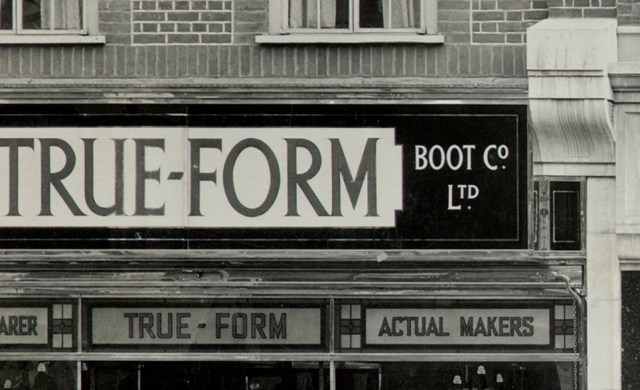
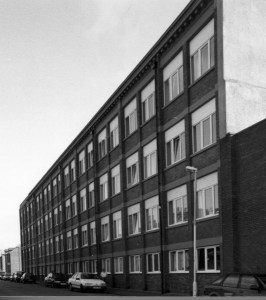
True-Form, Canning Town, London, 1930s. c. Historic England

The boot and shoe manufacturer J. Sears & Co. (True-Form Boot Co.) Ltd. was founded in Northampton in 1891 by John George Sears (1870-1916), who was soon joined in business by his younger brother William Thomas Sears (1876-1950). The Sears brothers were following in their father’s trade: John started out as a ‘clicker’ – cutting leather for uppers – then became a foreman. Their first factory was on Derby Road and the second on Gray Street, but in 1904 they moved to larger premises, equipped with the latest machinery, on the corner of Stimpson Avenue and Adnitt Road. In 1908 a warehouse was built next to the factory, to store goods prior to their distribution to retail branches. A stock room and packing department were added in 1910.

Adnitt.Sears BB013282

Sears Factory, Adnitt Road, Northampton, 1913. c. Historic England

Stimpson,Sears MF99-01309(21)

Sears Factory, Stimpson Avenue, Northampton, 1924-25. c. Historic England

The first True-Form  shop opened in 1897, providing the Sears brothers with a way of distributing goods without resorting to factors or travelling salesmen. This was followed quickly by additional outlets. As with other multiple enterprises, goods were sold for cash rather than credit.

fww01_01_0511_001.tif

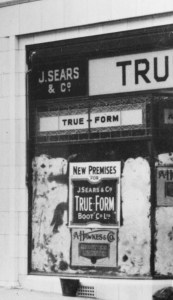
True-Form, Canning Town, London. c. Historic England

By 1912 – when its best-known boots sold for 10s. 3d. – the company operated 47 shops in London and 33 elsewhere. Most provincial branches were in English cities, but there were two outlets in Glasgow, and one each in Edinburgh, Swansea and Cardiff. Sears prided themselves on their window displays: ‘The boots and shoes are displayed in a novel manner, and their price in plain figures is not only stamped on the sole before leaving the factory, but is openly displayed to the possible customer who gazes through the shop window’ (The Times, 21 February 1912, 17).

In 1912 Sears became a limited liability company. The Great War brought about the usual problems: employees joined the forces and materials were hard to source. The demand for Army boots was so great that the company struggled to supply its civilian customers. Business boomed, however, after 1918. A multi-storey factory extension for men’s footwear was built in 1924-25 to a design by the architect F. H. Allen, and a ‘factory for repairing boots and shoes’ was built in London in 1928. Later that same year, after several months of negotiation, Sears bought out its rival Freeman, Hardy & Willis, which continued as a separate operation. Together they owned 722 shops, 300 of which were freeholds. Shortly afterwards, the True-Form factory for women’s footwear was extended, as was the warehouse. The Depression, however, delivered difficult trading conditions in the early 1930s, and Sears’ profits fell for the first time since the war. Trade stabilised in the mid-1930s, and older retail branches were refurbished.

fww01_01_0511_001.tif

True-Form, Canning Town, London. c. Historic England

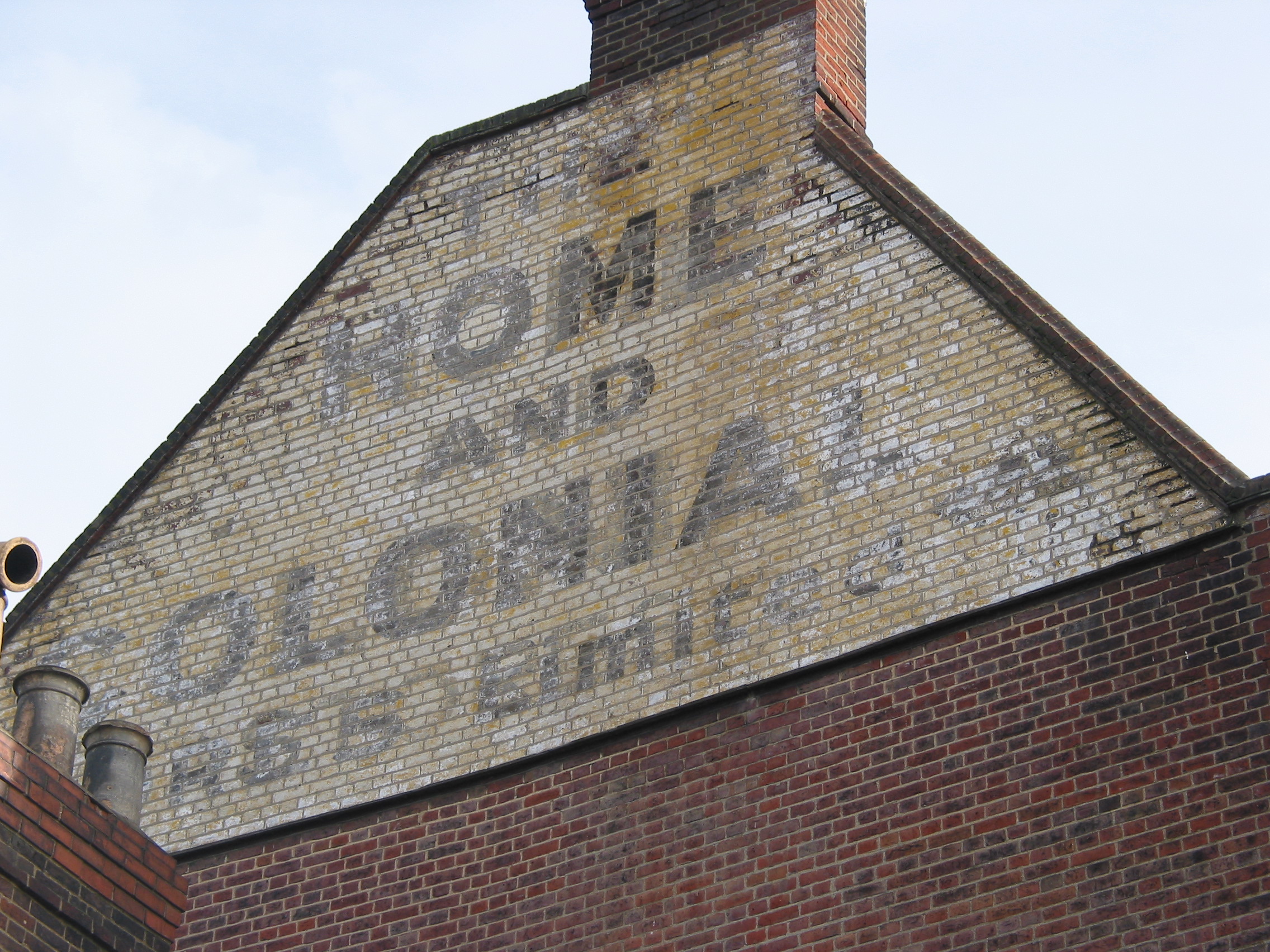
In the 1930s, the lobbies of True-Form shops were closed by gates incorporating sunbursts. Different glazing patterns were used but some transom lights, for example in Doncaster, incorporated foot-print-shaped panels bearing the name ‘TrueForm’ – a motif also used on products such as packets of shoe polish and shoe trees. A ‘ghost sign’ of similar vintage can still be seen on the side of a hair salon (‘Rush’) on Wimbledon Broadway, otherwise little trace survives  of this particular chain.

fww01_01_0123_001.tif

Coventry, c.1930. c. Historic England

In 1953, three years after the death of the co-founder and Chairman W. T. Sears, the company was acquired by the entrepreneur Charles Clore (1904-1979). Almost immediately, Clore sold off many of Sears’ properties – including True-Form and Freeman, Hardy & Willis shops – with lease-back agreements. He had raised £4.5 million from property sales by the end of 1953, and proposed selling additional properties to the value of £1 million.

The next step was for J. Sears & Co. to hand its True-Form footwear business over to Freeman, Hardy & Willis. Sears, renamed Sears Holdings in 1955, became no more than a holding company. After Dolcis and Manfield were acquired in 1956, Sears’ footwear group was named the British Shoe Corporation. This expanded with the acquisition of Saxone and Lilley & Skinner in 1962. Sears Holdings began to invest in department stores and other retailers in the 1960s (notably Lewis’s department stores [including Selfridges], William Hill, Wallis, Adams, Richard Shops). True-Form underwent several changes of image throughout the following decades, for example a revamp by Cardona Platt Associates in 1988.

The various footwear brands grouped under British Shoe Corporation – including True-Form – were sold off to Fascia, which went into receivership in 1996. A shrunken Sears plc was acquired by Philip Green in 1999.

Click here to read about the boot and shoe factories of Northamptonshire

Posted in Shoe Shops | 8 Comments

Forgotten Fashions: Etam

Bath 1999 - Copy.jpg

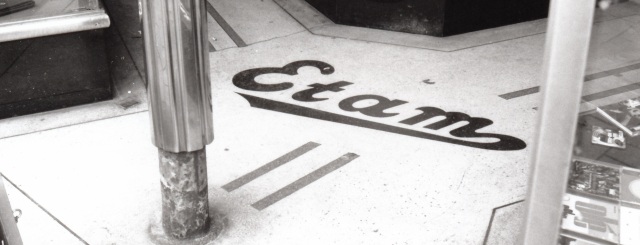
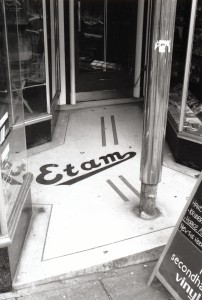
The floor of a former Etam shop, Bristol

Etam was one of several fashion or boutique chains which were popular with young women in the mid-20th century. Its main rivals through the 1960s and 1970s included Dorothy Perkins, Chelsea Girl (sigh!), Richard Shops, Wallis and Miss Selfridge. In later years, Etam suffered competition from a host of more exciting newcomers such as Next, The Gap, New Look, River Island, Top Shop, H&M and Zara.

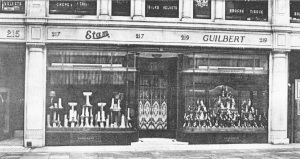
Etam was founded in Berlin in 1916 by an underwear manufacturer, Max Lindemann. It was named after a soft cotton or worsted fabric named ‘etamine’ which was used in Lindemann’s garments. After the Great War, Etam companies were set up in different countries. The British chain was founded in 1923, with the opening of an Etam shop on London’s Oxford Street. Soon afterwards a shop at 217 Regent Street, in a new building by the architects Yates, Cook & Darbyshire, was fitted up by Pollards, an established London shopfitter. This shared an entrance lobby with a shoe shop named Guilbert; the two premises are now unified as Hobbs. British Etam was followed by similar chains in France, Argentina, the Netherlands and Belgium

Etam ARev June 1925 Pollards

Etam, Regent Street, London, mid-1920s

The remarkably long-lived signature logo of Etam quickly became a standard feature of major British shopping centres. In 1952 the company sold its first range of ready-to-wear clothing. A spin-off brand for young girls, Tammy, was launched in 1975. By the time Etam was floated in 1984 it comprised 108 branches. In later years, as it attempted to go up-market, the company admitted that the ‘cheap and cheerful’ image of Etam in the 1980s was aimed squarely at ‘the Romford office girl’ – an early example, perhaps, of ‘Essex Girl’ stereotyping.

Bath 2 1999

Etam, Bristol

Two new brands acquired by the Etam Group in 1987 (Snob for teenagers and Peter Brown for men’s wear) were a drain on the company. The distinctive yellow signature logo was dropped from fascias in 1994, when the 224 shops were revamped.

A hostile takeover bid from Oceania in 1991 was rebuffed, but in 1998 Etam – now struggling – was taken over by its French namesake, Etam Développement. In 2005 the business was sold to Philip Green. Many shops were offered for sale to other brands – Monsoon bought 50 – while others were transformed into Arcadia brands such as Dorothy Perkins and Top Shop. The Etam name vanished from the British high street, and Tammy Girl was absorbed into BHS. Today Etam shops might be encountered on shopping streets in foreign countries, but in the UK it is merely an on-line retailer.

Southend 1999 col scan

Etam in Southend in 1999

Posted in Fashion and Clothing | 4 Comments

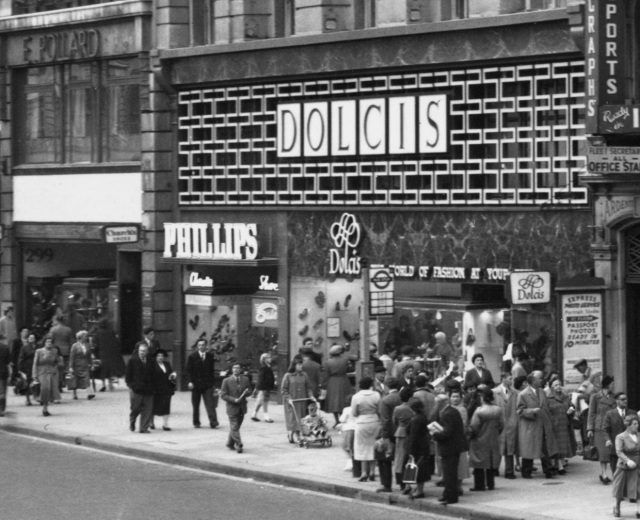
Dolcis: The World of Fashion at your Feet

Dolcis Oxford St AA005065 Sid - Copy - Copy

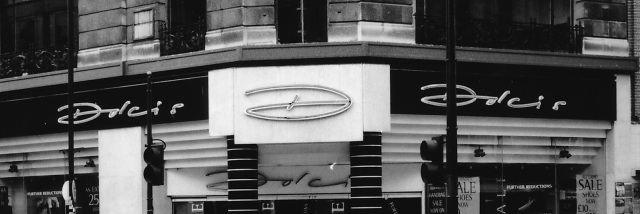
Oxford Street, London, 2000

Some of the most adventurous and exciting shoe shops of the 20th century – and especially of the 1950s – belonged to Dolcis. Once ubiquitous but ultimately ephemeral, scant trace of these can be found on the present-day high street.

This high-street chain of women’s fashion footwear was started in 1863 by John Upson, a bootmaker living in Plumstead, Kent. Upson sold (and here my spell checker is insistently suggesting ‘soled’) shoes in Woolwich market before opening his first shop with the slogan ‘The Great Boot Provider’. By the early 20th century the company had numerous branches throughout London and south-east England, trading simply as Upson’s.

Upson’s became a public company in 1920 and acquired Barron & Co. (with 24 shops trading under that name) in 1925. The head office stood on Great Dover Street in Southwark. By 1927 the company had 135 shops trading under the names Dolcis, Barron & Co., the London Boot Co., Upson & Co., and the High Life Shoe Co. No fewer than nine of the group’s branches were sited on London’s Oxford Street, which had an extraordinary concentration of shoe shops.

High Life AR 1920 - Copy

A High Life shoe shop, c.1920

Dolcis Strand 1920s

Strand, 1920s

The exact origin of the name ‘Dolcis’, which is thought to be Swiss, is uncertain. Historical photographs show that Dolcis shops of the 1920s (like those of High Life, above) were ornate affairs, in a rather traditional Edwardian style. The Charing Cross branch, for example, had expensively curved display windows with ornate transom lights incorporating a ‘DS’ monogram. A glimpse of the branch close to the Savoy Hotel on the Strand (left) in the late 1920s reveals a more modern approach, with illuminated lettering.

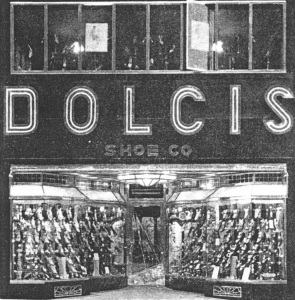
In 1931 Upson’s announced: ‘We have adopted a modern and distinctive type of front which has been most successful and is making a very marked impression on the shopping public. The latest examples are the new fronts which have just been installed at The High Life Shoe Stores at 146-148 Oxford-street, and 368-370 Oxford-street, W.1, and the Dolcis fronts at Victoria, Kingston, and elsewhere.’ (from The Times, 20 March 1931, 24). It is intriguing that a similar aesthetic was being applied across more than one brand within the group. The style was art deco, involving geometric display windows, grilles, lights and doors, with bold neonised lettering.

Dolcis Hammond2crop 1933

A Dolcis shopfront executed by Holttum & Green, shopfitters, c.1933

IMG_20160509_0001

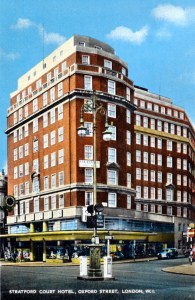
Stratford Court, with Dolcis on the ground floor, built in 1936 and photographed in the 1960s.

One of the most important Dolcis outlets of the 1930s opened in 1936 on the lower floors of Stratford Court, a new block of flats (and later a hotel) at 350 Oxford Street. The architects of this tall red-brick neo-Georgian building – Gunton & Gunton – worked alongside Dolcis’s staff architect, Harry Simcock. This was one of the first shops in London to take advantage of new rules which permitted a projecting canopy, a feature which has since been removed. As at other Dolcis shops of the 1930s (such as Brixton in 1937) the shopfront made use of shiny ‘Staybrite’ steel. It had an extensive arcade: a deep lobby with no fewer than six freestanding or ‘island’ showcases. At the heart of the shop was a dramatic staircase with a sweeping silver-bronze balustrade and ebonised handrail. The floor, throughout, was thickly carpeted in a bold geometric design. The shop is now occupied by Disney.

Ellis E. Somake (1908-1998) was appointed the staff architect to Dolcis in 1948 and oversaw the post-war expansion of the chain. His brief was to produce ‘an entirely new look to their new and refurbished shops, making them the most up-to-date vehicle for the sale of FASHION shoes . . . with the architecture and interior design to reflect this’ (Somake’s own words, in a letter dated 6 June 1985). So long as they kept within budget, Somake and his assistants – including R. W. Freeborn and Geoffrey H. Uffindell – could ‘hatch and implement our own ideas both in regard to the shopfront and fascia design, the interior planning and decoration, and in the case of an open site, the design of the building as well’. Reflecting this, Somake’s team worked with different shopfitters from job to job, though some specialist contractors were employed consistently: Minter, for example, invariably supplied Dolcis carpets.

Dolcis 99 Edgar Hyman - Copy - Copy

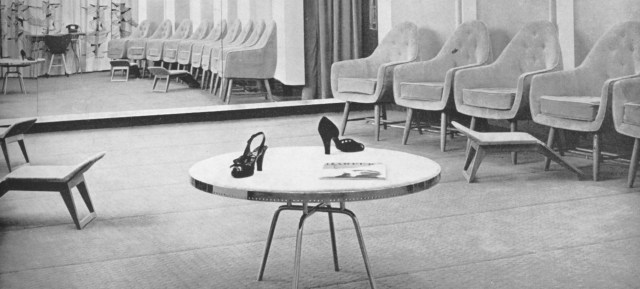
Dolcis, Old Bond Street, photographed by E. Hyman (from E. E. Somake & Rolf Hellberg, Shops & Stores of Today, London, 1956, 147).

Each new Dolcis project of the early-to-mid 1950s was unique. Nevertheless, some generalisations can be drawn to show how the shops had evolved to embrace modern ideas and technologies. The vast ‘arcade’ entrances of the pre-war period shrank in size and shopfronts became transparent, with armour-plated glass doors set in all-glass fronts. Entrance lobbies could still be vast, but they were no longer interrupted by island display cases. Interiors were typically given false ceilings of ‘egg-crate’ or fibrous plaster – often painted blue – set with combinations of spotlights and recessed or troughed lighting. Walls were often clad in vertical timber boarding. Staircases had a light quality with open treads and glass balustrades. Terrazzo or mosaic floors were partially covered by patterned carpeting, and sales rooms were furnished with contemporary-style seating – usually armchairs with spindly tapered legs and colourful upholstery. Shoe displays adopted quirky geometric or amorphous shapes.

Dolcis 30 Edgar Hyman - Copy (2)

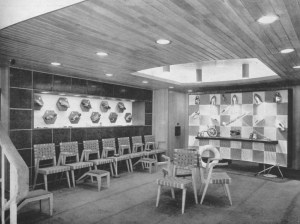
Man’s Shop, Oxford Street, photographed by Edgar Hyman (from E. E. Somake & Rolf Hellberg, Shops & Stores of Today, London, 1956, 71).

Perhaps most radical of all, many new branches included a ‘man’s shop’ as well as a ‘ladies’ department’ or ‘ladies’ salon’ (never called a ‘woman’s shop’). In 1950 Dolcis opened an experimental shop exclusively for men at 55-59 Oxford Street, on the corner of Soho Street in London. This occupied two floors of the building, with the main sales space in the basement. This adopted a nautical ‘below decks’ character, with a low, boarded ceiling. The displays made much use of pegboard – a ubiquitous material in the later 1950s and early 1960s – and part of the ground floor was laid with random (although not truly ‘crazy’) paving. In the same year, the pre-war window display lobby of the branch in Leicester Square was remodelled as a man’s shop. Slatted screens gave this a sense of separateness and enclosure. While the man’s shop adopted a rectilinear aesthetic, the ladies’ department on the upper floor was softly curvaceous, with serpentine displays surrounding the seating area.

Surprisingly, these highly modern shoe shops were still fitted with Lamson pneumatic tubes rather than cash registers, but the man’s shop on Oxford Street included a special ‘cheque table’.

Dolcis 40 Dolcis Shoe Co - Copy

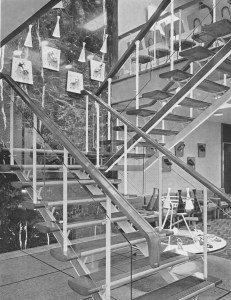
Staircase, Coventry, photographed by Edgar Hyman (from E. E. Somake & Rolf Hellberg, Shops & Stores of Today, London, 1956, 83).

In 1951 Dolcis opened a shop in the new Dingles block in Plymouth, where the pre-war shop had been destroyed by bombing. Upstairs was a ‘children’s corner’ with imitation railway carriages and a specially commissioned mural of an English seaside scene with children on holiday . Up on the second floor – daringly distant from the street in days before escalators became common – was the main ladies’ department. According to Jeremy Gould, writing in Plymouth: Vision of a Modern City, this shop ‘gave Plymothians their first glimpse of the contemporary modern style of the Festival of Britain’.

Another bombed outlet was replaced in Coventry a few years later, in 1955. The shop occupied the corner of British Home Stores at the junction of the Lower and Upper Precincts. The canopy – now a ubiquitous feature of retail buildings – was pierced at the back to allow the two-tier shopfront to rise through it. By now Dolcis had developed a penchant for dark veined marble: as well as being used to frame shopfronts (for example on Old Bond Street), it was sometimes used, as here, to clad the back of stair bays. Intriguingly, this building was supposedly planned on an 11 ft. grid ‘this being the correct distance between chairs in a shoe shop’ (from The Architect & Building News, 5 May 1955, 535).

fww01_01_0161_001.tif

Dolcis, Oxford Street, 1950s. c. Historic England

In June 1956 Dolcis opened yet another a branch on Oxford Street, on the site of Flemings Restaurant, near Woolworth’s flagship store. On the marble fascia the Dolcis name – with a trademark insignia created by the designer Reynolds Stone – was followed by the slogan ‘the world of fashion at your feet’. The first-floor windows were screened by a grille fitted with a geometric pattern of red and white neon tubing superimposed with Perspex letters spelling out the name. Inside, the mosaic floors echoed the pattern of the fascia grille, while the carpets were woven with the Dolcis insignia. One of the main features to the front of the shop was the lighting: a combination of spotlights and soffit lighting, hidden within honeycomb coffering coloured red, yellow and grey.

In 1956 Upson’s, recently renamed Dolcis, was absorbed by the British Shoe Corporation. According to Somake, the priority for the shops became ‘more financial than aesthetic . . . The design and construction of interiors in particular could now be likened to exhibition stand work, or almost to stage settings’.

Bristol 1999

Dolcis, Bristol, 1999

Soon afterwards, in 1958, the first self-service Dolcis shoe shop opened at 333 Oxford Street. Traditional service was retained in the basement and in the men’s shop, but part of the ground floor was remodelled with tiered display stands and rather uncomfortable-looking ‘poufe-type seats’. It was explained: ‘The only personal assistance given is the supply of the accompanying shoe on request, and with the sale’ (The Architect & Building News, 3 December 1958) – just how we still buy shoes in most shoe shops today. The shopfitting, unfortunately, became more perfunctory though some pre-war ‘arcade’ fronts survived well into the 1970s.

The Dolcis headquarters relocated to Leicester in 1967. Somake retired in 1970 and emigrated to Canada. Later developments in the shopfitting activities of the chain are difficult to track, but a scheme trialled in Leicester in 1996 was, bizarrely, inspired by French bistros.

halifax-2001

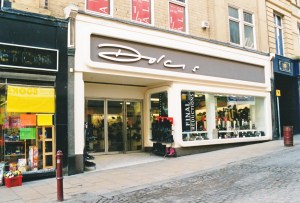
Dolcis, Halifax, 2000

Bedford

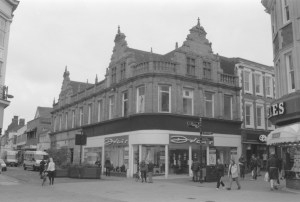
Dolcis, Bedford, 1999

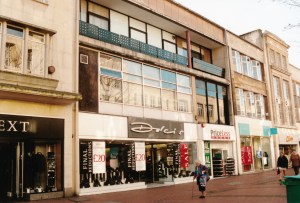
Dolcis was bought by Alexon in 1998 and moved to Luton. The still-familiar signature logo replaced older lettering on fascias. In 2006 Dolcis was sold (with, at that time, 65 shops plus 150 concessions in Envy and Bay Trader) to John Kinnaird. In January 2008 it fell into administration. The Dolcis name and 24 of the remaining 185 shops and concessions were bought by the Stylo Group, owners of Barratt’s. When Barratt Priceless collapsed into administration in 2012 – one of its many setbacks – Dolcis was acquired by the Jacobsen Group. It has traded online since 2013, but no longer has a physical presence in British shopping centres. A red signature logo can still be seen over Dolcis shops in the Netherlands but may soon vanish – its owners, the Macintosh Group, were declared bankrupt in December 2015.

Every effort has been made to trace current copyright holders. I apologise for any omissions and am happy to make amendments.
Posted in Shoe Shops | 2 Comments

Remembering Littlewoods Stores

Plymouth 2000 - Copy

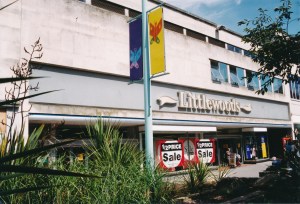
Littlewoods fascia, Plymouth, 2000.

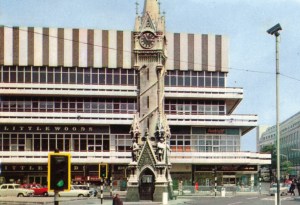
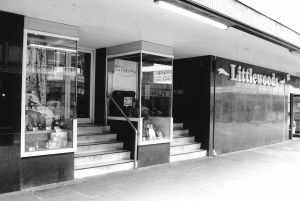
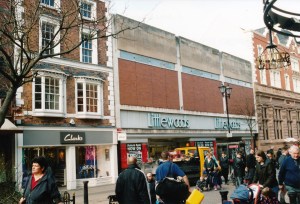
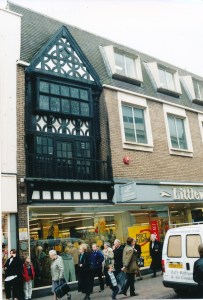
For much of the 20th century, the Moores family operated a number of highly profitable businesses under the ‘Littlewoods’ name, including football pools and mail-order catalogues. The most visible aspect of their lucrative empire, however, was the chain of Littlewoods high street stores. Architecturally, few of these buildings were as handsome as the stores of rivals such as Marks & Spencer, C&A, or even British Home Stores. Commercially, they never inspired the same affection as Woolworth. Yet Littlewoods was strong presence in British shopping centres for a good 65 years, and its closure in 2002 seemed to mark the passing of a retail era.

Littlewoods Pools was founded by John Moores (1896-1993; knighted 1980) in Liverpool in 1923. The business adopted the name of one of Moores’ original partners, Colin Henry Littlewood. In 1932 it expanded to include mail-order retailing, organised through local clubs. The subsidiary Littlewoods Mail Order Stores Ltd was formed in 1937, and the first outlet opened on Waterloo Road in Blackpool.

Littlewoods stores were similar to British Home Stores (BHS), selling a variety of low-cost (3d. to 2s. 11d.) clothing and household goods. Blackpool was followed by a number of other prime locations, including Oxford Street in central London, Brixton, Birmingham and Manchester. Littlewoods – like Woolworth – seems to have specifically targeted popular seaside towns, including Morecambe and Ramsgate as well as Blackpool.

Morecambe (1)

The former Littlewoods in Morecambe, photographed in 2002. c.R. Baxter

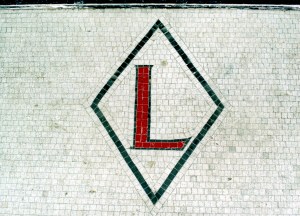
By 1939 there were 24 stores. A number of these were purpose-built for Littlewoods to designs by J. S. Quilter & Son. John Salmon Quilter (1841-1907) was, in fact, long dead, but his architectural practice had been continued by his son Cecil Molyneux Quilter (1879-1951). Quilter specialised in commercial architecture, notably public houses. He designed a new Blackpool store for Littlewoods, on the corner of Church Street and Corporation Street, which was faced in Empire stone. He also designed a store in Chester, and may have been responsible for the one in Morecambe. This faience-clad art deco building is the best surviving example of a pre-war Littlewoods store – indeed, it may be the best surviving Littlewoods of all time – even preserving ‘diamond L’ motifs on the entrance lobby floors. These clearly copied Woolworth’s ‘diamond W’.

Morecambe corrected

Lobby floor, Morecambe, in 2002. c.R. Baxter

Food departments were introduced into Littlewoods stores after the war, and as soon as it became feasible the company resumed its expansion policy. By 1956 there were 55 stores plus 12 ‘Jemima Shops’, specialising in blouses and lingerie.

Hull 2000

Hull in 2000

Annual reports were published at length in the national press from the mid-1950s through to the mid-1960s, providing details of Littlewoods’ development programme at that time. In 1956, for example, new stores opened in Banbury, Torquay, Islington, Lancaster, Crawley, Dumbarton and – actually a rebuild – Watford. The company maintained: ‘we retain the services of one of the leading designers to make sure that our stores are not only gay and attractive but efficient places in which to do the household shopping. In addition, we are always studying store practice in America and on the Continent, and are always ready to introduce new ideas if we believe that they will give our customer better service’ (quoted from The Times, 16 May 1956, 22). Unfortunately, the ‘leading designers’ were not identified.

former-littlewoods-oxford-st

Former Littlewoods building on Oxford Street, London, in 1999

Shrewbury jlp01_08_066410 - smaller

The Shrewsbury store under construction. c. Historic England, John Laing Collection

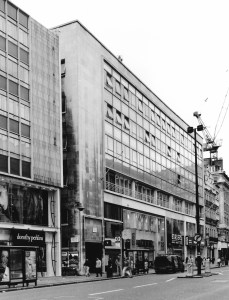
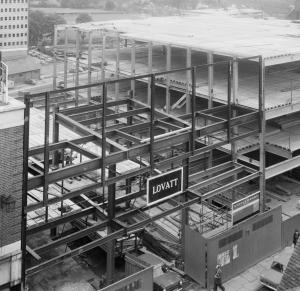
After Quilter’s death, Littlewoods seems to have depended on its in-house architects. By the early 1960s the company was experimenting with curtain walling, notably on Oxford Street, London, where a new building designed by in-house architect D. M. C. Roddick (with consulting engineer Septimus Willis) opened on 15 March 1962. The store occupied the lower floors, while the upper-floor offices were offered to let. The white-on-blue Littlewoods lettering on the fascia was in the blocky ‘Egyptian’ fashion of the time. In other cities, where lettable office space played no part in schemes, the company’s preference was for minimal windows – reduced to thin horizontal strips or, by the end of the 1960s, done away with altogether. Regardless of façade treatment, stores had steel frames – as can be seen in a John Laing photograph showing the Shrewsbury store under construction in 1964. Tragically, a labourer was killed by falling concrete floor slab during the construction of this building.

Bristol 1999

Bristol in 1999

Plymouth 2000

Plymouth in 2000.

img_2394-littlewoods-copy

Plymouth in 2016

As Littlewoods’ taste for blind façades – plain, textured or panelled – implies, sales floors relied heavily on artificial lighting and ventilation. Readily-available evidence for interiors is sparse but the up-to-date restaurant in the Stockton-on-Tees store of 1959 served to illustrate press advertisements for ‘Pel’ tubular steel furniture for a number of years. New store openings in 1960 included Basildon, Kirby, Oldham and the Glasgow ‘superstore’, regarded as ‘one of the largest single-floor chain stores in the country’.

Leicester 1 - Copy

Littlewoods, Leicester, in the mid-1970s

Stevenage 1998 (2)

Stevenage in 1998.

By 1965 the number of Littlewoods stores had risen to 70, and by 1984 to 108. Significant developments in this period included Leicester (1968), Gloucester (1968), Wolverhampton (Wulfrun Centre, 1969), Watford (extension 1970), Bath (Southgate Centre, 1972), Glasgow (extension to Argyle Street, enlarging store to 90,000 sq.ft.), Exeter (1973), Bradford (1976; 75,000 sq.ft.) and Peterborough (Queensway Centre, 1982). By the mid-1980s, Littlewoods was moving from town centres to out-of-town shopping centres. Moores’ long-term aim, to establish a chain of 120 Littlewoods stores, was achieved by 1990.

Lincoln 2000

Lincoln in 2000.

At the age of 81 Sir John Moores stepped down as Chairman in 1977. His son Peter took over briefly, but Sir John resumed control between 1980 and 1982. The main initiative of the later 1980s was Index Catalogue Stores. In 2005, when this loss-making chain folded, there were 66 freestanding shops and 93 inside Littlewoods stores. 33 shops were sold to rival catalogue retailer Argos.

Family disagreements about business strategy in the wake of the founder’s death in 1993 prompted unsuccessful takeover bids for the company. The outcome was a complete separation of ownership from day-to-day management, which was placed in the hands of a new Chairman, James Ross, and Chief Executive, Barry Gibson. Events in the late 1990s seem to highlight the absence of a consistent strategy. First of all, in 1997 a planned expansion programme was abandoned in order to develop the home shopping division. Then a deal to sell all 135 stores to Kingfisher fell through, but 19 large stores were sold to Marks & Spencer for £200 million. According to some commentators, this marked the start of Marks & Spencer’s much-publicised troubles. In 1999 Littlewoods began to (retail-speak alert!) update the store environment of 35 premises in the first phase of a £120 million investment programme which would affect every store (now numbering 112) within three years.

Hereford 2000 (1)

Hereford in 2000.

Meanwhile the introduction of the National Lottery in 1994 had thoroughly undermined the pools business, which was sold for £161.8 million – a fraction of its pre-Lottery value – in 2000.

When the decision was taken by the Moores family to sell all remaining 119 Littlewoods stores in 2002, they initially intended to retain the more profitable home shopping operation with its successful website. However, they accepted an offer of £750 million for the entire enterprise from the Barclay Brothers, owners of the Ritz Hotel, the Scotsman newspaper and numerous other businesses. Subsequently the stores closed – many were sold to Primark – and the Littlewoods name vanished from the high street after 65 years. Littlewoods home shopping is now part of the Barclays’ Shop Direct Group, a business initially formed through the merger of Littlewoods and Kays Catalogues and later joined (until 2015) by Woolworths.

Posted in Littlewoods | 62 Comments

British Home Stores Part 3: 1960 to 2016

Bristol KAM2

Bristol in 1999

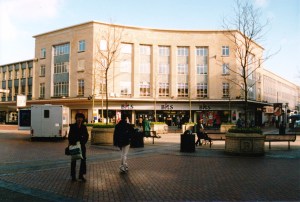
The last of BHS’s war-damaged stores to be rebuilt was Bristol, where a ‘temporary’ store had traded for many years. The new building opened in 1960 on a corner site and had an attractive concave frontage with a sweeping canopy to shelter window shoppers. The contemporary store in Scunthorpe – on the site of the Trinity Methodist Church bought for BHS by S. H. Chippendale (surely none other than Sam Chippendale of Arndale) in 1959 – had a blind concave corner bay, on which the name of the company was prominently displayed. Also in 1960, the Peckham and Bedminster stores closed and were rapidly rebuilt.

PeckhamJan09IMG_2760 (35) - Copy

Peckham in 2009

Eastgate Gloucester 1999 (2)

Gloucester (Beecroft, Bidmead & Partners, 1965) in 1999

Rather astonishingly, BHS had no presence on London’s Oxford Street until 1961, when it took a major unit, with 33,000 sq. ft. sales space, on the ‘East Island Site’ – next to John Lewis and beneath the London College of Fashion. Other new or comprehensively rebuilt stores of the early 1960s included (first list alert!): Bradford (1961; cafeteria, 1962), Rotherham (1962), Sutton (1962), Woolwich (1962), Watford (1963, with an extension of 1966), Wembley (1963), Sheffield Moor (1963), Kirkcaldy (the first Scottish branch, 1964), Swindon (1964), Tooting (1964), Gloucester (1965), Belfast (the first branch in Northern Ireland, 1965), Chester (1965), Sheffield Haymarket (1966), Ilford (1966), Bolton (1966) and Doncaster (1966).
Tonbridge Wells 1999

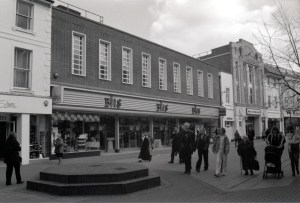
Tunbridge Wells in 1999

At the same time, many older branches were extended, including (second list alert!): Slough (1960), Bedford (1960), Kilburn (1960), Nottingham (1961), Tunbridge Wells (1961), Gravesend (1961-2), Hounslow (‘modernised’ 1961), Taunton (1961-2), Sunderland (1961-2), Croydon (1961-3), Chatham (1963), East Ham (1963), Dudley (1966), Luton (1966), Portsmouth (1966), Lowestoft (1966) and Putney (1966). Harlesden had to be rebuilt after a fire in 1961. BHS closed small branches that could not be extended, such as Edgware Road (1960), Upton Park (1961), Salford (1967) and Stratford (1967). It also shut stores deemed to have limited trading potential, like Ilkeston and Dagenham (both 1965).

In 1961 Sir Richard Burbridge (1897-1966), recently ousted from Harrods by Hugh Fraser, became Chairman of BHS. Around this time the brand name ‘Prova’ was applied to the full range of merchandise, with the exception of toiletries and cosmetics. The company considered its main rivals to be Littlewoods, Marks & Spencer and C&A, rather than Woolworth, which (with the exception of the Ladybird label) never became a significant clothing retailer. BHS largely abandoned its earlier emphasis on British goods and started to source merchandise from abroad. In 1960 a Times columnist maintained that: ‘British Home Stores . . . has done more for the garment trade in Hongkong than any other single buyer’.

By 1965 BHS had 87 stores (compared with Woolworth’s 1120, Marks & Spencer’s 240 and Littlewoods’ 70). Around 40 BHS stores had restaurants, where microwave ovens were introduced as early as 1966. This was a progressive company. In the same year, BHS took delivery of an IBM 360 computer which no doubt assisted with stock control. Although expansion continued unabated, the BHS board noted that the planning requirements of local authorities were becoming overly demanding. Negotiations were prolonged and difficult, delaying projects. BHS, like many other retailers, began to take ready-made units in speculative developments, such as a parade on St Stephen’s Street, Norwich, built by Norwich Union in 1963. The office tower over this store was not added until 1972.

Arguably the best building erected by BHS, certainly in the post-war period, was its store on Princes Street in Edinburgh. This occupied the site of an imposing 19th-century insurance office, acquired in 1963. The store was designed in 1965 by Kenneth Graham of Robert Matthew, Johnson-Marshall & Partners as part of a scheme to create an elevated walkway along Princes Street, raised above the traffic. Although several buildings – referred to as the Princes Street Panel Buildings – were erected to this concept, it was eventually abandoned. Fragments of similar schemes survive in other cities, such as Sheffield and Bristol. Inside, the Edinburgh store – completed in 1967 – had three sales floors and differed from most other BHS branches by having staircases and escalators grouped in a central position rather than located to the sides of the sales floors. Robert Matthew, Johnson-Marshall & Partners went on to design the BHS store on Market Street and Union Street in Aberdeen. Like Edinburgh, this had boxy projecting window bays.
Southend 1999

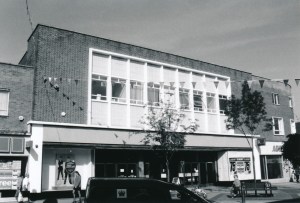
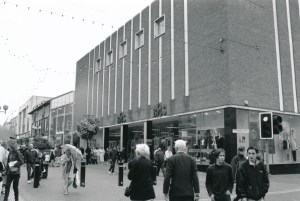
Southend in 1999

Amongst other new stores of the late 1960s were (third list alert!): Reading (1967), Preston (rebuilt and extended, 1967), Lewisham (1967), Stockport (1967), Newport (Monmouthshire – very large, with 50,000 sq. ft.), Blackburn (1968), Derby (1968), St Helier, Jersey (1968 – the 91st branch), Stockton (1968), Northampton (1968), Southend (1968), Glasgow (Sauchiehall Street, 1969) and Brighton (1969). Between 1967 and 1970 extensions and major improvements included: Watford, Swansea, Wolverhampton, Southampton, West Ealing, Brixton, Liverpool, Darlington, Middleborough, Cardiff (Queen St) and Birmingham. At the end of the decade major stores were under construction in Croydon (Whitgift Centre), Hull and Wood Green.
Newcastle (1)

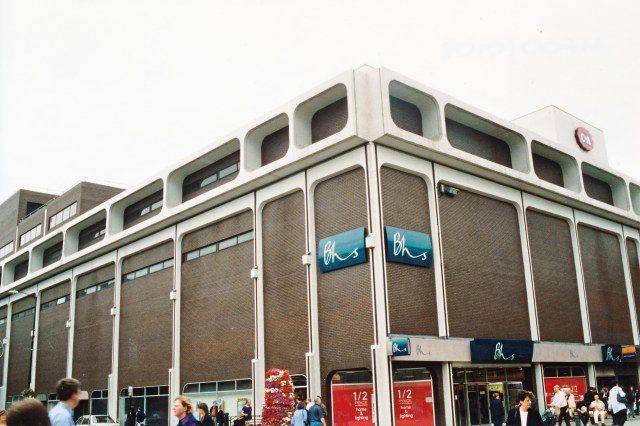
Newcastle c.2000 (now demolished)

By 1970 BHS had 95 stores, and a decade later this had risen to 125. As in Croydon, branches were increasingly positioned within shopping precincts or malls rather than high streets. New stores of the early 1970s included Bournemouth, Hamilton, Worthing and East Kilbride. In 1971 BHS bought Gamages department store in Romford. Given its name, it would have been astonishing if British Home Stores had survived the Irish ‘troubles’ unscathed. The Belfast store was bombed in 1971 and 1972. In 1973 a fire bomb was discovered in the Wembley branch and another incendiary device was received in post, disguised as a book, at the Marylebone Road branch in London. Despite this, work began in 1973 on a new Dublin branch. Amongst other stores of the mid-to-late 1970s were: Leeds (Bond Street, with 109,000 sq. ft. the largest store in the chain), Stevenage, Grimsby, Aberdeen, Newcastle, Sutton Coldfield, Dundee (Wellgate Centre), Colchester (Lion Walk, 1975), Wandsworth, Bromley, Barnsley, Manchester (1976-8), Peterborough (Queensgate Centre), Milton Keynes and Gravesend (St George’s Centre).
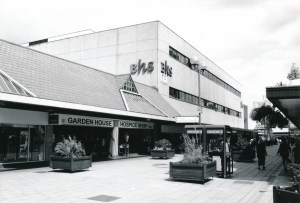
Stevenage 1998 (1)

Stevenage (built 1974-75) in 1998

BHS 1 May 2-16 (2)

Stevenage, photographed 1 May 2016

BHS maintained a cautious interest in out-of-town shopping through 1970s, biding its time until conditions were more favourable. In 1975 BHS and Sainsbury’s joined forces to create SavaCentre hypermarkets. The first opened in Washington New Town in 1977. SavaCentres were taken over wholly by Sainsbury’s in 1989 and rebranded. By then BHS had started to move into out-of-town shopping malls such as Merry Hill, Dudley. Further afield, foreign franchise stores opened, beginning with Gibraltar in 1985. By 1996 there were 51 franchise stores in 12 different countries, many in the Middle East.
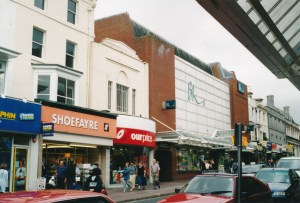
Torquay 2000

Torquay in 2000

BHS stopped selling food in many stores in the late 1970s, largely as a result of the price war that raged after Tesco abandoned green shield stamps. It was continued at just 56 out of 127 stores. This may have been why Conran Associates were brought in to devise a modern layout, described as ‘open-plan shop-within-a-shop design’, piloted at Harlow, Croydon and Wakefield in 1982. A brief attempt was made to emulate Marks & Spencer’s hugely successful food halls in 1984, but everything changed just two years later.
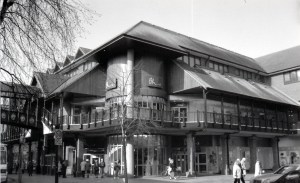
Canterbury1998

Canterbury in 1998

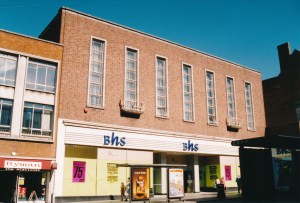
In 1986 BHS merged with Mothercare and Habitat to form Sir Terence Conran’s Storehouse group. Conran launched a brighter image for BHS at Kingston-on-Thames, with ‘ash panelling, walkways, bright signposting, and wood and chrome mesh display shelves’. The stores were rebranded as BhS (with a so-called ‘flying h’), though the historic lettering was notably retained in Edinburgh. Conran tried to appeal to younger shoppers and shut remaining BhS food departments. This was a disaster and Conran resigned in 1990.
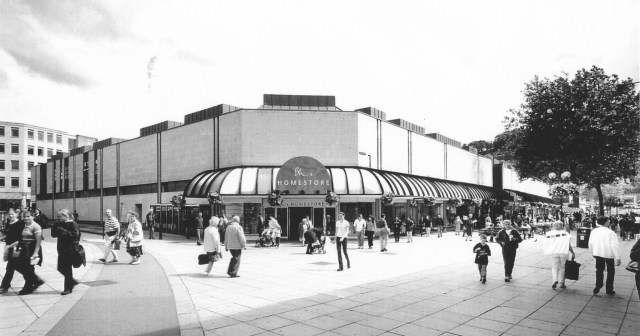
Bath BB98 13858 HE

Bath Homestore in 1998

Harrogate

Harrogate c.2000

In March 2000, Storehouse sold the BhS chain to the entrepreneur Philip Green – who had recently failed in a bid to take over Marks & Spencer. At the time of Green’s takeover there were 155 BhS stores nationally, and the chain had been making losses for some time. Green paid £219 million and converted BhS into a private company.

BhS ‘Homestores’ existed by 1998 and more opened after the acquisition of  several Allders stores in 2006. There were 16 of these by 2008, for example in Bath, Chichester and Bromley. From 2009 Green (who was knighted in 2006) began to integrate BhS with his other brands, opening Arcadia concessions in BhS stores. A year later 10 stores (including Harrogate, Guildford and Winchester), were sold to Primark.

Green sold BhS to Retail Acquisitions Ltd in 2015 for a nominal sum of £1. At that time Food Stores were being reintroduced on a trial basis, and Retail Acquisitions subsequently decided to invest effort in building up this aspect of this business. It was also announced in 2015 that the company might have to close or downsize 52 of its 171 stores, and indeed, several high-profile branches (including Fosse Park outside Leicester, Southampton and Carlisle) subsequently closed – by April/May 2016 there were 164 branches of BHS: four in Northern Ireland, 16 in Scotland and the remainder in England.

A deficit in the pension scheme was revealed in March 2016, and the company threatened to close up to 50-60 stores unless its landlords would agree to rent reductions. BHS subsequently gained a brief reprieve. This merely delayed the inevitable, however, and BHS entered administration on 25 April 2016. On 2 June the administrators announced that they had been unable to find a buyer for the business, and that the stores would close. It was further announced on 23 July – amidst a furore over the role played by Sir Philip Green in the company’s demise – that the final store closures would be implemented by 20 August 2016.

Southport 1999 (2)

Southport in 1999

Continue reading

Posted in British Home Stores (BHS) | 8 Comments

British Home Stores Part 2: the 1940s and 1950s

At the end of 1939 British Home Stores (BHS) was operating 58 stores in England and Wales. Two stores were still under construction in the early war years and one of these – in Lewisham – was requisitioned and not released to BHS until 1950. Other stores, and part of the head office, also seem to have been taken over by the Government for the duration.

Several BHS branches suffered through enemy action: eight were destroyed and 25 damaged, leading to a post-war claim for damage amounting to £103,930. Four of the destroyed stores were replaced by temporary premises which traded through the late 1940s and early 1950s.

Like its rivals, BHS experienced considerable turmoil during the war. The company had not been involved in manufacture (unlike Marks & Spencer and C&A), and found that its supply chain was thoroughly disrupted, especially in the field of drapery goods. Additionally, staff joined the forces (in fact, 20 were killed), air raid precautions affected working hours, and government policies such as purchase tax and rationing caused headaches for the management team. Not surprisingly, BHS had to abandon its 5s. maximum price limit. Throughout the 1940s, the catering side of the business, especially the serving of hot meals, assumed great importance.

Green Shops Hounslow

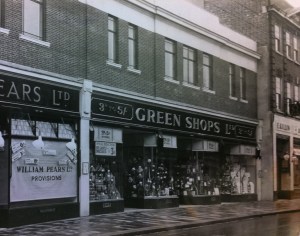
Green Shops, Hounslow, 1937: another Woolworth-lookalike. c. Historic England

Two important mergers allowed BHS to expand in the 1940s. First, in 1943, BHS acquired Green Shops Ltd. This was yet another variety store chain with a 3d. to 5s. price range. It had been started up by an American chain store proprietor,  H. L. Green of New York. Formed in 1932, this company had expanded quickly by taking over several US chains before setting up in the UK in 1935. The first Green Shops in the UK opened in Hounslow and East Ham, followed by Wood Green and Bedford. By end of 1943, all but two Green Shops had been rebranded.

Then, in 1944, BHS took over Hills & Steele Ltd, a chain store subsidiary of Great Universal Stores Ltd., known until 1938 as New Universal Stores. This had nine outlets including Newport, Wolverhampton, Dudley, Dundee, Hull, Lowestoft, Exeter and Lincoln. These shops operated a price range of 3d. to £5. As with Green Shops, the majority were rebranded as BHS, but in this case the process was more protracted, perhaps because the product range was not such a close match. Hills & Steele was not fully integrated with BHS until 1950.

In 1947 BHS took possession of a new office block: Marylebone House at 129-137 Marylebone Road, London. A cafe was installed there for employees in 1948, and around the same time a training scheme was introduced. Marylebone House was extended in 1965.

Exeter 2000

Exeter in 2000

The post-war building licencing system meant that BHS could not resume normal expansion until 1954, but in the meantime its architects and estates departments undertook as much forward planning as possible. They participated in a number of prioritised reconstruction schemes, primarily in blitzed city centres such as Southampton (store begun 1951; opened 1951) and Exeter (store begun 1950; opened 1953). In addition, several sites were acquired for future development, for example in Cardiff, where a store opened in 1955 on a site bought in 1952. By now, through a deliberate policy of property sales, most stores were leasehold, on 99-year leases, rather than freehold.

BHS’s chief architect at this time was G. W. Clarke, who generally worked alongside W. S. Atkins & Partners, as consulting engineers. The stores – like Woolworth’s buildings – were composite structures, with steel frames and concrete floors. Clarke sometimes appointed local architects. At first, like C&A, BHS retained the narrow vertical window bays and margin-light glazing that had characterised high street façades in the 1930s, but by the end of the 1950s Clarke had embraced a modified form of curtain-walling. This architectural approach became firmly associated with BHS, with framed curtain wall panels – like giant TV screens – dominating the frontages of many stores.

In 1954 expansion began in earnest. Work began on replacing the temporary stores which superseded bombed premises in Sheffield and Coventry (opened 1955), and in Swansea (1957). In Plymouth (opened 1955), Gloucester (opened mid-1960s) and Northampton (1967-1970), and no doubt at some other sites, the architects Beecroft, Bidmead & Partners were engaged. Extensions opened in Hanley (1955), West Ealing (1955), Great Yarmouth (1956), Wakefield (1956), Hull (1957), Northampton (1959) and Wigan (1959).

Blackpool 2001 (2)

Blackpool, 2001

Crewe 2000

Crewe in 2000

Middlesborough

Middlebrough around 2000

Amongst the new stores built in the late 1950s were York (1957), Blackpool (1957), Middlesbrough (1958; particularly large at the time, with 29,000 sq ft) and Crewe (1959, built by Cubitts). The most important stores in this period, however, were erected in Birmingham and Liverpool. That on New Street, Birmingham, regarded as the ‘largest and most important store to date in our chain’, opened in May 1958; escalators were installed in 1966. On Lord St in Liverpool, in 1959, part of the upper floor had to be cantilevered over an existing jewellery shop; this was extended in 1967.

Liverpool 1999

Liverpool, 1999

Meanwhile, sales methods were changing and like many other retailers BHS, in 1957, embraced self-service. 

Posted in British Home Stores (BHS) | 4 Comments

British Home Stores Part 1: 1928-39

Croydon - Copycrop

Croydon

British Home Stores, commonly known as ‘BHS’, was registered as a private company in London in April 1928. The exact circumstances of its foundation remain mysterious, as do the personalities involved, but the intention from the outset seems to have been to develop a chain of variety stores in major shopping centres.

Some of the first branches opened in thriving London suburbs, starting with Brixton – where Marks & Spencer and Woolworth were already established – followed by Croydon, Harlesden and Ilford. The revamped Victorian building in which the Brixton branch opened still stands at 452-6 Brixton Road, on the corner of Dorrell Place, occupied by Superdrug. The branch on Church Street in Croydon – subsequently redeveloped by BHS in the early 1960s, before the firm moved into the Whitgift Centre around 1970 – appears to have been designed on the model of contemporary Woolworth stores.

The ethos of the day was to ‘buy British’, and the very name ‘British Home Stores’ appealed strongly to consumers’ patriotism. Within a few years the company was claiming that 96% of its goods was manufactured (or otherwise produced) in Britain. Principal lines included clothing, household goods such as lighting – which was also a Woolworth’s staple – and groceries. Most branches seem to have had a cafe from an early date, if not from the start.

When BHS was just a few months old, in December 1928, a controlling interest in the company (50%) was bought by a New York chain store proprietor, Abraham Herman Neisner (1884-1933). Neisner, who assumed the dual role of Chairman and Managing Director, wished to fashion the English chain along similar lines to his American stores, which traded as Neisner Brothers and displayed red and gold fascias. In this he was following in the footsteps of Frank Winfield Woolworth (1852-1919), who had developed a successful chain of 5 and 10 cent stores in America before starting his British chain in 1909. By 1928, Woolworth was entrenched on the British high street. BHS had a very similar business model, but sold goods within a broader price range – ‘3d. to 5s.’ rather than Woolworth’s restricted ‘3d. and 6d.’. By some accounts the price range originally adopted by BHS was ‘3d. to 1s.’, but Neisner raised it to fall in line with contemporary American variety chains.

BHS had seven branches by 1929, all overseen from the head office at Ivy House, 30 Newgate Street, London. One of the first to open outside London was at 38-40 Palmerston Road, Southsea; others followed in Portsmouth and Sheffield. BHS’s comprehensive rebuilding and modernising programme of the 1950s and 1960s has meant that few of its pre-war sites survive. A rare purpose-built example stands on Western Road, Brighton, now in the hands of Primark. Designed in 1930, with touches of both art deco and classical styling, this is comparable with the contemporary stores of C&A or Woolworth. Archive photographs show the building in the course of construction. It was sold by BHS in 1969.

Primark,_169–174_Western_Road,_Brighton_(April_2015)_(2)

Former BHS, Brighton (Hassocks5489 via Wikimedia Commons)

BHS became a public company on 15 December 1932, with a total of £400,000 issued capital. A prospectus published in May 1933 stated that BHS had 15 stores, with two more under construction. By December 1933, when Abraham Neisner died of a fever aboard the Italian cruise ship SS Rex, there were 22 stores. Shortly after this, Neisner Brothers sold their interest in BHS for around a million dollars. Ernest Vaughan, the 7th Earl of Lisburne (1892-1965), who had been a director since 1928, took the helm as Chairman – he was succeeded in 1937 by the naturalised American John R. Sofio (1887-1961), and in 1940 by Horace Moore (1894-1959), an architect’s son.

The severing of the American connection did not check the growth of BHS. There were 27 stores by 1935, and 37 by 1936. By the mid-1930s it had become a matter of course for BHS to build its own stores, whether properties were held freehold or leasehold. Several of BHS’s London stores were leased from Second Covent Garden Property Co. Among these was 140-142 High St, Sutton, which was rebuilt with an agreement that the Second Covent Garden Property Co would refund the cost of demolition and construction while BHS took an 80-year lease on the new building. The Sutton store was rebuilt yet again in the 1960s.

New branches were still chiefly in London – for example in Peckham, Kingston, West Ealing and East Ham – and major city centres in the south of England, such as Bristol. BHS already had a store in Sheffield, but from the mid-1930s additional outlets opened in the Midlands and the north of England, for example in York, Wakefield, Newcastle, Hanley and Leicester. The Newcastle branch occupied one wing of a building newly erected by the architects North & Robin for C&A. On more than one occasion BHS boasted that the heating lighting and ventilation of its new stores had been ‘scientifically treated’, though it is unclear exactly what was meant.

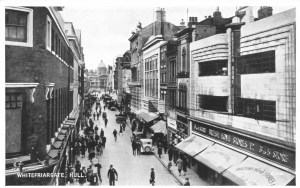
Hull

Whitefriargate, Hull

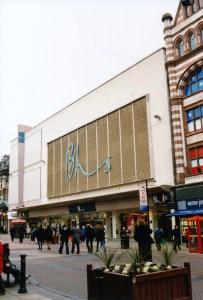
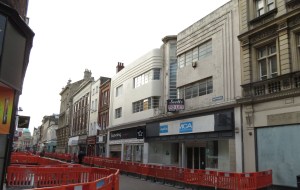
The George Hotel on Whitefriargate in Hull was rebuilt in a robust moderne style between April and November 1934, and the premises of the draper Frederick Matthew on Fishergate, Preston, were reconstructed between February and October 1935. In each case, the store occupied a single level, on the ground floor, with the stockroom and staff rest rooms (including a dining room and kitchen as well as cloakrooms) above, an arrangement just like contemporary Woolworth stores. The suppliers and contractors at Preston probably worked for BHS on a regular basis: the structural steel was by Rubery, Owen, the terracotta by the Leeds Fireclay Co., the bronze shopfront – which was remarkably like Woolworth’s – by the Cheltenham Shopfitting Co., and interior fittings by Mason’s. However, the company maintained that ‘when it is decided to build new stores everything is done to see that as much of the cost of materials and labour as possible is spent locally’. Once open, each store employed around 50 local people.

img_2621-copy

Whitefriargate, Hull, 2016

Preston 1935

Preston

The Managing Director, Mr B. M. Rosoff, explained at the opening of the Preston store that “Before starting the day’s work, the whole staff gather round the music counter and enjoy ten or fifteen minutes’ hearty singing. It is found that this creates a happy feeling amongst the staff first thing in the morning, and dispels that ‘early-morning feeling’.”BHS branches, inevitably, grew progressively bigger. The store which opened on Listergate, Nottingham, on 21 February 1936 – the 39th in the chain – occupied two levels: ground and basement. It had 36 large counters and racks, with around 1,500 feet of display space. At the opening, Rosoff explained that sweets and foodstuffs were stored in a zinc-lined room to avoid contamination, and that the luncheonette counter was stocked with fresh food every day – something that evidently could not be taken for granted at the time! As at Hull and Preston, the staff dining and rest rooms were on the upper floor.

WHSmith - Copy

Former BHS, Nottingham

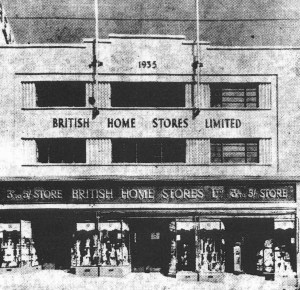
The Nottingham branch (now W. H. Smith) was just one of several BHS stores of the 1930s to be designed by the company’s staff architects and given a modern façade clad in cream glazed terracotta or faience. A couple of masts often crowned the elevation. In 1935-6 Shaws of Darwen manufactured tiles for the façades of stores in Stockport, Liverpool, Taunton and Birkenhead.

Growth paused briefly in 1937 while BHS underwent organisational changes. Amongst its new initiatives at this stage – shortly before Woolworth took a similar step – was the introduction of a staff pension and life assurance scheme.

Expansion resumed in 1938, with new branches in Sunderland and Swansea, and extensions to the older stores in Sheffield, Bedminster and Southend. This phase in the development of the company would soon, of course, be checked by the outbreak of the Second World War.

Posted in British Home Stores (BHS) | Leave a comment

The Public Benefit Boot Co and Lennards

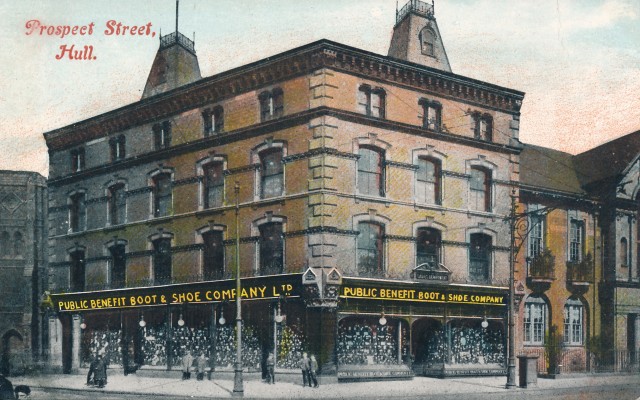
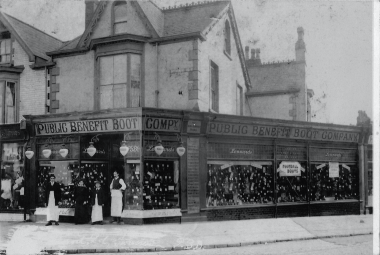
Public Benefit Boot Hull

Public Benefit Boot & Shoe Co., Hull

The Public Benefit Boot & Shoe Co

The Public Benefit Boot & Shoe Co – what a name! It makes an overt claim to altruistic philanthropy, something that was often little more than a cynical advertising ploy for Victorian businessmen. Multiple branch retailing was in its infancy when this company was formed in 1875. The multiple system promised to bring cheaper goods within reach of the working classes by following three key principles:

  • cutting out the middleman
  • refusing credit (cash buyers only!)
  • bulk purchasing

Many companies thus fulfilled their noble pledge to benefit the public. They also made a tidy fortune for their founders and managers.

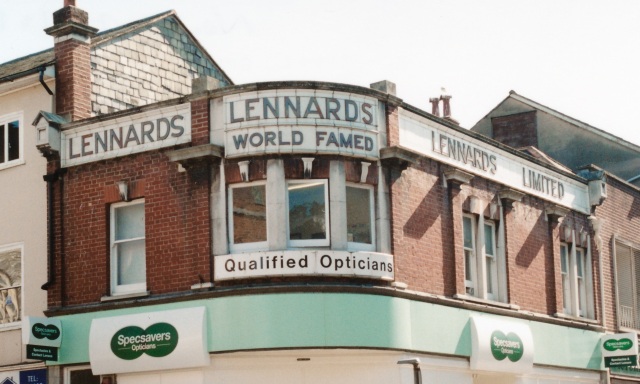
William Henry Franklin (1848-1907), who founded the Public Benefit Boot Co, left £78,000 (over £8 million in modern terms) on his death. He established his business in Prospect Street, Hull in 1875. By the time it merged with Dickinson Bros (of Bramley, Leeds) in 1897, it comprised 51 shops and a factory in Wellingborough. In 1904 the Public Benefit Boot Co struck a deal with Lennards (see below), which was trading under the same name in the south of England. The shopfronts of the two firms, with their large plate glass windows, were very similar.

036 - Copy

Public Benefit Boot Co., Gainsborough (c. R. Baxter)

By 1920 there were 143 Public Benefit Boot Co shops (11 of them freehold), mainly in the north and Midlands. In 1946 the company and its shops were renamed Benefit Footwear Ltd. Through amalgamation with the merged Saxone and Lilley & Skinner (1957), it passed into the hands of Charles Clore’s British Shoe Corporation in 1962. The date on which the last ‘Benefit’ shop closed is not known.

malton-yorks-2000-copy

Malton, Yorks, photographed in 2000

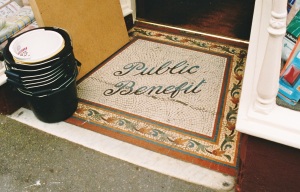
At least one of this company’s shopfronts survives, at 13a Saville Street, Malton, Yorks. Others are possibly unrecognised because they have lost their mosaic tiling and other obvious branding. Quite a few historical postcards of British town centres highlight branches of the Public Benefit Boot Co and could well have been commissioned by the firm.

Newport IoW 2000 (2) - Copy

Newport, Isle of Wight

Lennards

Lennard Brothers was founded as a boot and shoe manufacturing firm in Leicester in the 1870s (incorporated 1897). The prime mover seems to have been Samuel Lennard (1851-1901), who opened his first factory on Crafton Street in 1876, later moving to Asylum Road (subsequently the site of the now-demolished Liberty Building). Branch factories opened in Kettering, Northampton and Blaby, and a warehouse in Leicester. Samuel married the daughter of Edward Wood, the Chairman of Freeman, Hardy & Willis.

Newport IoW 2000 (1) - Copy

Newport, Isle of Wight

Some of Samuel’s brothers were more engaged in retailing. Thomas Lennard (1861-1938; knighted 1920) moved to Bristol where he established Lennards Ltd in new headquarters on Queen Street. In 1904 Lennards Ltd – with 104 branches trading as the Public Benefit Boot Co – reached an agreement with the Public Benefit Boot Co of Leeds (see above) to form a new company embracing both concerns.

Public Benefit Boot Company, 1 King Edwards Road, Swansea (courtesy of Kirsty Hill, original source unknown). Note the Lennards name in the windows.

Lennards Boot & Shoe Manufacturers, 1 King Edward Road, Swansea (courtesy of Kirsty Hill)

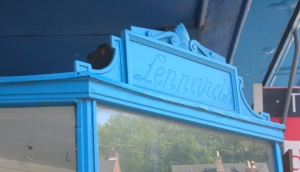
Whilst Lennards’ shops were concentrated in the Midlands and south, those of its Leeds namesake were largely in the Midlands and north. Before long, however, Lennards’ shops were trading under the ‘Lennards’ name.

Lennards Matlock 2009 (3) - Copy

Matlock

By 1909 Lennards had 130 shops, and by 1920, when the freeholds were transferred to the Lennards Real Property Co Ltd, it had 200, a number it never greatly exceeded. In this period the pilasters framing the shopfronts had panels engraved with the locations of principal branches, and the low stallrisers displayed the Lennards name. In 1923 an important new store was built on Edgware Road, London, designed by Bridgeman & Bridgeman, with a cupola over the canted corner bay. The discreet ladies’ fitting room to the rear of the shop was warmed by a gas fire. In 1929 the 50 or so shops of Alfred Tyler & Sons of Leicester – mainly situated in northern towns and cities – were acquired and reorganised, and in 1938 Lennards moved into new headquarters on Soundwell Road, Staple Hill, Bristol.

Lennards Matlock 2009 (2) - Copy

Matlock

Lennards Matlock 2009 (1)

Matlock

Lennards failed to buy back its properties in 1952, losing them to Lombard. The company developed subsidiaries abroad, notably in Ghana and Nigeria and acquired England’s Smart Shoes Ltd in 1970. Lennards was bought by Great Universal Stores 1973 and then (with 260 shops) by Charterhall in 1989. Charterhall went into receivership shortly afterwards, and the shops probably closed in 1991-92.

Posted in Shoe Shops | 28 Comments

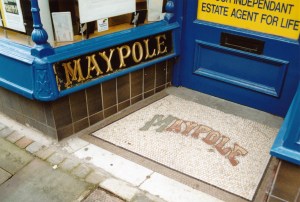
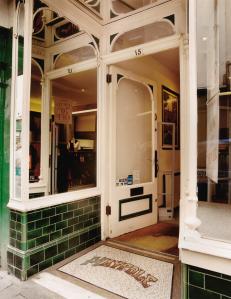
‘Shop-Coolness and Counter-Cleanliness’: The Legacy of the Maypole Dairy Co

AA009232 15 King St Ludlow - Copy

King Street, Ludlow, in 2000. (c. Historic England)

Introduction

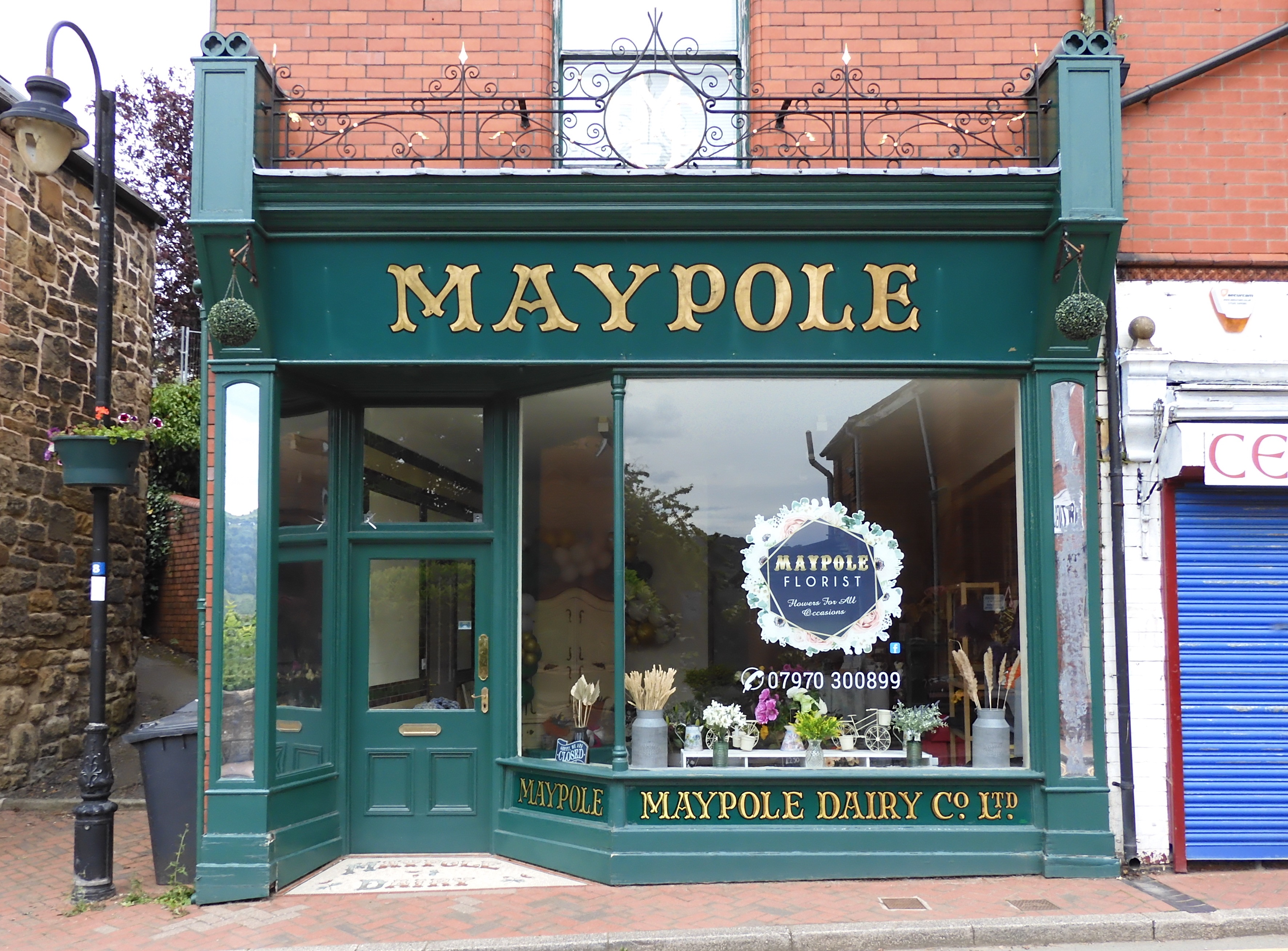
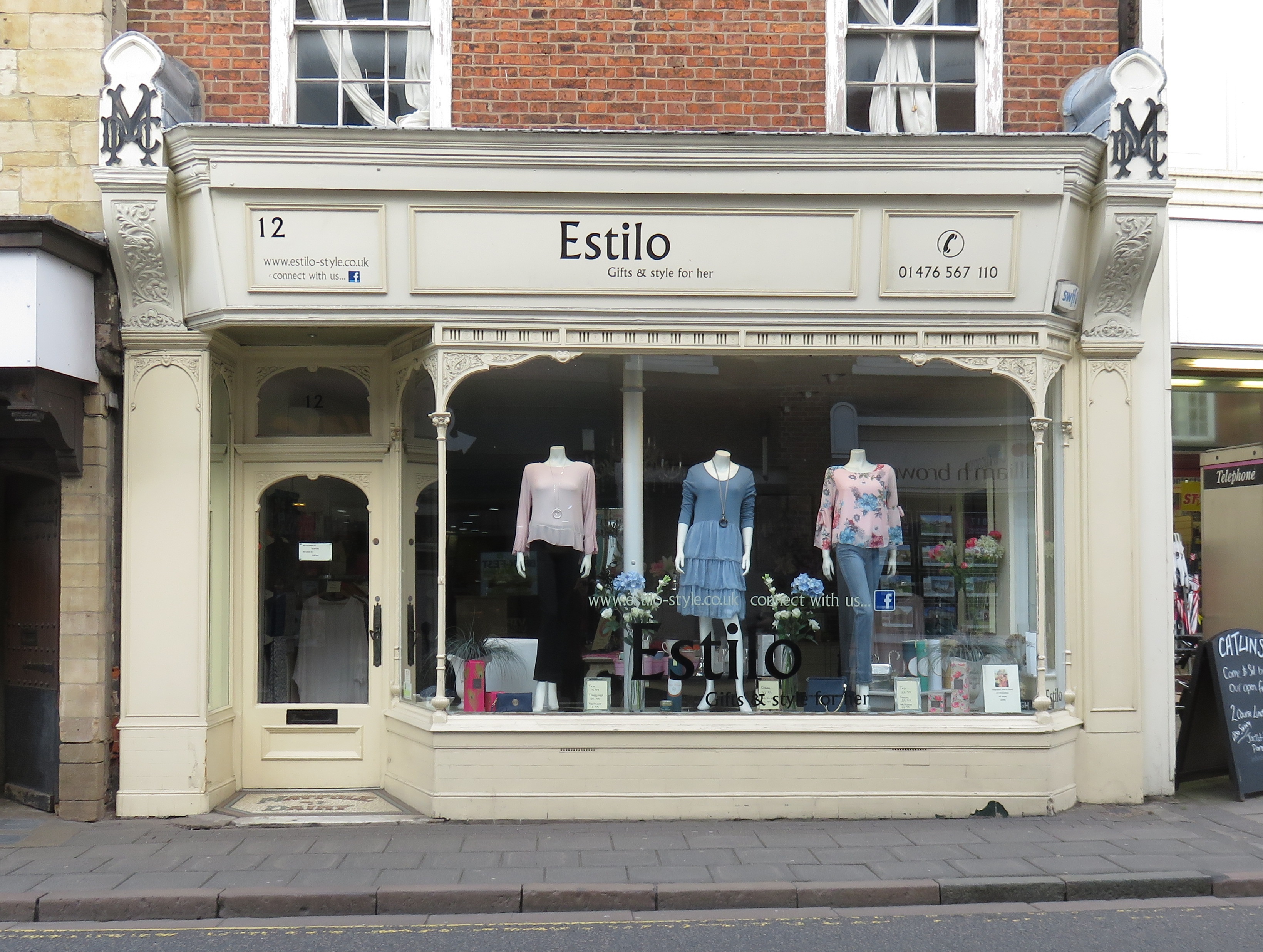
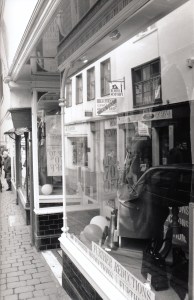
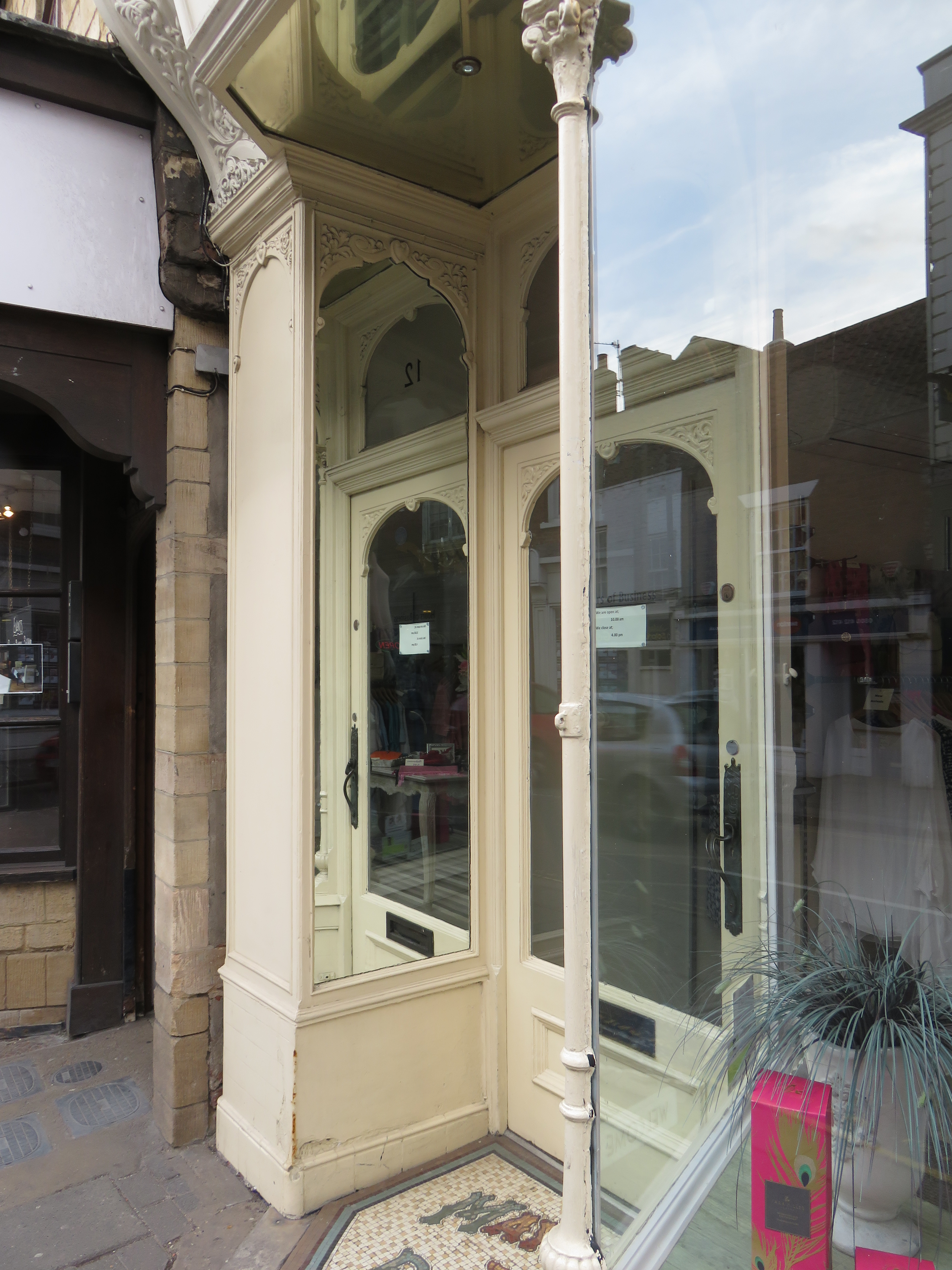
Some of the most ornate and distinctive shopfronts created by British provision chains in the late 19th and early 20th centuries belonged to the Maypole Dairy Co. These are highly recognisable and well worth looking out for, though examples are usually fragmentary. A replica was created at 5 Crane Street, Cefn Mawr, near Wrexham, in 2010 (below).

Cefn Mawr June 2022 (2) - Copy

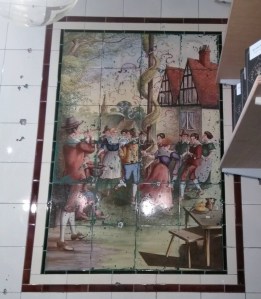
The features that are most likely to survive inside former Maypole shops– something to be aware of when these premises are being refitted – are pictorial tile panels. Indeed, some original tiles were found while work was in progress in Cefn Mawr.

Grantham March 2017 (35)

Grantham

The History of the Maypole Dairy Co

The Maypole Dairy Co came into being in 1891, not 1887 as is usually reported.

Maypole’s roots go back to 1861, when George Jackson took over a provision warehouse in Birmingham. Three Watson brothers, relatives of a previous owner, became his apprentices in the late 1870s. Together, in 1887, Jackson and the Watsons started a national chain of butter and margarine shops called The Danish Dairy Co., with Jackson trading in the South and East of England and the Watsons elsewhere. Once they began to manufacture their own butter in the UK in 1891-92 the Watsons renamed their shops Maypole Dairy Co, while Jackson called his Medova. These two chains amalgamated as a public company in 1898, with William George Watson (1861-1930) as Chairman. The Medova shops were renamed Maypole.

At this point Maypole had 185 shops and 17 ‘creameries or butter factories’ in England and Ireland. Until 1924 the business operated a co-partnership system, sharing profits with employees.

Grantham March 2017 (30) - Copy

Grantham


Grantham March 2017 (38) - Copy

Grantham

Maypole Dairies specialised in butter and margarine, but also sold eggs, tea and condensed milk – a narrow range of basic working-class staples. The Medova name eventually vanished (except as a brand name for produce) and Maypole grew to 800 branches in 1913, rising to 889 by 1918.

The Great War, however, disrupted Maypole’s organisation. Although the company manufactured its margarine in England and Ireland, it obtained oils and fats abroad. Unable to access these crucial supplies from August 1914, Maypole had to seek new sources of crude oil for its refining works at Erith. In 1915 Otto Monsted’s vast factory in Southall, Middlesex, became the Maypole Margarine Works.

Meanwhile Maypole’s competitors continued to receive deliveries of the finished product from Holland (Lipton’s from Van den Bergh and Home & Colonial from Jurgens). A ‘buy British’ campaign was launched, but government interference in food pricing and distribution, including rationing, caused additional headaches for the Maypole management.

Despite wartime problems, Maypole maintained good profits until the early 1920s, when a series of low returns opened the door for Home & Colonial to take over the company in 1924. Maypole thus became part of the large Home & Colonial group, eventually coming under the Allied Suppliers umbrella. It nevertheless continued to expand (with 1,040 shops in 1928) and retained its identity until around 1970.

Grantham March 2017 (27) - Copy

Grantham

Maypole’s Buildings and Shopfitting

Maypole’s shopfronts were splendid – much more so than Home & Colonial’s – and it is no surprise to learn that some of the top shopfitters in the country, including Harris & Sheldon and Parnall & Sons, were engaged by the company in the early 20th century.

Leominster 2000 (1)

Leominster in 2000.

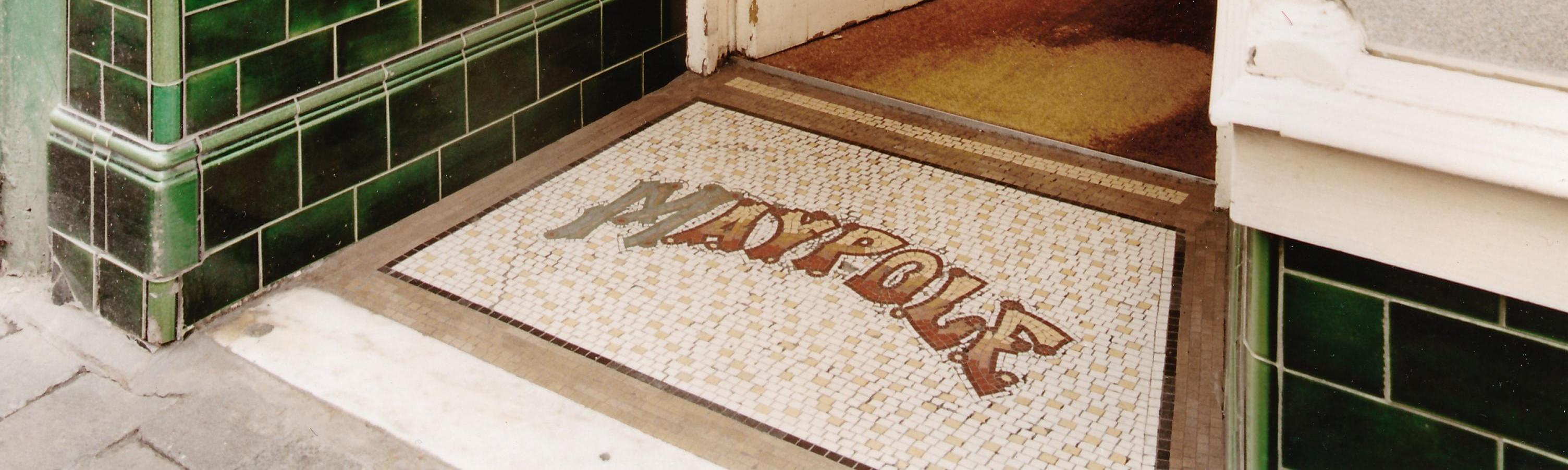
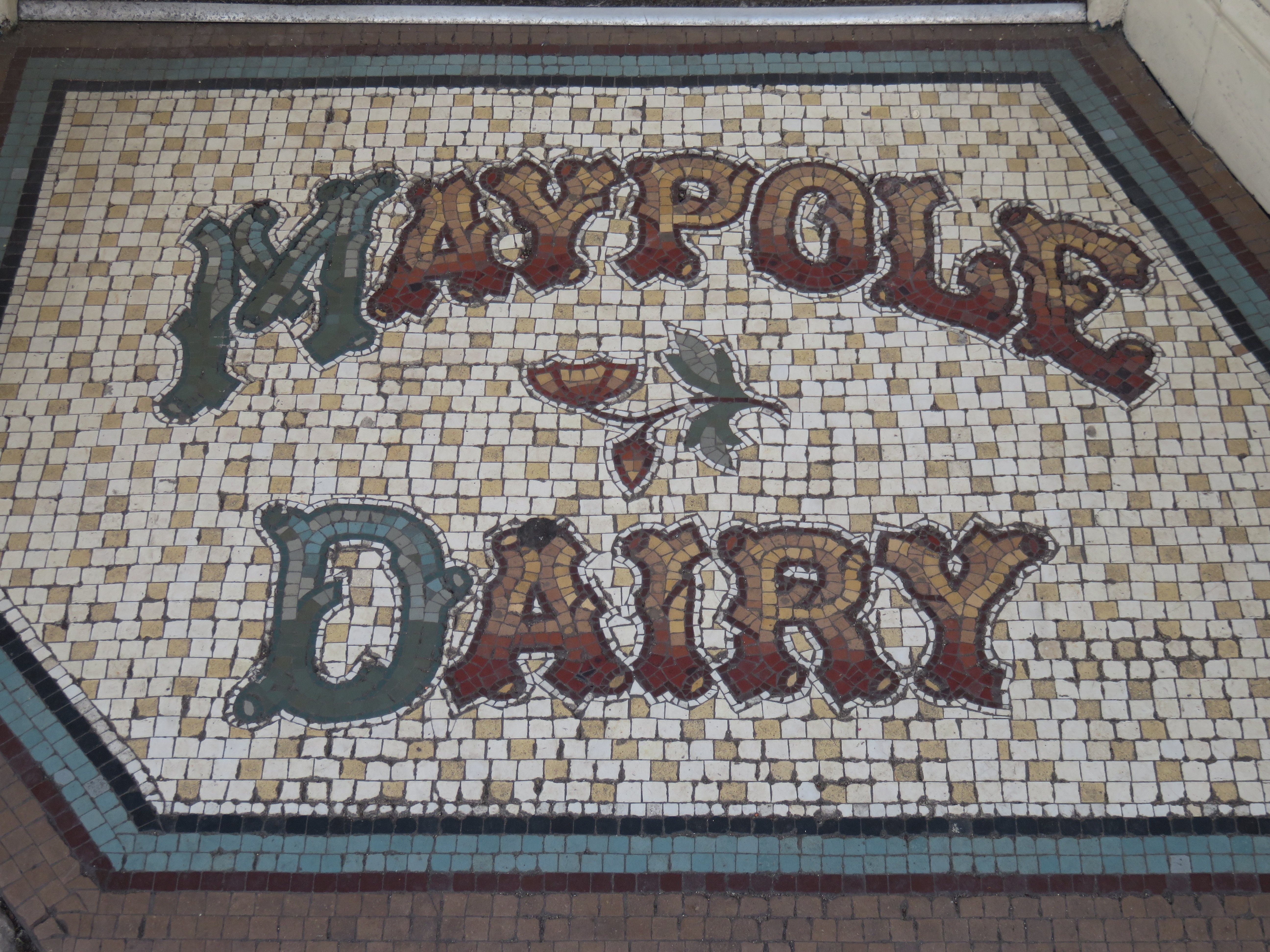
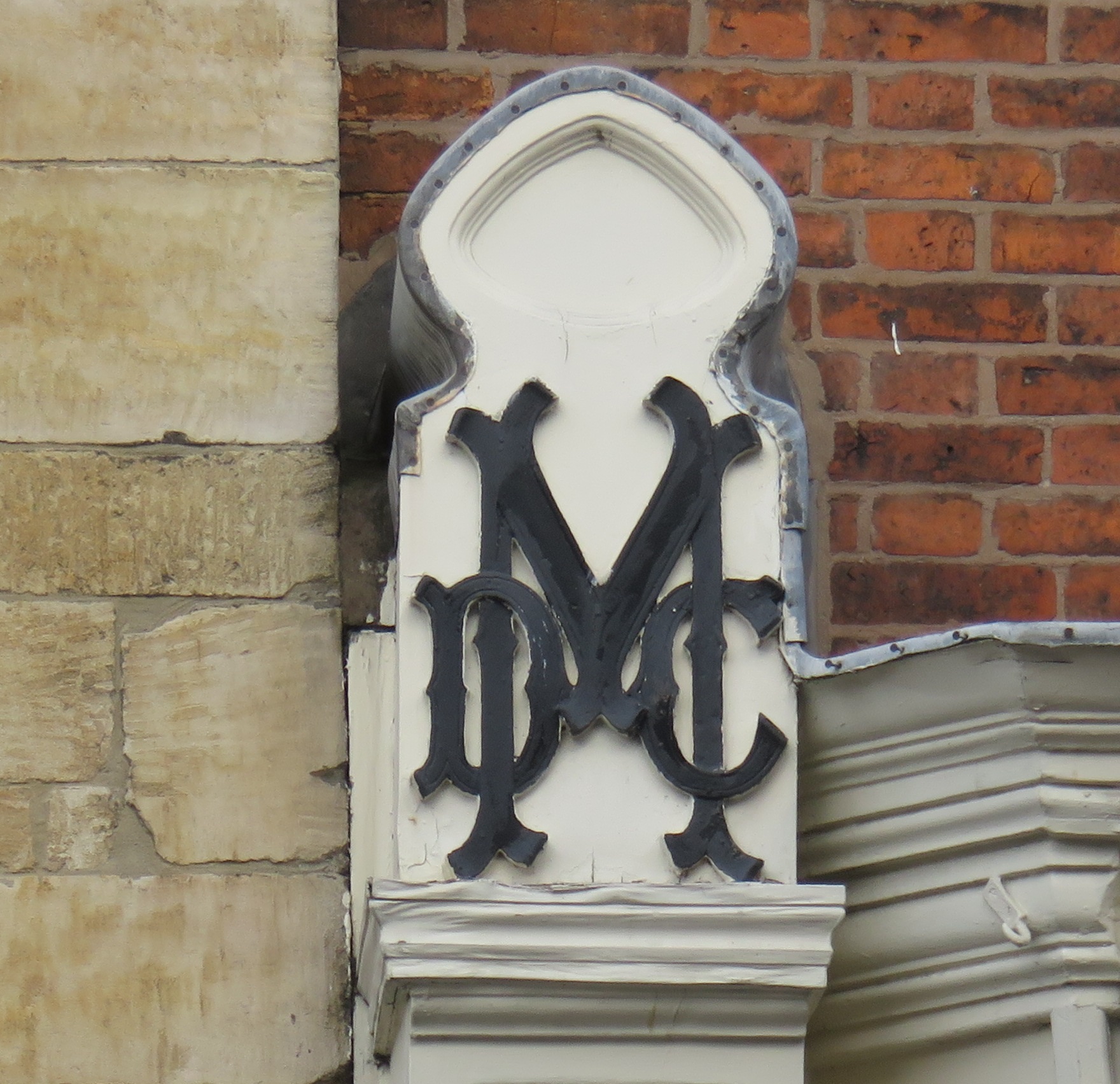
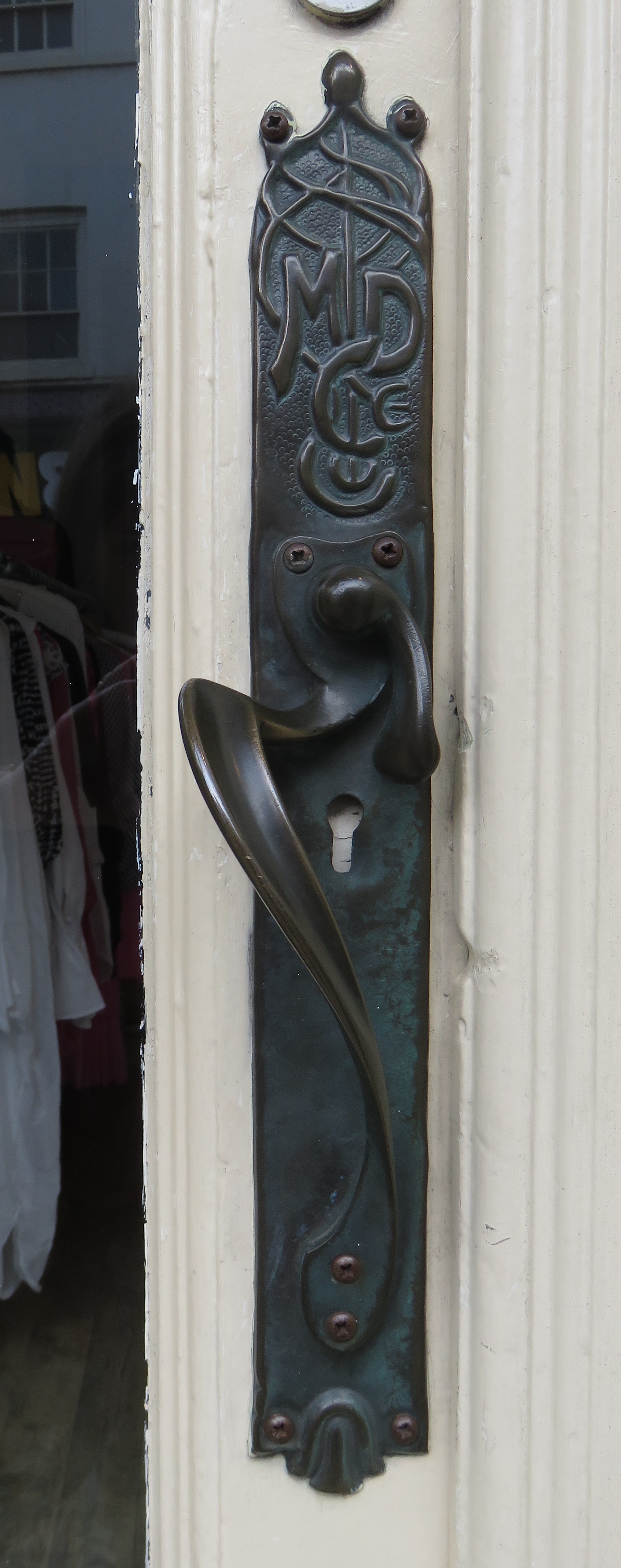
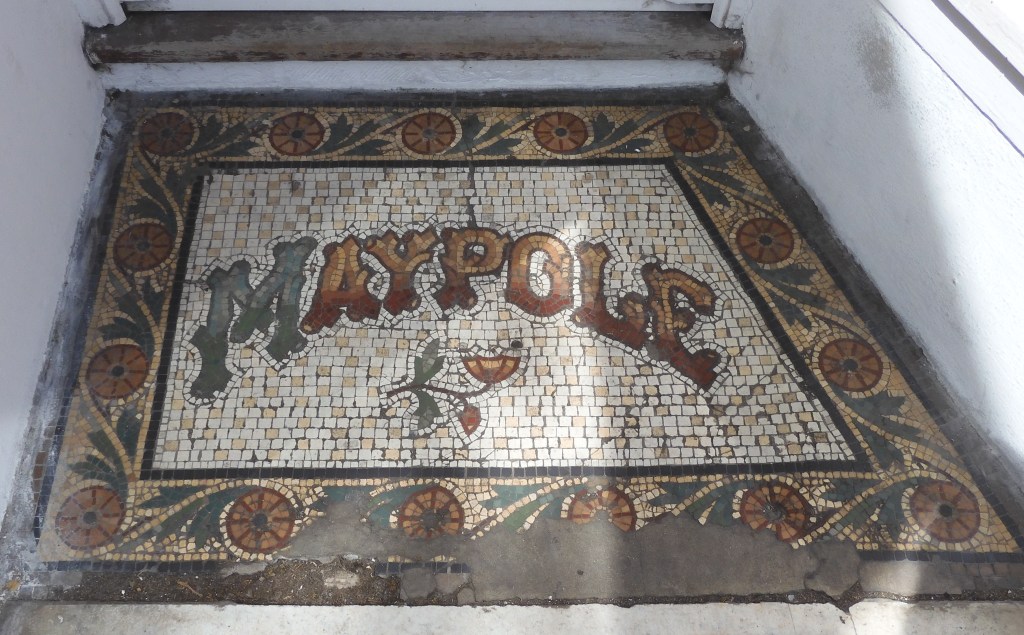
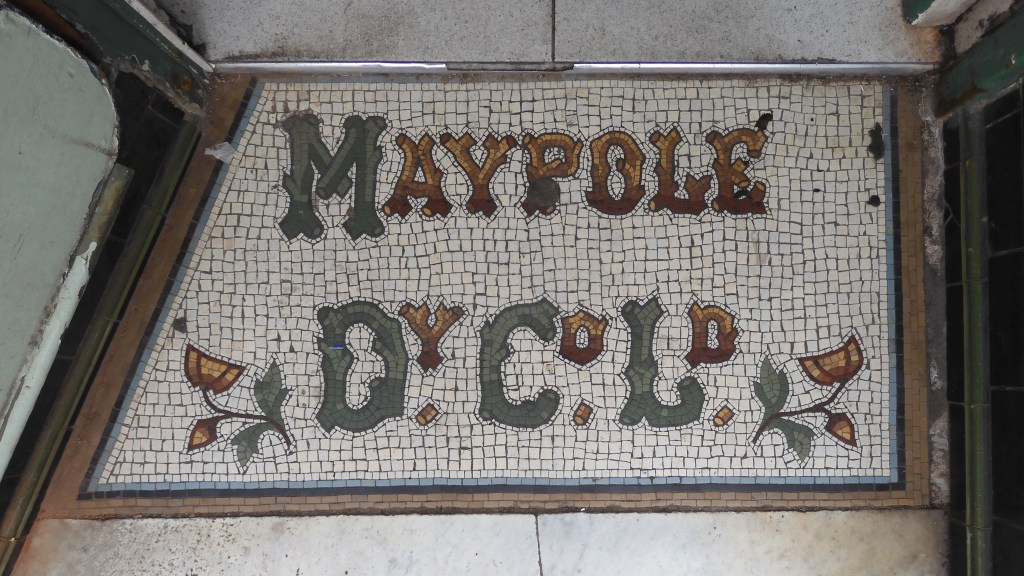
The typical Maypole shop comprised a single lobby entrance to one side of a plate-glass display window with ornate spandrels and a ventilation strip. The Maypole name was emblazoned on the fascia in gilded lettering with forked serifs and was repeated on the glass shades of the arc lamps, the window sill (stall plate), the entrance lobby floor, and the canvas shop blind. An intricate ‘MDC’ monogram adorned the consoles and the elegant push-plate of the door. In addition there was often a wrought-iron railing (or cresting) above the fascia with a central monogram. The shopfronts were framed by mirror glass pilasters and soffit, and the tiled stallrisers were dark green, a colour also favoured by Lipton’s.

AA009232 15 King St Ludlow

Ludlow in 2000 (c. Historic England)

As Maypole advertised: ‘Our Maypole shops are uniquely adapted and specially fitted for the supply and serving of butter, margarine and tea. You will find within the shop-coolness, counter-cleanliness and quick-courteous service, which our customers rightly expect and justly appreciate’ (from Times 12 June 1918, 8). Inside the shops, the Maypole name – just in case you’d missed it! – was repeated on the fronts of the marble counters and on signage around the walls.

49 South Great St George’s Street, Dublin, in 2018, courtesy of Helen McEvoy @HildaMcevoy

A complete Maypole interior is said to survive on Mersey Road in Widnes (present condition unconfirmed). Walls were often decorated with pictorial tile panels, some of which are still visible, notably a maypole scene in Ludlow (Church Street) and (unseen by the author) two arcadian scenes in Jesmond (Acorn Road). Maypole apparently commissioned tiles from several different firms in the inter-war period, including Pilkingtons. The Jesmond panels are signed ‘JE’.

Ludlow 2 1999 (2)

Mirror Glass, Ludlow, 2000.


Grantham March 2017 (40)

Mirror glass, Grantham, 2017

The architect W. A. Lewis, well known for his association with Marks & Spencer, designed two large new buildings in London for Maypole following the Home & Colonial takeover in the 1920s. The first was Maypole House at 27-28 Finsbury Square, which featured in The Builder in May 1927. A year later a new tea packing and blending warehouse was built at 179-189 City Road, London, opposite Lipton’s headquarters. Special permission was obtained from the LCC for this building to exceed normal height limits. Both of Lewis’s buildings for Maypole have been demolished.

One Maypole building that does survive is the Maypole Institute, Merrick Road (previously Margarine Road), Southall. For photographs taken by the architectural photographer Bedford Lemere in 1911, see Historic England Archive. In addition, some of the old margarine factory buildings still stand to its east.

Lewes Road, Brighton
Wrexham
Posted in Grocers, Provision Dealers and Dairies, Maypole Dairy Co | 15 Comments

The Legacy of Home & Colonial Stores

12 Derby St Leek (2) - Copy

A ‘shopfront within a shopfront’ at 12 Derby Street, Leek, photographed in 2000. The shop is still there, occupied by il Gusto, but the fascia and the ox-blood tiles have been covered up.

Introduction

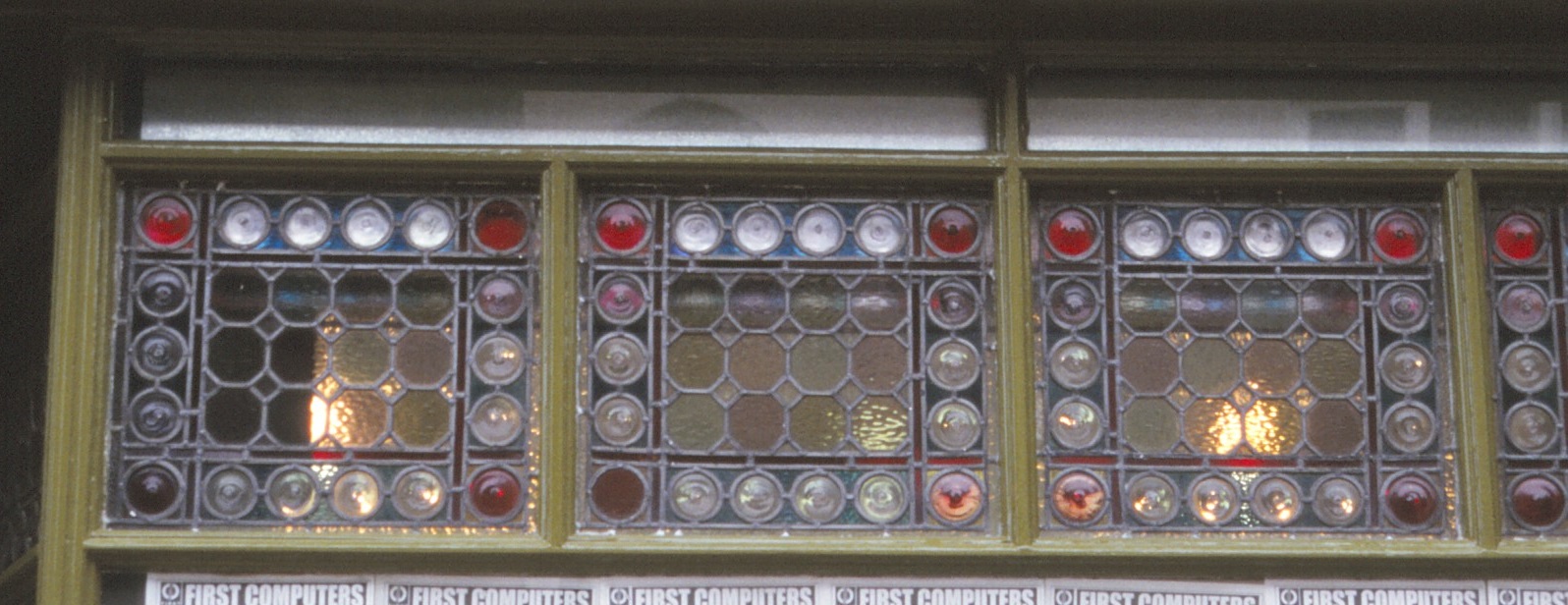
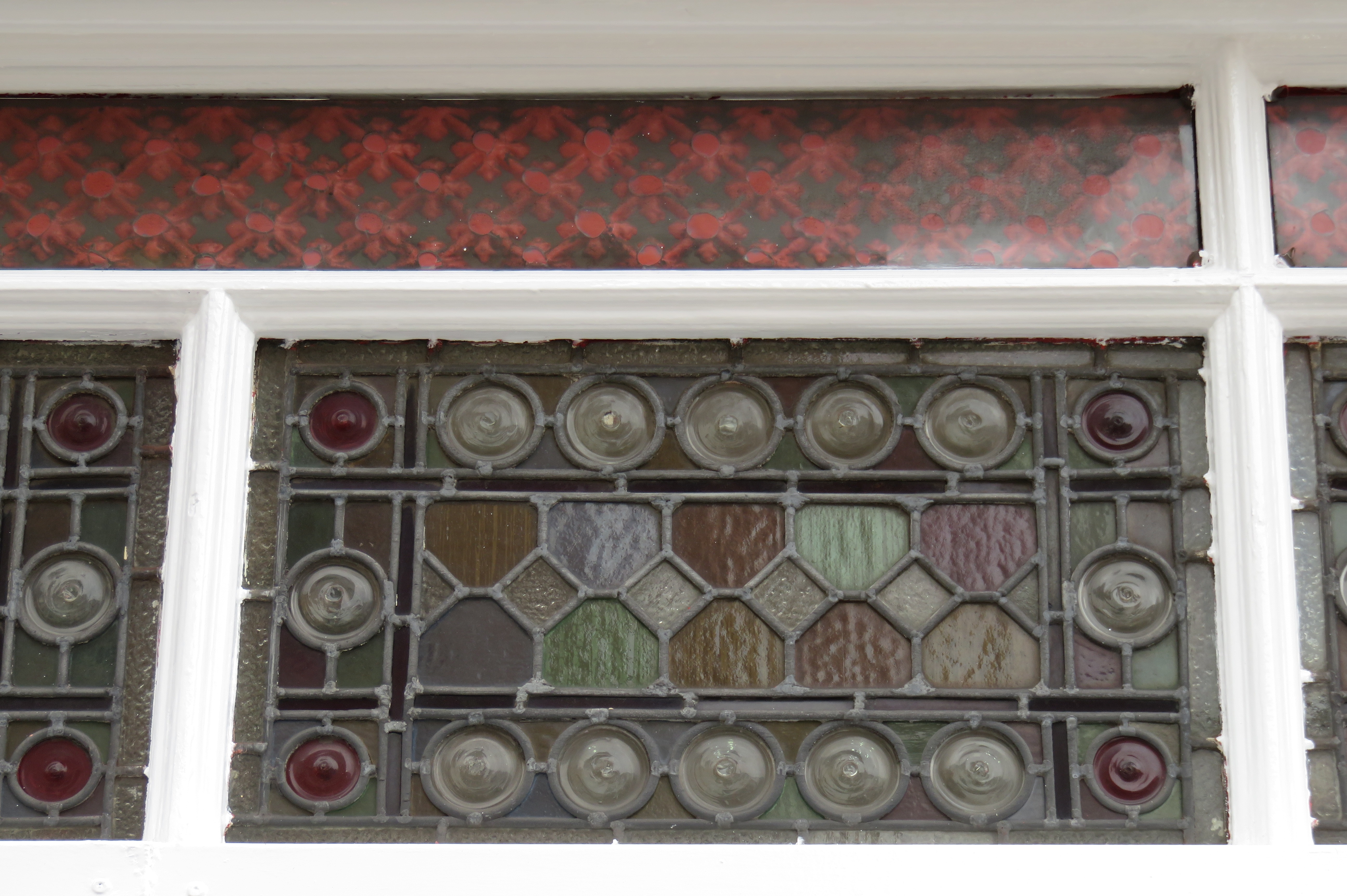
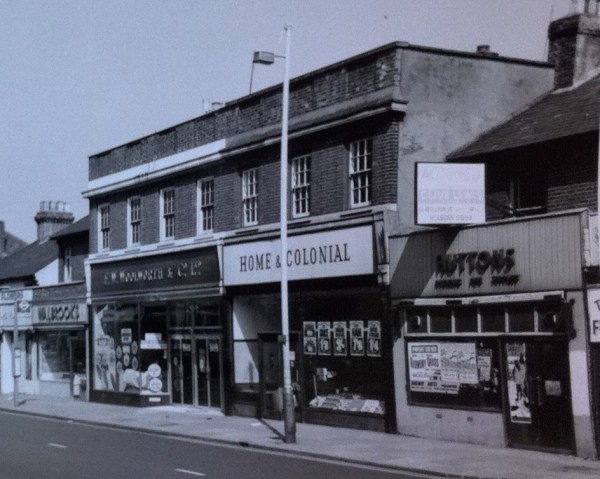
Decades have passed since large superstores asserted their dominance over the retail food market, yet attractive remnants of old grocery and provision chains can still be spotted on shopping streets throughout the UK. One of the most recognisable is Home & Colonial Stores: a name that evokes the heyday of the British Empire. Particularly characteristic of Home & Colonial shopfronts are transom lights (ie: the fixed glazing above the main display windows and doorways) fitted with coloured and leaded ‘bottle’ glass. In addition, more than one modern shopkeeper has made a feature of Home & Colonial’s distinctive gilded lettering, with its sharp serifs.

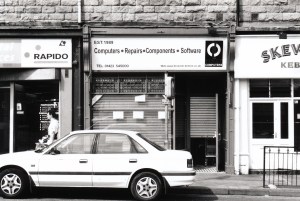
First Computers Home & Colonial (2) - Copy

Transom lights at Beulah Street, Harrogate, now ‘abc of health’.

Sheerness 86 High St June 2016

86 High Street, Sheerness. Probably Home & Colonial. Photographed June 2016.

Home & Colonial Stores

The Home & Colonial Trading Association was founded in 1885 by the tea buyer Julius C. Drew (1856-1931) – who later commissioned Sir Edwin Lutyens to design Castle Drogo in Devon – and his business partner, the grocer John Musker (1846-1926), who made his home at Shadwell Park, Norfolk, in 1898. The headquarters and main shop were at 268 Edgware Road, London. Within three years the company comprised four large ‘stores’ – Edgware Road, Islington, Birmingham and Leeds – selling a wide range of groceries and provisions, and nine smaller ‘tea shops’ which concentrated on groceries, especially tea. The ‘tea shops’ set the template for the future.

In order to finance the development of a national chain of ‘stores’ and ‘tea shops’, Home & Colonial Stores was incorporated in March 1888. The company was steered by William Capel Slaughter (of the City solicitors Slaughter & May, married into the Drew family), who served as Chairman until his death in 1917. Expansion was astonishingly rapid. By the end of 1889 there were 53 branches. In the following year new headquarters were taken on Paul Street, Finsbury, London. There were 237 branches (all leasehold) in 1895, 320 in 1897 and 500 in 1903.

berkhamsted (3)

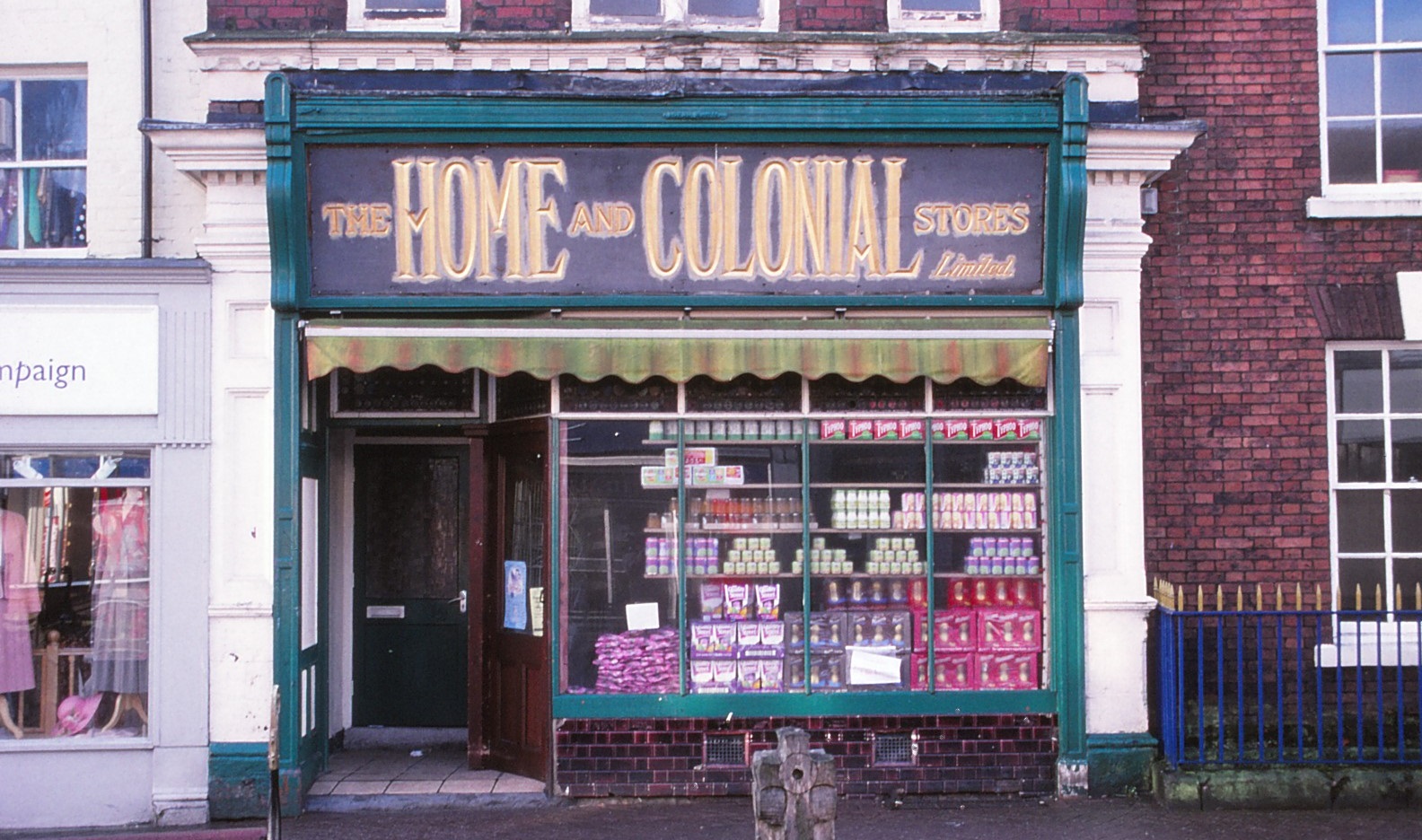
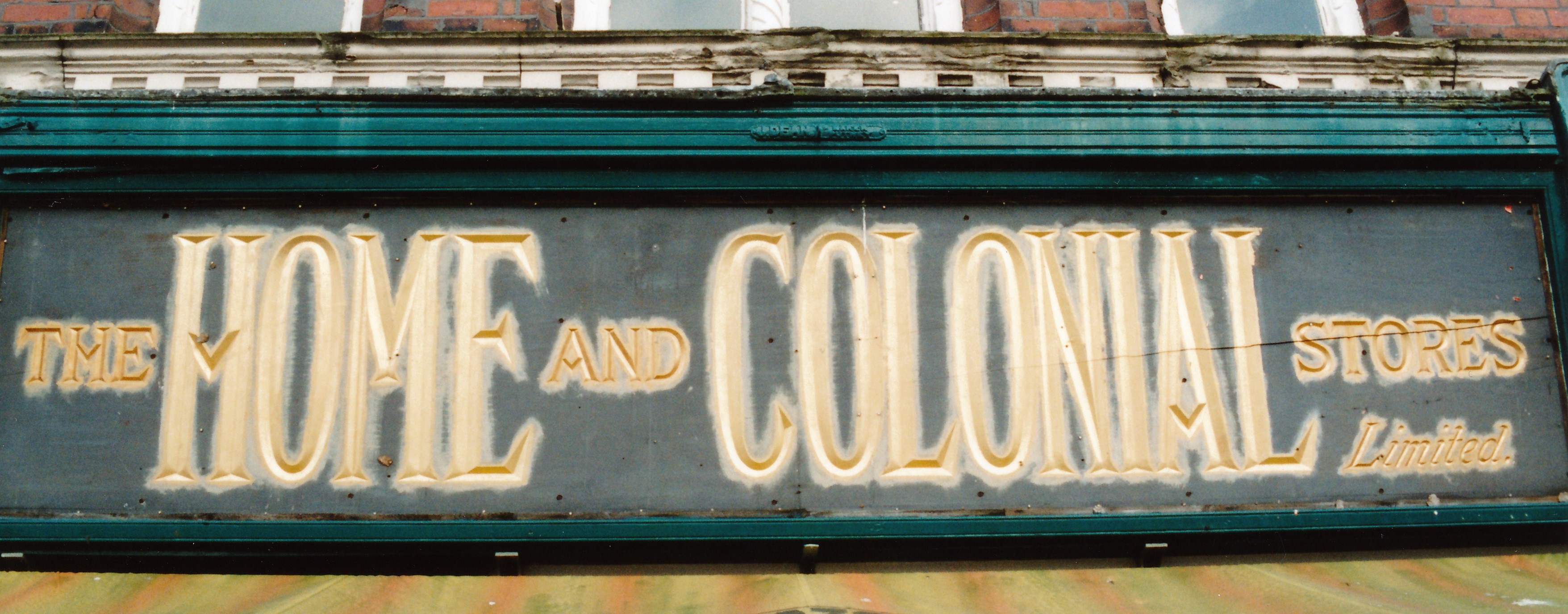
‘The Home and Colonial Stores Limited’ in Berkhamsted, now an antiques centre.

As well as tea, coffee and sugar, Home & Colonial shops became popular for their imported butter and margarine. Around 1906 some branches in the north of England were opened as provision (or dairy) shops, with tea being the only ‘grocery’ article on sale, but the general trend was towards diversification of merchandise, including confectionery and tinned goods. Window display was standardised, with branch managers following instructions issued from the head office in London.

Fakenham 1999

Fakenham, Norfolk: the fascia has been covered up since this was taken in 1999. Fabulously, it is the ‘Hot & Cold’ (H&C) Chinese Restaurant.

The general format of Home & Colonial shopfronts was established in 1888. It was probably devised by Robert Willey (1835-1918) who – as Zachary Osborne recently discovered whilst researching Home & Colonial for an academic thesis – was retained as the company’s architect. Willey had a private practice and was also surveyor to the Hand-in-Hand Insurance Co. (later Commercial Union), whose address he shared. The shopfront designed by Willey for Home & Colonial had great longevity, enduring into the mid-20th century. As well as the bottle-glass transom lights and gilded lettering mentioned above, these shopfronts featured brass sills (stall plates) engraved with the legend ‘Home and Colonial Tea Stores’. Beneath this, the stall risers were clad in ox-blood tiles. Windows generally held fixed glazing rather than sashes, befitting Home & Colonial’s emphasis on groceries rather than provisions. To the sides, the pilasters were extremely narrow.

Harrogate H&C Station ParadeBeulahSt 1999 (2)

Station Parade, Harrogate, 1999

Further information about Home & Colonial shops of this period is available thanks to legal proceedings initiated in 1898 against the World’s Tea Company, which was accused of deliberately imitating Home & Colonial’s shopfitting and displays: ‘The fascia in each case was much the same in appearance, although, of course, each company put in its own name. Below this in each case a portion of the window was in cathedral glass or lead-lights’. Inside the counters were in similar positions: ‘In each case a [gas] pipe ran over the counter and carried lamps with glasses of a similar shape. In each case, also, there were labels on the walls with the statement “This is the – (cheese, or as the case might be) department”.’ The defendant agreed to make specific alterations to its shops, including, apparently, an undertaking not to lay black and white chequered tile floors.

Norwich (2)

St Benedicts Street, Norwich.

Between the two world wars, Home & Colonial Stores expanded by purchasing three of its main competitors – the struggling Maypole Dairy Co. in 1924, the more prosperous Meadow Dairy Co. in 1929 and the thriving Lipton’s in 1931. It was already associated with Lipton’s through Allied Suppliers, a buying group formed in 1929. In 1960 the holding company, Home and Colonial Stores Co. Ltd., changed its name to Allied Suppliers Ltd, but the subsidiary retail chains (including Lipton’s and Maypole as well as Home & Colonial) retained their original names. Allied Suppliers was bought out by Sir James Goldsmith’s Cavenham Foods in 1972. Within three years the Home & Colonial shops – which had been depleted in the course of the 1960s – had been sold or rebranded.

Home and Colonial Yiewsley 654

Yiewsley c.1960

Given the passage of over 40 years it is perhaps surprising that so many Home & Colonial shopfronts have survived – albeit in a fragmentary condition. Sadly, no shop interiors exist . . . unless you know otherwise?

Leek 2000 (4) - Copy

The wooden fascia at Leek, minus its glass facing, in 2000.

Acknowledgements: I am most grateful to Zachary Osborne for discovering Robert Willey.
Posted in Grocers, Provision Dealers and Dairies, Home & Colonial Stores | 18 Comments